How to Improve Reaction Time: A Clinical Guide to Faster Responses
Mar 11, 2026
Improving your reaction time isn't just about playing video games. It’s a trainable skill built on a three-step process your brain performs every single day: perceive, process, and respond. This guide will walk you through clinically-proven methods—from sleep hygiene to targeted cognitive drills and physical exercises—that sharpen the exact neural pathways governing how quickly you act.
Why Milliseconds Matter for Your Brain and Body
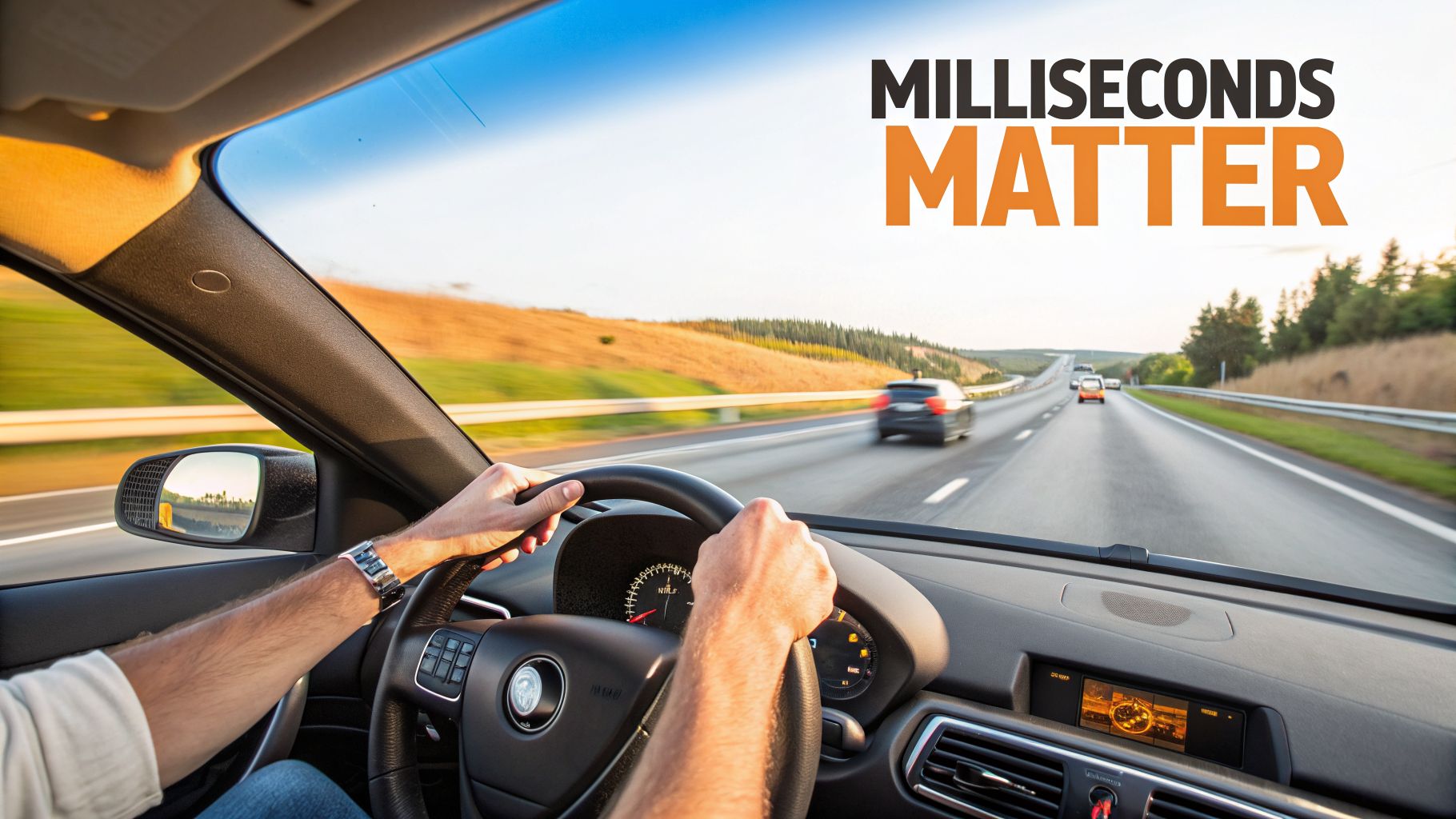
Think about driving on a busy highway when another car suddenly cuts into your lane. The split-second decision that separates a safe swerve from a serious accident is your reaction time. It's a fundamental cognitive function that has a massive impact on your daily safety and performance, no matter what you do for a living.
This isn’t one single skill, but a lightning-fast sequence. First, your brain perceives the event—seeing the other car. It then has to process that sensory input and decide on an action. Finally, it shoots a signal to your muscles to execute that response, whether it’s turning the wheel or slamming on the brakes. Every step takes time, and even a tiny delay can have huge consequences.
The Real-World Impact of a Split-Second Delay
The stakes are incredibly high. In just one jurisdiction, a single year saw over 164,123 car crashes. When researchers analyzed the data, they found that drivers involved in these collisions took, on average, 0.487 seconds longer to react.
That tiny delay—less than half a second—is often the difference between a near-miss and a fatal accident. For clinicians, this number is a stark reminder of how subclinical delays, maybe from a mild concussion or just the natural aging process, can create very real dangers. This is where objective measurement becomes non-negotiable.
At Orange Neurosciences, we've seen firsthand how advanced tools are empowering clinicians and individuals to move beyond guesswork. By precisely measuring and training this vital skill, we can achieve tangible improvements in both safety and performance.
Beyond Driving and Sports
While athletes and drivers are the obvious examples, quick reactions are critical in countless other scenarios. A construction worker has to react instantly to a falling piece of equipment. A surgeon must respond immediately to an unexpected change during an operation. Even at home, a fast reaction can be the difference between catching a falling glass and cleaning up a mess—or preventing a serious fall.
Here’s a quick look at the core components we’ll be targeting to improve your reaction speed. Think of this as the roadmap for what makes you react quickly.
Core Components of Your Reaction Time
Component | What It Means | Its Role in Your Reaction |
|---|---|---|
Perception | How quickly your senses (sight, sound, touch) detect a stimulus. | The starting line. A delay here means everything else is already behind. |
Processing Speed | How fast your brain makes sense of the information it just received. | The decision-making hub. This is where your brain decides what to do. |
Response Execution | The time it takes for your brain to send a signal to your muscles to act. | The finish line. This is the physical action you take based on your brain's decision. |
This guide gives you a clear, data-driven plan to enhance each of these areas. By integrating advanced tools, we can create objective cognitive profiles that pinpoint specific bottlenecks, like selective attention or processing speed, and build personalized training that actually works.
To get a deeper understanding of these foundational elements, you can explore our complete guide on the components of human reaction time. Ultimately, a faster reaction time is about building a more resilient brain-body connection for a safer, more effective life.
Establishing Your Cognitive Baseline
Before you can even think about improving your reaction time, you need an honest starting point. Trying to sharpen your reflexes without knowing where you stand is like flying blind—you have no idea where you're going or if you're making any real progress. While those simple online click tests can be a bit of fun, they just don't offer the reliable data you need for meaningful change.
To get a true picture of your current abilities, you need to establish what we call a cognitive baseline. This isn't just a single score. It's a comprehensive, standardized measurement of your brain's performance across the key areas that all feed into how quickly you react. Think of it as creating a detailed profile of your unique cognitive strengths and weaknesses.
Why Consistency Is Key for Accurate Assessment
Gathering trustworthy data comes down to one thing: consistency. Your reaction time isn't static; it can swing wildly based on everything from how well you slept to the time of day you test. For your baseline to mean anything, the testing conditions have to be controlled.
This means you need to assess yourself under the same circumstances each time. Pick a quiet room. Test at the same time of day—maybe mid-morning, after you're fully awake but before any afternoon slump hits. Inconsistent testing just creates noise, making it impossible to tell if a change in your score is a real improvement or just a daily fluctuation.
Actionable Insight: Don't compare a post-workout reaction score to one taken first thing in the morning. Physical fatigue, mental alertness, and even caffeine intake can dramatically skew results. For a true baseline, test at the same time, in the same quiet place, before you've had coffee or exercised.
Moving Beyond Simple Click Tests
A true cognitive baseline goes much deeper than just seeing how fast you can click a button. It involves assessing the specific cognitive functions that actually drive your reaction speed. I’ve seen this firsthand in clinical settings, especially when a therapist is working with a patient recovering from a mild brain injury. They need a far more detailed picture.
A clinician might use a platform like OrangeCheck to build out this comprehensive profile. An assessment like this doesn't just spit out a single reaction time number. Instead, it breaks down performance into the critical domains that matter:
Selective Attention: How well you can focus on what's important while tuning out distractions.
Processing Speed: The pace at which your brain can take in and make sense of new information.
Executive Function: Those higher-level skills like planning, problem-solving, and controlling your impulses.
This detailed report is what a solid therapy plan is built on. It gives the clinician the objective metrics needed to set realistic goals, personalise the training, and track whether the chosen methods are actually working. Without that baseline, therapy is just guesswork.
This simple flow shows the foundational steps for any effective cognitive training program.
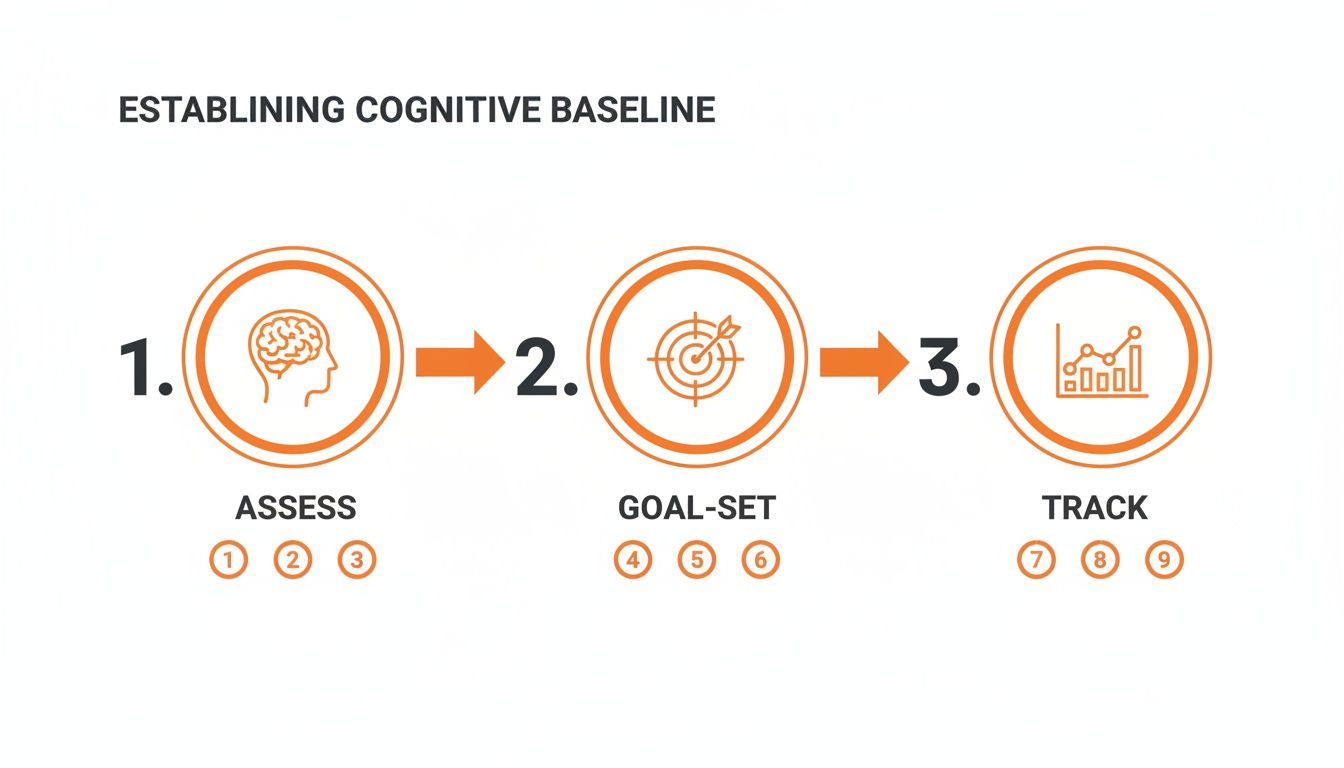
As you can see, a reliable assessment is the critical first step. It's what informs your goals and allows you to track real progress over time.
Setting Meaningful Goals from Your Baseline
Once you have your baseline report, you can finally set specific, measurable, and achievable goals. The data tells you exactly which cognitive areas need the most work. For example, you might discover your simple reaction time is fine, but your selective attention score is lower than you’d like. To see what "average" looks like for different age groups, check out our in-depth guide on average reaction times.
This kind of insight is incredibly powerful. Instead of falling back on generic "brain training" games, you can laser-focus your efforts on drills that specifically challenge your ability to filter out distractions. It's a much more efficient and effective approach for anyone looking to get faster—whether you’re an athlete, a working professional, or an older adult wanting to stay sharp and independent.
In a clinical setting, this initial assessment allows therapists to craft a truly personalised intervention plan. By using these detailed cognitive profiles, they can design programs that target specific deficits, leading to better outcomes and a more confident path toward recovery or peak performance.
Actionable Training to Sharpen Your Reflexes
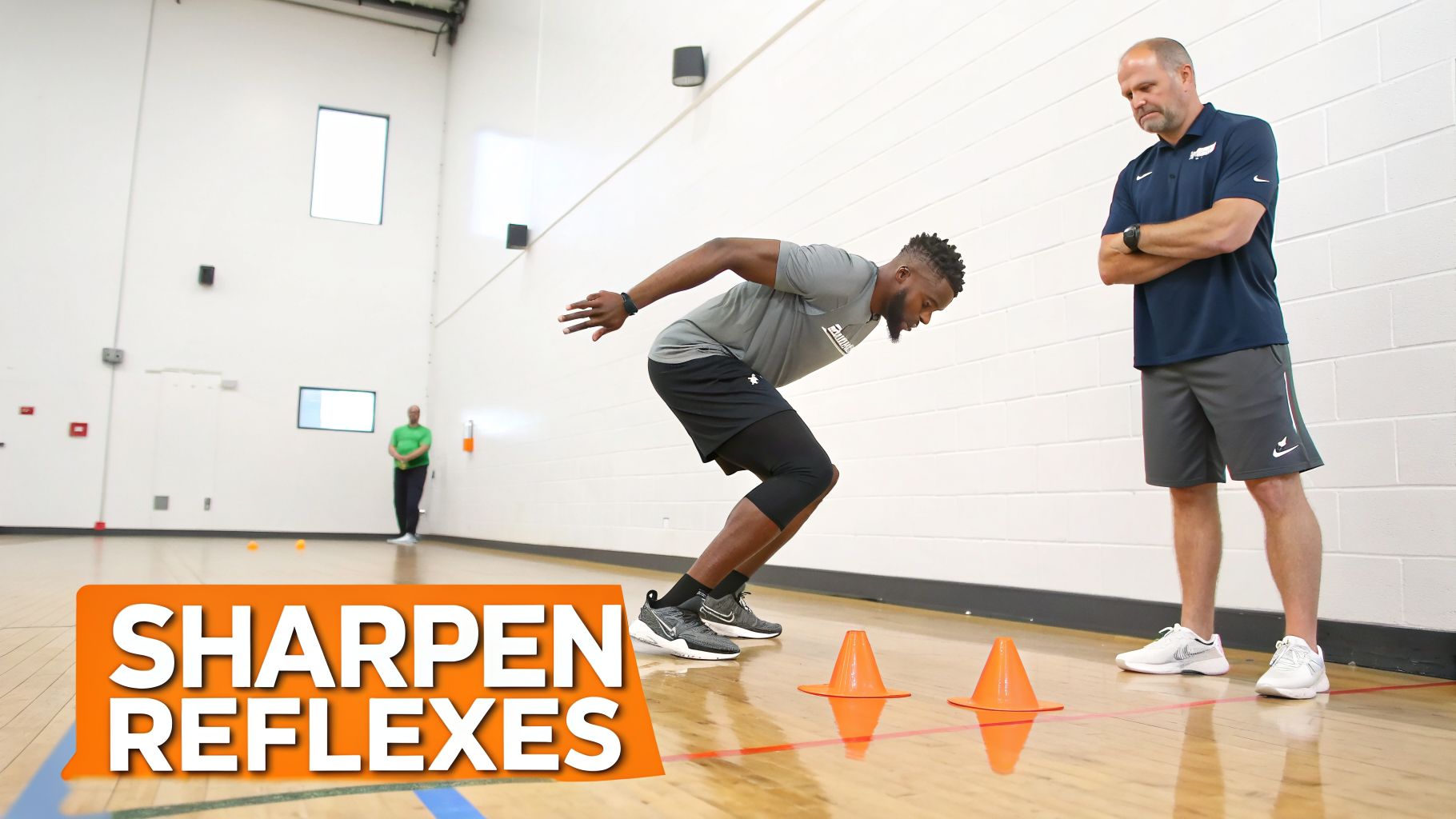
Once you’ve got a clear baseline, the real work—and fun—begins. To see genuine improvement in your reaction time, you have to look beyond just playing a few online games. A truly effective program needs to target three interconnected systems: your physical conditioning, your cognitive processing, and your sensory integration.
When you train these areas in concert, you create a powerful synergy. Your body becomes more explosive, your brain sorts information faster, and your senses work together to paint a complete, real-time picture of your environment. This holistic approach is how you build adaptable, real-world reflexes that you can count on.
Sharpening Your Mind With Cognitive Drills
Think of cognitive drills as strength training for your brain. The goal isn't just raw speed; it's about efficiency. You're teaching your mind to spot patterns, filter out distractions, and make decisions in a split second. While generic brain games can be a decent starting point, targeted exercises deliver far more impactful results.
Programs like our own ReadON are built on this very principle. Instead of just asking you to click a button faster, these drills are designed to challenge the specific cognitive skills that are foundational to how you improve reaction time.
Practical Example (Pattern Recognition): A drill might ask you to quickly find a specific shape or sequence hidden among a field of similar-looking distractors. This trains your brain to find the "signal in the noise"—a crucial skill for reacting to a single, important cue in a busy setting.
Practical Example (Decision-Making Speed): Another exercise could present you with several options and force you to select the correct one under tight time pressure. This builds the mental muscle you need for making rapid, high-stakes choices when it matters most.
For a closer look at how game-based training can be structured for maximum benefit, check out our guide on effective reaction time games.
Actionable Insight: The goal of cognitive training isn't just to get a high score. It’s about building transferable skills. The ability to quickly scan and identify a target in a game directly translates to a driver spotting a pedestrian stepping into the road, or a professional finding that one critical piece of data in a dense report.
Building an Explosive Body With Physical Conditioning
Your mind can be razor-sharp, but if your body can't execute the command, your reaction is still going to be slow. Physical training for faster reflexes isn't about endurance; it's about conditioning the neuromuscular pathways—the superhighway between your brain and your muscles. The name of the game is explosiveness and adaptability.
Plyometric exercises are fantastic for this. Drills involving rapid, powerful movements, like box jumps or medicine ball throws, train your muscles to contract forcefully and with minimal delay. This directly cuts down the time it takes for your body to physically respond to a mental command.
Sport-specific drills are just as vital. A goalkeeper, for instance, doesn't just need to be fast; they need to react to the completely unpredictable flight of a ball. Incorporating specialised goalkeeping training drills to improve reflexes is a perfect example of targeting rapid decision-making and physical response in a real-world context.
Uniting the Senses for a Cohesive Response
Finally, we need to get your senses working together as a team. Most real-world events don't happen in a vacuum with a single, neat stimulus. You see a car swerve, you hear the screech of its tires, and you might even feel the vibration through your own steering wheel. A truly fast reaction hinges on your brain's ability to instantly integrate these different sensory inputs.
This is where sensory integration drills come in. They are designed to combine visual, auditory, and tactile cues into a single exercise.
Practical Example: Stand facing a wall with a partner behind you. Your partner can either throw a tennis ball against the wall (a visual cue), clap their hands (an auditory cue), or gently tap you on the shoulder (a tactile cue). Your job is to perform a specific, pre-determined action—like a quick side shuffle—as fast as possible based on the type of signal you receive.
This kind of multisensory training builds a more robust and adaptable response system, getting you ready for the complex and unpredictable nature of real life.
Putting It All Together: Sample One-Week Reaction Training Schedule
Making these methods part of a consistent routine is where the magic happens. A scattered approach won't cut it. Below is an example of how you might structure a training week, balancing the different types of training while building in crucial rest days for recovery and adaptation.
This plan is built around the principle of progressive overload. To keep seeing gains, you have to continually challenge yourself. That might mean reducing the time you have for a cognitive drill, increasing the height of your box jump, or adding more complex sensory cues to a reaction drill.
Day | Physical Training (20 Min) | Cognitive Training (15 Min) | Sensory Drill (10 Min) |
|---|---|---|---|
Monday | Plyometrics: 3 sets of 10 box jumps. | Pattern Recognition: ReadON drills focused on identifying targets. | Visual/Auditory: React to coloured lights and corresponding sounds. |
Tuesday | Agility: 3 sets of ladder drills (e.g., in-and-outs). | Rest Day | Rest Day |
Wednesday | Sport-Specific Drills: e.g., mirror drills with a partner. | Decision Speed: ReadON drills with multiple-choice responses. | Tactile/Visual: Drop a reaction ball and catch it based on a visual cue. |
Thursday | Rest Day | Rest Day | Rest Day |
Friday | Plyometrics: 3 sets of 8 medicine ball rotational throws. | Sustained Attention: ReadON drills requiring focus for longer durations. | Multi-Sensory: Combine light, sound, and touch cues for varied responses. |
Saturday | Active Recovery: Light jogging or stretching. | Rest Day | Rest Day |
Sunday | Rest Day | Rest Day | Rest Day |
By committing to a structured, multi-faceted approach like this, you move beyond simple guesswork. You are actively rewiring your brain and conditioning your body to perceive, process, and act in a fraction of the time it took before.
Hidden Factors That Slow You Down
Putting in the work with targeted training is a fantastic way to sharpen your reaction time, but that effort can be wasted if overlooked lifestyle factors are holding you back. It's a bit like trying to run a marathon on a poor diet—no matter how hard you train, you’re sabotaging your own performance from the inside.
Many of these hidden culprits are so ingrained in our daily lives that we don't even notice the handbrake they're putting on our cognitive speed.
By making a few consistent adjustments, you create a solid foundation that lets the results from your training truly shine. You’re clearing the path so all that hard work actually pays off.
The Critical Role of Sleep in Cognitive Speed
We all know we need sleep, but it’s the quality of that sleep that really moves the needle for cognitive performance. I'm talking specifically about your deep and REM sleep cycles. This is when your brain gets to work consolidating memories, clearing out metabolic junk, and strengthening the neural pathways you've been building.
Skimping on high-quality sleep is like trying to run a complex software update on a laptop with only 10% battery. It’s going to be slow, buggy, and probably fail. When you're running on fumes, your prefrontal cortex—the brain's command centre for quick decisions—gets sluggish. This directly slows down how fast you can process what’s happening and respond.
A single night of poor sleep can slow your reaction time by a measurable amount. Over time, that sleep debt piles up, seriously impairing your ability to respond quickly and accurately. In daily life, especially behind the wheel, that can be a genuine risk.
Here are some actionable ways to improve your sleep hygiene:
Create a "Wind-Down" Routine: For the last hour before bed, ditch the screens. Actionable Step: Try reading a physical book, listening to calm music, or doing some light stretching to signal to your brain that it's time to power down.
Optimize Your Environment: A cool, dark, and quiet bedroom is your best friend. Actionable Step: Invest in blackout curtains or a white noise machine to block out disruptive light and sound.
Be Consistent: Try to go to bed and wake up at roughly the same time every day—yes, even on weekends. This helps regulate your body's internal clock.
How Nutrition and Hydration Fuel Your Brain
What you eat and drink has an immediate effect on your brain's performance. Your brain is an incredibly greedy organ, gobbling up about 20% of your body's total calories. Fuelling it properly isn't a luxury; it's a necessity for staying sharp.
Foods rich in omega-3s (like salmon and walnuts), antioxidants (think berries and dark leafy greens), and flavonoids (found in dark chocolate) all support brain health. On the flip side, a diet heavy in processed foods and sugar can trigger inflammation and oxidative stress, which absolutely slows down your neural processing speed.
Dehydration is another sneaky culprit. Even being mildly dehydrated can mess with your attention, memory, and motor coordination—all of which are crucial for a fast reaction time. Keeping a water bottle on your desk is a simple but surprisingly effective strategy.
Sometimes, the issue isn't just about physical limits. Subtle cognitive problems can also get in the way. For instance, understanding brain fog symptoms can help you spot and tackle a hidden performance killer that many people just try to push through.
The High Cost of Stress and Distractions
Chronic stress is public enemy number one for quick reactions. When you’re constantly stressed, your body is flooded with cortisol. While that's great for a "fight or flight" moment, sustained high levels of it directly impair your prefrontal cortex, making it harder to focus and make snap decisions. You can read our complete guide on the key elements of human reaction time for a deeper look into this.
In our always-on world, digital distractions are just as draining. Every time you glance at a notification, you're pulling your brain off-task. It takes precious time for it to refocus, costing you critical milliseconds. This is incredibly dangerous when driving.
With nearly 500,000 crashes yearly on some of the country's busiest roads, distracted driving is a massive problem. Using a cell phone can increase reaction time by about 250 milliseconds. That 0.25-second delay contributes to thousands of serious injuries, proving just how much these external factors impact our cognitive performance. You can read the full review of the distracted driving research from the California DMV to learn more.
Tools like Orange Neurosciences' game-based ReadON app are designed to help train the very attention and processing skills that make us vulnerable to these distractions in the first place. By tackling these hidden factors head-on, you clear the way for your training to deliver the best possible results.
Adapting Training for Special Populations
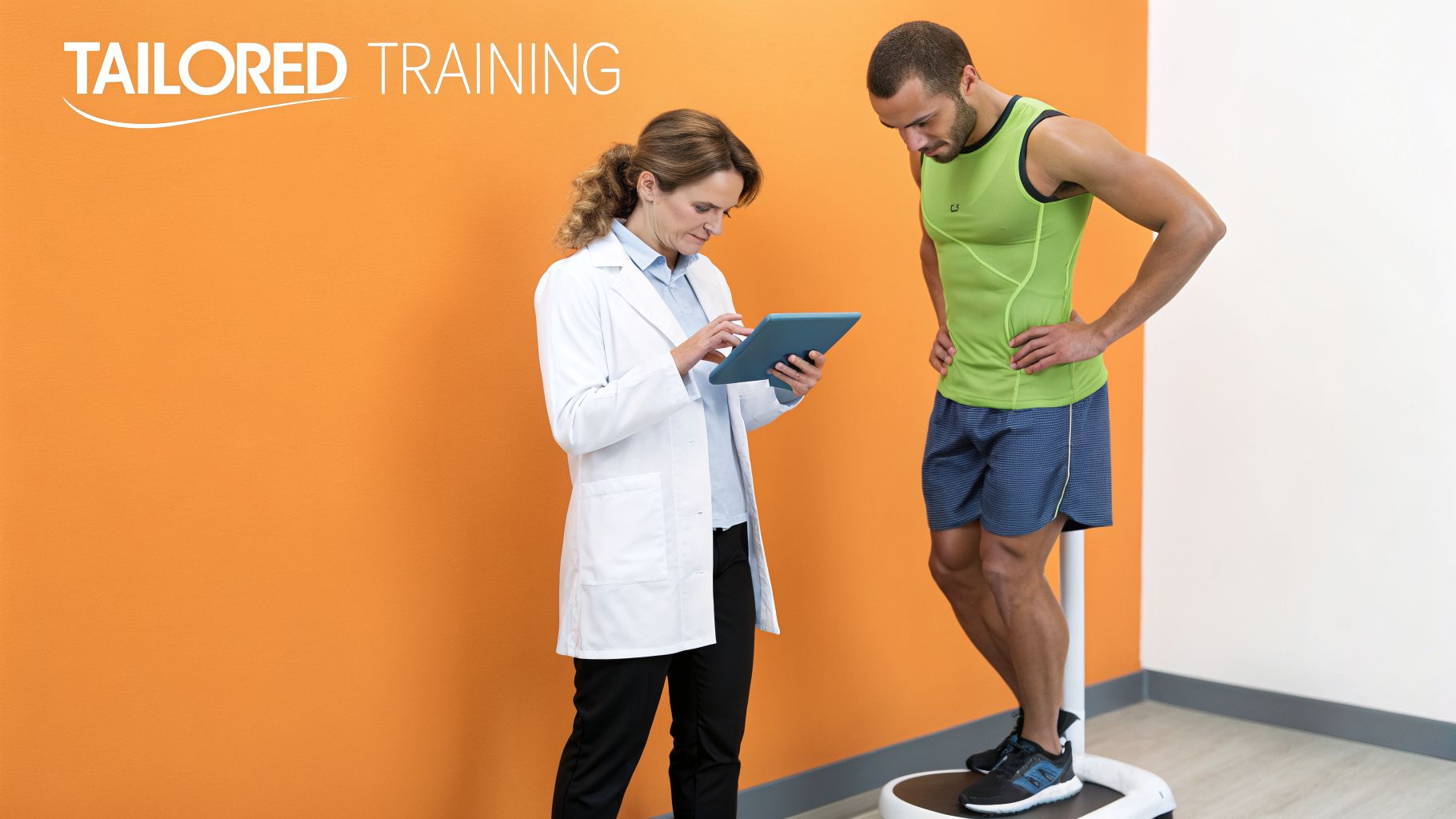
When it comes to improving reaction time, a one-size-fits-all program is doomed to fail. A competitive athlete, an older adult working to stay independent, and a child with developmental challenges all have completely different starting points, needs, and goals. To be effective, any training has to be tailored to the person, using hard data to guide the process and, most importantly, keep them safe.
This is never more critical than in complex cases like post-concussion care. I’ve seen it time and again: a person reports feeling 100% better, but objective testing reveals significant cognitive deficits still lurking beneath the surface. Relying on feelings alone isn't just misguided; it can be dangerous. A data-driven approach is the only way to make confident decisions about recovery and returning to activity.
Children With Developmental Challenges
For children, especially those with conditions like ADHD or autism, reaction time training isn’t about shaving milliseconds off a score. It’s about building the foundational skills they need for life. When a child struggles with processing speed, selective attention, or impulse control, everyday activities like participating in class or navigating a busy playground can feel completely overwhelming.
The key to reaching these kids is engagement. The training has to feel like play, not a chore. This is where game-based cognitive tools really show their value. Instead of boring, repetitive drills, children can jump into interactive exercises designed to strengthen specific cognitive weak points in a fun and motivating way.
Practical Example: An occupational therapist might use a program like our ReadON platform with a child who has trouble following instructions. A specific game could ask the child to quickly match a visual symbol to a sound cue. By framing it as a game with points and rewards, the child stays focused while actively building the neural pathways for auditory processing and response speed.
This approach lets therapists gather objective performance data without the pressure of a formal test. You can see more on how an occupational therapist for autism can integrate these tools into their practice in our guide.
Older Adults and Fall Prevention
In our work with older adults, we see how a faster reaction time is directly tied to safety and quality of life. The ability to react quickly to a slip or a sudden loss of balance can be the difference between a minor stumble and a life-altering fall. As we get older, our processing speed and motor responses naturally slow down, which makes targeted training a vital part of healthy aging.
Training for this population should zero in on multi-sensory and dual-task exercises that mirror real-world challenges. It's not just about hitting a button when a light flashes; it's about processing information while also performing a physical movement.
Actionable Drill: Have the person walk in a straight line while a partner calls out simple math problems (e.g., "What's 5+3?"). This forces the brain to manage both a cognitive task (the math) and a motor task (walking), directly improving the cognitive flexibility needed to prevent falls.
This kind of dual-task training builds a more resilient cognitive system, helping older adults maintain their independence and move through their daily lives with more confidence.
Post-Concussion Recovery and Athletes
Clearing an athlete to return to play after a concussion is one of the highest-stakes decisions a clinician can make. The athlete may feel free of symptoms, but hidden cognitive deficits can persist, putting them at serious risk for re-injury if they get back in the game too soon. Subjective reports of "feeling good" are simply not enough.
This is where objective data becomes non-negotiable. Research has repeatedly shown that major deficits can remain long after concussion symptoms disappear. For instance, one study found that symptom-free individuals post-concussion had a driving composite reaction time of 676.19 ms, compared to 383.33 ms in healthy controls. That nearly 300 ms gap represents a huge, invisible safety risk. You can explore more on these persistent post-concussion deficits and their risks on PMC.
Case Study: A Data-Driven Return to Play
A neurologist was treating a university hockey player who, despite being cleared of concussion symptoms, still felt "a step behind" on the ice. The player was anxious to rejoin his team, but the neurologist was rightfully hesitant to give the all-clear based on feeling alone.
Using an AI-powered tool like our OrangeCheck assessment, the neurologist ran a 30-minute evaluation. The results generated a detailed cognitive profile that pinpointed a specific, measurable deficit in the player's selective attention and decision-making speed—even though his simple reaction time was normal.
This objective data was a game-changer. Instead of a vague "rest and see" plan, the neurologist could confidently prescribe targeted cognitive therapy. He used game-based exercises that specifically challenged the player's identified weaknesses. After three weeks of focused training, a follow-up assessment showed the player’s scores had returned to his pre-injury baseline. Armed with this data, the neurologist could clear him to play, certain that the underlying cognitive issue was resolved.
This data-first approach removes the guesswork, protects the athlete, and creates a clear, defensible path for making return-to-play decisions.
Your Questions on Reaction Time Answered
As you get ready to start training, it's completely natural to have a few questions pop up. We hear a lot of the same ones from clients, so we've put together some clear, practical advice to help you apply what you've learned and start improving your reaction time with confidence.
How Long Until I See Real Improvement?
This is the big one, isn't it? While everyone's starting point is different, most people begin to feel a difference within 2 to 4 weeks of consistent training. That means committing to about 15-20 minutes, maybe 3-4 times per week. Remember, consistency is far more important than intensity.
For objective, measurable changes that you can track with a clinical platform like Orange Neurosciences, you can expect to see statistically significant results within 4 to 6 weeks. Just don't forget that your progress is also tied to those hidden factors we talked about, like getting quality sleep and proper nutrition.
Are Free Online Reaction Tests Good Enough?
Those simple online tests can be a bit of fun for a quick, rough estimate, but they aren't reliable for tracking serious progress. The truth is, their results are easily skewed by dozens of factors completely outside of your control.
A simple online test can be affected by your monitor's display lag, your mouse's polling rate, and even your browser's performance. For accurate, meaningful data—especially in a clinical or high-performance setting—a standardised system is essential for a true picture of your cognitive function.
To reliably track your progress, you really need a comprehensive system like OrangeCheck. It’s built to control for all those variables and assesses a much wider range of cognitive skills, giving you a trustworthy view of how you're actually doing.
Can This Training Help With Conditions Like ADHD?
Yes, absolutely. We've seen how many of the core challenges associated with ADHD—like difficulties with processing speed, sustained attention, and impulse control—are the exact cognitive functions that reaction time training targets. By engaging in these specific drills, you are actively strengthening those neural pathways.
While this kind of training is not a cure, it can be an incredibly powerful tool as part of a broader management plan. We’ve seen it help improve focus and control in daily tasks, from the classroom to the workplace.
Is There a Limit to How Much I Can Improve?
Everyone has a physiological limit that's determined by their own unique nervous system, but the vast majority of us are nowhere near our peak potential. It's true that reaction time naturally slows as we age, but consistent training can significantly lessen this decline and lead to very noticeable improvements at any stage of life.
This is all thanks to neuroplasticity—your brain's incredible ability to reorganise itself by forming new neural connections. You might not achieve the reflexes of a 20-year-old Formula 1 driver at age 65, but you can definitely become much faster than your untrained peers, which is a huge boost to your safety, independence, and overall quality of life.
Ready to move beyond guesswork and start a data-driven journey to better brain health? At Orange Neurosciences, our AI-powered platform provides the precise cognitive assessments and targeted training you need to make real, measurable improvements. Discover how our tools can support your goals by visiting us at https://orangeneurosciences.ca. For more actionable insights like these delivered to your inbox, sign up for our newsletter on our website.
Orange Neurosciences' Cognitive Skills Assessments (CSA) are intended as an aid for assessing the cognitive well-being of an individual. In a clinical setting, the CSA results (when interpreted by a qualified healthcare provider) may be used as an aid in determining whether further cognitive evaluation is needed. Orange Neurosciences' brain training programs are designed to promote and encourage overall cognitive health. Orange Neurosciences does not offer any medical diagnosis or treatment of any medical disease or condition. Orange Neurosciences products may also be used for research purposes for any range of cognition-related assessments. If used for research purposes, all use of the product must comply with the appropriate human subjects' procedures as they exist within the researcher's institution and will be the researcher's responsibility. All such human subject protections shall be under the provisions of all applicable sections of the Code of Federal Regulations.


© 2026 by Orange Neurosciences Corporation