Define High Acuity: Indicators & Patient Care
Apr 10, 2026
A charge nurse is halfway through a shift. One patient is short of breath, another is confused and trying to get out of bed, a third looks stable on paper but has become strangely slow to answer simple questions. Everyone needs care, but not everyone needs the same level of attention right now.
That is where people often need to define high acuity clearly. Without a shared definition, teams rely on instinct, habit, or whoever speaks up first. In busy hospitals, rehabilitation centres, mental health services, and senior communities, that creates risk.
Acuity is not just a label. It is a practical way to decide who needs close monitoring, faster intervention, more staff time, and tighter coordination. It helps answer hard daily questions. Who can wait? Who cannot? Who is drifting toward crisis even if their chart still looks acceptable?
Many clinicians learn acuity through experience. The problem is that experience alone can make teams inconsistent. One person sees “complex but stable.” Another sees “high risk and about to deteriorate.” A better approach combines judgement with shared markers, common language, and repeated assessment, including cognitive changes that are easy to miss.
The Daily Challenge of Patient Acuity
At 10:15 in the morning, the unit feels manageable. By 10:40, it does not.
One patient’s oxygen needs have climbed. Another has started pulling at lines. A family member reports that a resident who is usually chatty now seems withdrawn and disorganised. None of these situations look identical, but each may signal rising acuity.
This is why acuity matters. It gives teams a disciplined way to prioritise care when time, staff, and beds are limited. It is also closely tied to safe handoffs, because a patient who looks “fine for now” can become the patient everyone is rushing to rescue an hour later if early warning signs are missed. That is one reason continuity matters so much across settings, from emergency care to rehab to long-term support. A useful companion read is this guide on continuity of care: https://www.orangeneurosciences.ca/guide/continuity-of-care
Why gut feeling is not enough
Experienced clinicians develop strong instincts. That helps, but instinct varies by person and by context.
A new nurse may overestimate danger. A seasoned therapist may underestimate how quickly a confused patient can fall. A busy physician may focus on vitals and miss a sharp decline in executive function or attention.
What acuity solves in practice
Acuity helps teams make practical decisions such as:
Observation level: Does this patient need intermittent checks or near-continuous monitoring?
Staffing intensity: Should this assignment go to someone with more critical care experience?
Escalation timing: Is it time to call for rapid review, psychiatric support, or a change in placement?
Care setting fit: Can this person remain safely where they are, or do they need a higher level of care?
When teams define high acuity the same way, they reduce argument at the bedside and improve speed in the moments that matter.
Understanding the Core Concept of High Acuity
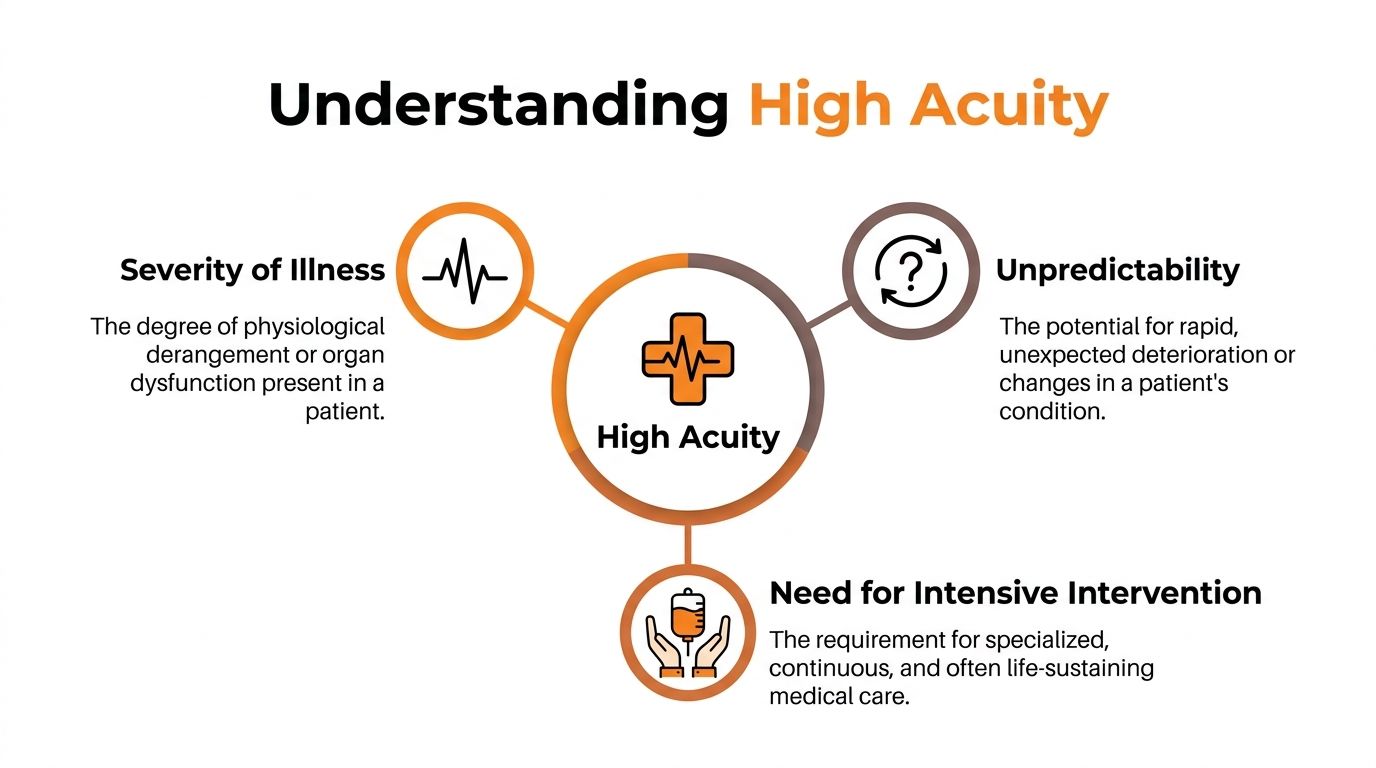
To define high acuity in plain language, start with one idea. High acuity means a patient’s condition is severe, unstable, or complex enough that they need immediate and intensive attention. In healthcare, that often includes life-threatening conditions and may require ICU-level care.
A weather analogy helps. Low acuity is a calm forecast. Moderate acuity is heavy rain with a chance of worsening. High acuity is a storm warning. You do not just watch. You prepare, mobilise resources, and act fast.
In acute care, this matters because well-designed acuity-based systems change outcomes. In California, implementing High Acuity Units reduced in-hospital mortality by 20% and increased hospital discharge rates by 26%, according to the source summarised here: https://www.droracle.ai/articles/142405/what-is-the-definition-of-low-medium-or-high
Three parts of the definition
Clinicians often confuse acuity with diagnosis alone. Diagnosis matters, but acuity is broader.
Core element | What it means in plain language | Practical example |
|---|---|---|
Severity | How sick the patient is right now | A patient with severe respiratory distress |
Unpredictability | How likely the condition is to worsen quickly | Someone who seems stable but can decompensate within hours |
Intervention needs | How much skilled support and monitoring are required | Frequent reassessment, IV therapy, close observation, specialist input |
A person can have a serious diagnosis and not be high acuity at this moment. Another patient can have a less dramatic diagnosis but be high acuity because their condition is changing rapidly and demands constant attention.
High acuity is about workload and risk
High acuity is about workload and risk, and teams often stumble here. High acuity does not just mean “very ill.” It also means the patient requires more decision-making, more frequent reassessment, and more coordinated action.
Think of two patients with chest pain. One is calm, improving, and awaiting routine workup. The other is pale, diaphoretic, and unstable. The diagnosis may still be under investigation, but the second patient is clearly higher acuity because the risk of deterioration is higher and the need for rapid intervention is immediate.
For clinicians who train staff in emergency response, educational material on signs of cardiac arrest and how to act fast can help reinforce how quickly a high-acuity event can unfold.
High acuity is not a personality trait of a patient or a permanent category. It is a current state of risk, instability, and care intensity.
Distinguishing Medical and Cognitive High Acuity
Many teams are comfortable identifying medical high acuity. Fewer are equally confident with cognitive or behavioural high acuity.
That gap matters. A patient may have stable blood pressure, acceptable oxygen levels, and no obvious surgical complication, yet still be in a high-acuity state because their thinking, judgement, behaviour, or emotional regulation has become unsafe.
Two lenses, one patient
Medical high acuity usually centres on physiology. Cognitive or behavioural high acuity centres on function, safety, and the risk created by changes in thinking or behaviour.
A patient with delirium may pull out lines, misinterpret care, or wander. A teenager with suicidal ideation may look physically stable while facing immediate psychiatric danger. A resident with advanced dementia may have no acute infection but may suddenly lose the ability to follow safety cues.
In California mental health systems, youth mental health emergencies rose 25% post-2020, and acuity-driven triage has been associated with a 30% reduction in psychiatric bed waits in integrated systems, as described here: https://www.springhealth.com/glossary/high-acuity
A related community resource on compassionate Alzheimer's and dementia care is useful for teams supporting families who are trying to understand behavioural risk outside the hospital.
For a deeper look at the concept itself, this guide on mental acuity is helpful: https://www.orangeneurosciences.ca/guide/mental-acuity-definition
Medical Acuity vs. Cognitive Acuity at a Glance
Aspect | Medical High Acuity | Cognitive/Behavioural High Acuity |
|---|---|---|
Main concern | Physiological instability | Unsafe thinking, behaviour, or emotional dysregulation |
Common warning signs | Respiratory distress, shock, altered vitals, rapid deterioration | Delirium, suicidal ideation, psychosis, severe executive dysfunction, impulsivity |
Immediate risk | Organ failure, arrest, need for critical intervention | Falls, self-harm, aggression, treatment refusal, missed deterioration |
Typical monitoring focus | Vitals, labs, airway, circulation, response to treatment | Attention, orientation, judgement, memory, behaviour, insight |
Staffing implications | Higher nursing intensity, specialist support, rapid escalation | Closer supervision, behavioural support, environmental controls, repeated cognitive checks |
Common mistake | Waiting too long to escalate because data is incomplete | Assuming “medically stable” means “safe” |
A practical example
Consider two patients in rehabilitation.
The first is recovering from surgery and has stable vitals. The second also has stable vitals, but becomes disorganised in the afternoon, forgets mobility instructions, and insists on walking alone despite high fall risk. The second patient may be the one who needs closer supervision at that moment, even without dramatic physiological findings.
This is the key distinction. Medical stability does not rule out high acuity. If cognition is driving safety risk, staffing needs, and likelihood of poor outcomes, the patient is high acuity through a different pathway.
Teams miss cognitive high acuity when they ask only, “How sick is the body?” They need to ask, “How safe is this person’s thinking and behaviour right now?”
Common Metrics and Scales for Measuring Acuity
Once teams can define high acuity conceptually, the next question is practical. How do you measure it?
Some tools are built for physiological deterioration. Others are observational or discipline-specific. None are perfect on their own, but they create shared language.
MEWS and what it tells you
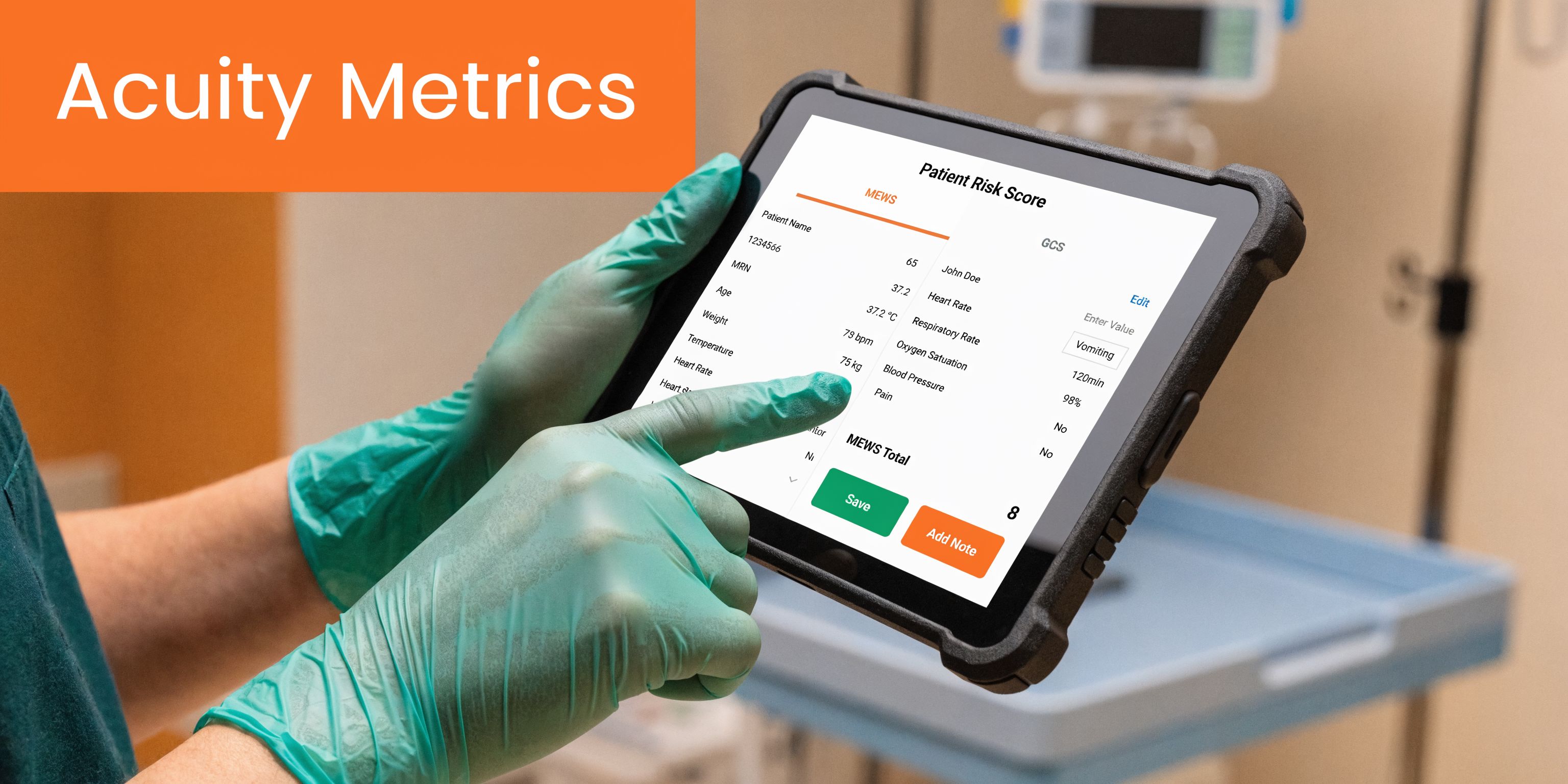
The Modified Early Warning Score (MEWS) is one example. It pulls together basic observations such as respiratory rate, pulse, blood pressure, temperature, and level of consciousness to flag patients who may be deteriorating. In the source used here, scores above 4 to 5 indicate high-acuity status. The same source notes that high-acuity emergency department patients account for about 25% to 30% of visits in Level I and II trauma centres in California and consume 60% to 70% of nursing resources: https://studyingnurse.com/study/acuity-in-healthcare/
That tells you something important. Acuity is not just about clinical danger. It is also about operational load.
Why scales help multidisciplinary teams
A good scale does three things:
Creates consistency: Staff stop using vague phrases like “not looking great” and start using agreed thresholds.
Supports escalation: A high score prompts action rather than debate.
Improves handoff quality: Incoming staff know whether to watch, reassess, or escalate.
Where cognitive indicators fit
Here is the blind spot in many systems. A patient’s MEWS may remain acceptable while their cognition worsens. They become slower to process instructions, miss safety cues, lose track of steps, or show a steep drop in attention. Those changes may come before a fall, behavioural crisis, medication error, or failed therapy session.
This is why cognitive screening belongs beside physical observation, especially in neurology, geriatrics, rehabilitation, and dementia care. If your team is reviewing options, this overview of cognitive screening tests for dementia is a useful starting point: https://www.orangeneurosciences.ca/guide/cognitive-screening-tests-for-dementia
A simple way to interpret acuity data
What you observe | What it may mean | What teams often do next |
|---|---|---|
Vitals worsening quickly | Medical acuity is rising | Escalate assessment, increase monitoring, review treatment response |
Vitals stable but behaviour abruptly changes | Cognitive or behavioural acuity may be rising | Increase supervision, assess cognition, review medications and environment |
Repeated small declines over several shifts | Trajectory is worsening even without a dramatic event | Tighten reassessment schedule and update care plan |
Improvement after intervention | Acuity may be decreasing | Maintain observation, then step down carefully |
Acuity tools are not replacements for judgement. They are prompts that help clinicians organise judgement more reliably.
How Acuity Guides Care in Diverse Clinical Environments
The meaning of high acuity shifts with the setting. The principle stays the same. The signals, actions, and risks change.
In the ICU and acute hospital
In intensive care, high acuity usually looks obvious. A patient may need continuous monitoring, advanced respiratory support, rapid medication changes, or minute-to-minute reassessment.
The care response is equally intense. More equipment, tighter nurse ratios, faster access to specialist decision-making.
In rehabilitation and transitional care
Rehabilitation settings create a different kind of challenge. Patients may not look critically ill, yet their progress depends on endurance, attention, memory, sequencing, and insight.
A patient who cannot retain safety instructions or suddenly loses processing speed may fail therapy, become frustrated, or attempt unsafe movement. In that setting, acuity affects treatment timing, supervision level, and discharge planning more than ventilator settings or vasopressor use.
In skilled nursing and long-term care
In California skilled nursing facilities, high-acuity dementia residents have a 40% higher fall risk and a 25% increased hospitalisation rate. The same source states that frequent cognitive and physical assessments can reduce adverse events by up to 35% through proactive intervention: https://sunnyvista.org/blog/determining-acuity-levels-and-their-assessed-frequency/
That is a strong reminder that in long-term care, acuity often hides in behaviour, function, and daily fluctuation rather than in dramatic emergency signs.
For teams building whole-person care plans, this guide to detailed geriatric assessment is worth reviewing: https://www.orangeneurosciences.ca/guide/comprehensive-geriatric-assessment-canada
In community mental health
Acuity in mental health may centre on suicidality, psychosis, severe agitation, or the inability to maintain safety in the community. The needed intervention may be crisis stabilisation, close observation, environmental protection, or step-up services rather than medical critical care.
One concept, different actions
Setting | What high acuity often looks like | Immediate priority |
|---|---|---|
ICU | Physiological instability | Stabilise and monitor continuously |
Rehabilitation | Cognitive barriers affecting participation and safety | Adjust therapy, supervision, and timing |
Skilled nursing | Dementia-related falls, wandering, behavioural change | Increase assessment frequency and environmental safeguards |
Community mental health | Crisis risk, unsafe thoughts, severe dysregulation | Rapid triage and protective intervention |
Acuity is useful precisely because it adapts. The label alone does not guide care. The context does.
The Shift to Proactive Cognitive Acuity Monitoring
Traditional acuity assessment is often reactive. Staff notice a fall, a behavioural crisis, a failed therapy session, or a sudden inability to follow instructions. Then the team reassesses.
That is late.
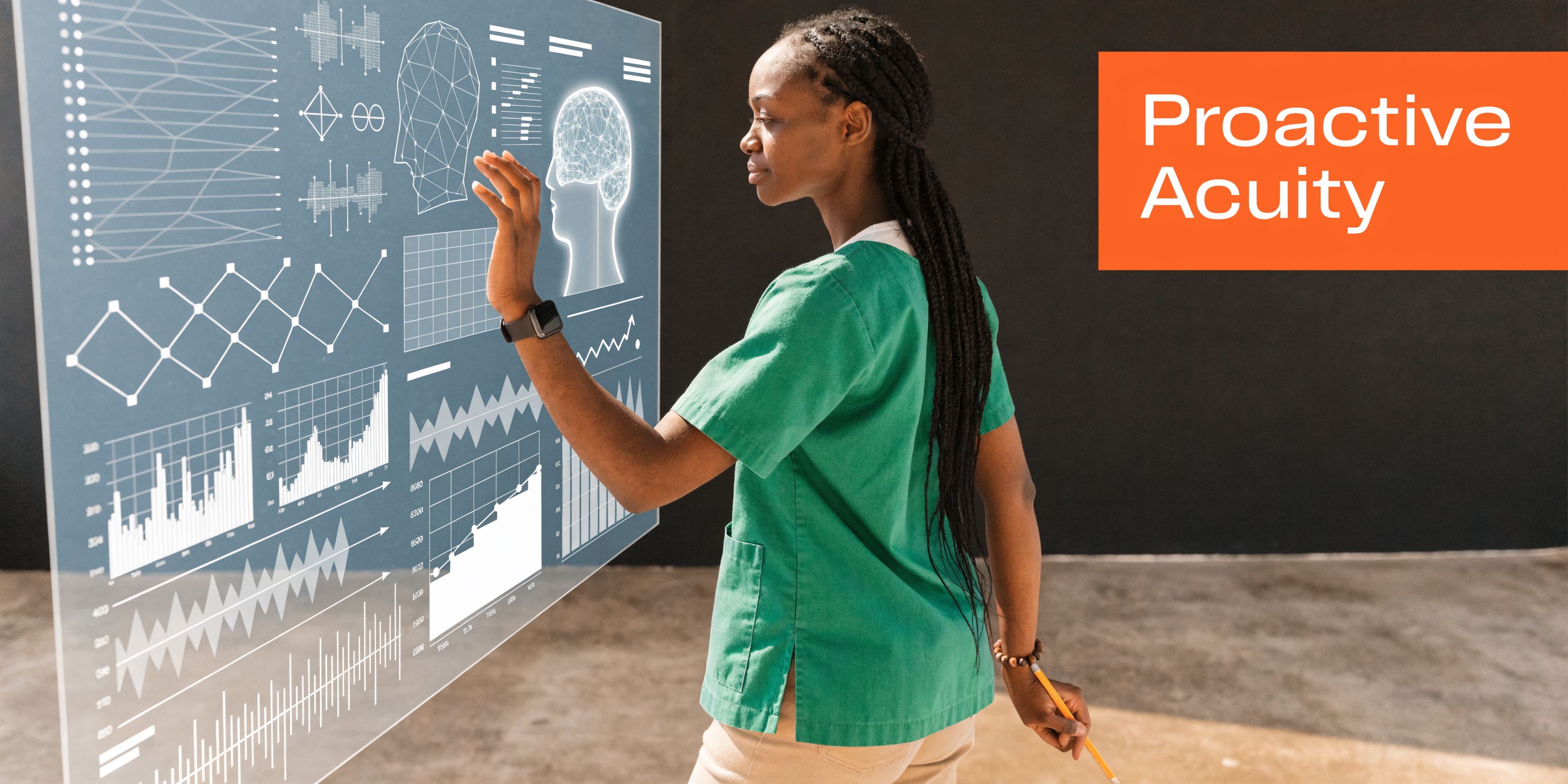
A major gap in current care models is the lack of continuous or semi-continuous cognitive monitoring. The source used here notes that acuity changes are often detected reactively, while brief, repeated cognitive assessments may identify deterioration patterns within days and allow earlier intervention: https://degree.astate.edu/online-programs/healthcare/rn-to-bsn/high-acuity-nursing/
Why this changes the definition
When teams define high acuity only by crisis-level medical signs, they miss an earlier phase. That earlier phase may include:
Attention lapses: The patient stops tracking instructions reliably.
Memory slips: New information is lost almost immediately.
Executive dysfunction: Planning, sequencing, and impulse control decline.
Processing slowdown: Tasks that were manageable yesterday become confusing today.
These changes may predict a poorer trajectory even before a dramatic event occurs.
From snapshot to trend
Acuity should not be treated as a one-time stamp. It is more useful as a moving signal.
A single bedside impression tells you what the patient looks like now. Repeated objective checks tell you whether the patient is climbing toward risk or moving away from it.
The smartest acuity systems do not wait for collapse. They detect drift.
That shift matters in rehabilitation, senior care, neuropsychiatry, and post-acute care. If cognitive performance can be tracked quickly and consistently, teams can personalise therapy sooner, adjust supervision earlier, and make stronger decisions about escalation, discharge, or added support.
Putting Acuity Insights into Practice
To define high acuity well, keep the concept simple. It means the patient has a level of severity, instability, complexity, or cognitive risk that demands more immediate attention and more intensive support.
The most useful teams do three things consistently:
They assess both body and mind.
They use shared metrics instead of relying on guesswork alone.
They reassess over time rather than treating acuity as fixed.
That is especially important in person-centred models of care, where safety, function, cognition, and goals must be considered together. This guide on client-centred care connects well with that approach: https://www.orangeneurosciences.ca/guide/client-centered-care
If your organisation is trying to improve prioritisation, staffing decisions, cognitive tracking, or care transitions, the next step is not to create more paperwork. It is to choose a clearer framework for repeated, actionable assessment.
Frequently Asked Questions About Patient Acuity
Is high acuity the same as critical illness
No. Critical illness is one form of high acuity, but not the only one.
A patient can be high acuity because of rapid deterioration risk, intense monitoring needs, severe behavioural instability, or major cognitive impairment that creates immediate safety concerns.
Can a medically stable patient still be high acuity
Yes.
This is one of the most common sources of confusion. A patient may have acceptable vitals and still require close supervision because of delirium, severe executive dysfunction, suicidality, psychosis, or dementia-related risk.
How often should acuity be reassessed
There is no single schedule that fits every setting. Reassessment should match the patient’s risk, recent changes, and care environment.
In practice, teams increase reassessment when they see shifts in behaviour, function, response to treatment, or safety events. The main principle is simple. The more unstable or uncertain the picture, the more often the patient should be reviewed.
Does acuity only affect nursing
No.
Acuity affects physicians, therapists, psychologists, care managers, support workers, and administrators. It influences staffing, therapy pacing, observation level, room placement, discharge readiness, and family communication.
What is the biggest mistake teams make with acuity
They treat it as static.
Acuity changes. Sometimes it changes quickly. Teams get into trouble when they record an acuity level once and stop looking for movement, especially cognitive movement that can alter risk before a visible crisis.
What helps teams apply acuity more consistently
Three habits help most:
Use shared language. Agree on what high acuity means in your setting.
Look beyond vitals. Include cognition, behaviour, and function.
Track trends. Compare today with yesterday, not just with a textbook normal.
Why does cognitive acuity matter so much now
Because many poor outcomes are tied to what patients can understand, remember, initiate, inhibit, and safely carry out. If those functions drop, risk rises, even when standard medical indicators look less urgent.
That is why cognitive acuity deserves the same disciplined attention that teams already give to heart rate, oxygenation, and blood pressure.
Orange Neurosciences helps clinicians, care teams, and researchers bring cognitive acuity into everyday practice with rapid, objective assessment and ongoing tracking. If you want a clearer view of attention, memory, executive function, processing speed, and related risk signals, visit Orange Neurosciences to explore the platform or contact the team by email for a conversation about your setting.
Orange Neurosciences' Cognitive Skills Assessments (CSA) are intended as an aid for assessing the cognitive well-being of an individual. In a clinical setting, the CSA results (when interpreted by a qualified healthcare provider) may be used as an aid in determining whether further cognitive evaluation is needed. Orange Neurosciences' brain training programs are designed to promote and encourage overall cognitive health. Orange Neurosciences does not offer any medical diagnosis or treatment of any medical disease or condition. Orange Neurosciences products may also be used for research purposes for any range of cognition-related assessments. If used for research purposes, all use of the product must comply with the appropriate human subjects' procedures as they exist within the researcher's institution and will be the researcher's responsibility. All such human subject protections shall be under the provisions of all applicable sections of the Code of Federal Regulations.


© 2026 by Orange Neurosciences Corporation