Safety Guide: can you sleep with a concussion? Myths and recovery tips
Mar 17, 2026
Let's tackle one of the most common—and stressful—questions that comes up after a head injury: can you sleep with a concussion?
The short answer is yes, you absolutely can, and in fact, you should. But there's a crucial first step: getting cleared by a doctor or other healthcare professional. Once that's done, rest isn't just a good idea; it's one of the most powerful tools you have to help your brain heal.
Where Did the Myth About Staying Awake Come From?
You've probably seen it in old movies: a character gets a knock on the head, and everyone panics, trying to keep them from drifting off. This advice is one of the most stubborn myths in first aid, but it comes from a place of genuine concern.
Before we had modern tools like CT scans, there was no easy way to see what was happening inside the skull. The biggest fear was a serious brain bleed, and the worry was that if someone fell asleep, they might slip into a coma without anyone noticing. Keeping them awake was the only way to monitor their condition.
Today, we know better. We now understand that sleep is when the brain does its most important repair work. Think of it like a city that needs to fix its roads after a major storm. You can't do that with traffic running everywhere. You have to shut things down. For the brain, sleep is that shutdown period, allowing it to clear out debris and mend damaged pathways without interruption.
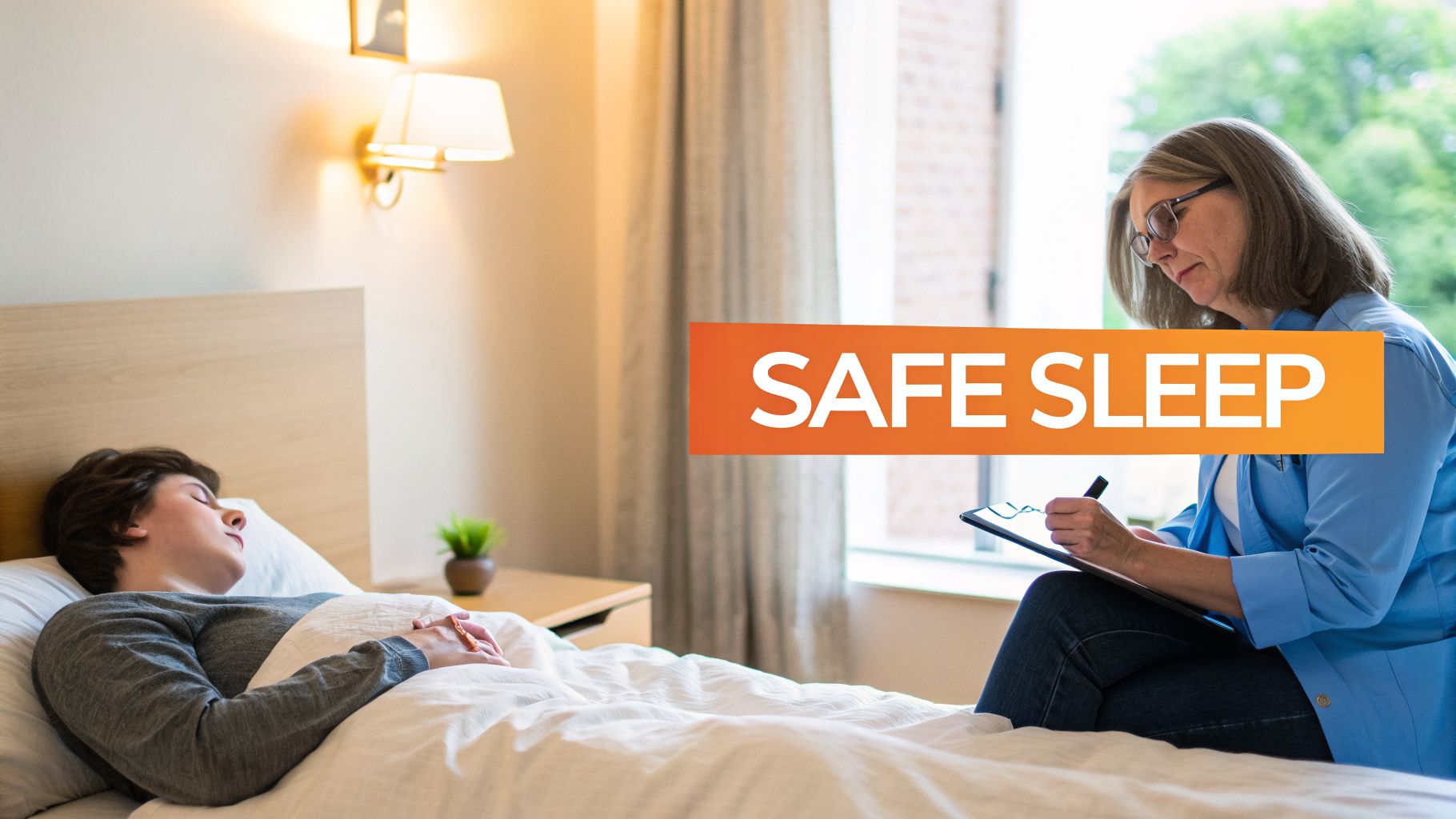
The Modern "Safe Sleep" Approach
So, why does the myth stick around? Because there's a nugget of truth buried in the old advice. It’s not about preventing sleep, but about making sure it's safe to sleep. The first few hours after a head injury are a critical observation window.
The modern, evidence-based approach involves two key steps:
Get a Medical Green Light: This is non-negotiable. Anyone with a suspected concussion needs to be seen by a professional. This quick check-up is essential to rule out more severe injuries, like a skull fracture or a brain bleed, that would require a trip to the emergency room. A practical example: After your child takes a tumble at the park and hits their head, take them to an urgent care clinic. The doctor will perform a quick neurological exam. If they say it's a mild concussion with no red flags, you have the green light for them to sleep.
Monitor, Don't Prevent: Once a doctor gives the okay, the person can and should sleep. The caregiver’s job then shifts to "active monitoring." This just means checking on them every 2-3 hours or so for the first night. You're not trying to wake them fully, just enough to make sure they are rousable and their breathing is normal.
This balanced "safe sleep" protocol gives the brain the rest it desperately needs while keeping a watchful eye out for any red flags. To help with this, it's crucial to know what you're looking for. Our detailed concussion symptom questionnaire is a great resource for identifying symptoms.
And remember, the need for good rest extends far beyond concussion recovery. A lack of quality sleep has wide-ranging health consequences, and it's well-documented how poor sleep increases fall risk and limits mobility, underscoring its importance for overall physical safety.
How a Concussion Changes Your Sleep Patterns
When you’ve had a concussion, your brain’s relationship with sleep gets complicated, fast. That overwhelming urge to rest is your body’s natural first-aid response kicking in. Think of your brain like a construction site that's just been hit by a storm; all non-essential work stops so every available resource can go towards damage control and repairs.
This massive repair job is incredibly energy-intensive. It's why so many people feel a deep, bone-wearying fatigue and an insatiable need for sleep, a state called hypersomnia. But in a cruel twist, the very same injury can throw the brain's sleep-regulating systems into chaos, leading to long, frustrating nights of tossing and turning—what we know as insomnia.
These two extremes—sleeping way too much or not at all—are both classic signs of a brain in recovery mode. Getting a handle on why this happens is the first step toward managing your sleep and getting back on track.
The Two Extremes of Post-Concussion Sleep
Right after a concussion, the brain’s delicate chemical orchestra is thrown completely out of tune. The injury can disrupt key neurotransmitters like melatonin, which manages our sleep-wake cycles, and orexin, which helps keep us awake and alert. This chemical imbalance is what lies at the heart of the two most common sleep issues we see after a head injury.
Hypersomnia (Feeling Overwhelmingly Tired): This is usually the first thing people notice. Your brain is facing an energy crisis, and sleep is simply the most efficient way to conserve its resources for healing. A practical example: You find yourself needing a two-hour nap in the afternoon just to make it to dinner, even though you slept for nine hours the night before. This isn't laziness; it's a sign your brain is working overtime to heal.
Insomnia (Struggling to Sleep): On the flip side, some people find it impossible to fall asleep or, just as frustratingly, stay asleep. This can stem from a mix of concussion-related factors, including the physical pain of headaches, anxiety about the injury itself, or a direct disruption of the brain's internal clock. A practical example: Despite being exhausted, you lie in bed for hours, your mind racing, or you wake up at 3 AM and can't fall back asleep.
It's not uncommon to get hit with both at once. You might feel drained and exhausted all day, only to find yourself staring at the ceiling the moment your head hits the pillow. This exhausting cycle really underscores just how complex brain recovery can be.
Why Sleep Disruption Is More Than Just an Inconvenience
These sleep problems aren’t just a side effect; they’re a central piece of the concussion puzzle and can seriously affect how quickly and how well you recover. When your sleep is off, your brain’s repair crews just can’t work as effectively.
A concussion doesn't just make you tired; it can fundamentally rewire your sleep architecture. The normal, restorative stages of deep sleep become fragmented. This means that even if you clock a full eight hours, you might not be getting the high-quality rest your brain desperately needs to heal.
This is exactly why "sleeping it off" isn't a reliable strategy on its own. The quality of your sleep matters every bit as much as the quantity. Persistent sleep issues can drag out other symptoms like headaches, brain fog, and mood swings, locking you into a vicious cycle that’s tough to break. In fact, we see a strong link between many of the long-term effects of concussion and chronic sleep problems.
The Long-Term Impact on Sleep
For most people, sleep patterns start to get back to normal within a few weeks. For a significant number of individuals, however, these issues can stick around for months or even years. We now know from research that sleep-wake disturbances (SWDs) are a stubbornly persistent problem, even after a seemingly mild concussion.
One major study really brought home how long these effects can linger. It found that among concussion patients who had sleep problems two weeks post-injury, nearly 50% were still reporting those same issues three months later. About a third were still struggling a full year down the road.
This long-tail disruption is why it's so critical to address sleep issues early on. If your sleep isn't getting better after a couple of weeks, it’s a clear signal that it’s time to check back in with your doctor. These lingering problems often need more targeted help than just rest alone.
The Hidden Link Between Concussions and Sleep Apnea
You’re doing everything right after a concussion. You're resting, staying off screens, and following every piece of medical advice. But the crushing fatigue, brain fog, and headaches just won’t let up. What if the real problem isn't the concussion itself, but something it triggered that's sabotaging your recovery every single night?
It’s a deeply frustrating scenario we see all too often, and it frequently points to a surprising culprit: obstructive sleep apnea (OSA), a serious sleep disorder that can be kickstarted by a head injury. Most people don’t connect sleep apnea with a concussion, but the link is stronger than you might think.
How a Head Injury Can Trigger Sleep Apnea
Your brain is the command centre for your body's automatic functions, including breathing. When you have a concussion, the injury can disrupt the complex signals the brain sends to the rest of the body. Think of it like a crossed wire.
During sleep, your brain is supposed to send a steady stream of commands to the muscles in your throat, keeping them just firm enough to hold your airway open. After a head injury, those signals can become weak or erratic. This causes the throat muscles to go limp and collapse, blocking off your airway.
Each time this happens, you stop breathing for several seconds. Your brain, sensing the dangerous drop in oxygen, jolts you just awake enough to tighten those muscles and take a breath. This can happen hundreds of times a night, but you'll likely never remember it. This is obstructive sleep apnea.
What makes this condition so tricky after a concussion is that its symptoms are nearly identical to post-concussion syndrome.
Persistent Headaches: Especially those awful morning headaches, which are often caused by a lack of oxygen overnight.
Intense Daytime Fatigue: No matter how long you sleep, your brain isn't getting the deep, restorative rest it needs.
Brain Fog and Poor Concentration: An oxygen-starved brain simply can't think clearly.
Irritability and Mood Swings: Chronic sleep deprivation wreaks havoc on your ability to regulate emotions.
Since relentless fatigue is a hallmark of post-concussion syndrome, it’s crucial to understand the critical connection between chronic fatigue and sleep apnea. Spotting this overlap is the first step toward getting the right help.
Unmasking the True Cause of Lingering Symptoms
Because the symptoms line up so perfectly, it's easy for both patients and clinicians to chalk it all up to a slow concussion recovery. We’ve seen young athletes sidelined for months with what everyone assumes are "lingering concussion symptoms," when undiagnosed sleep apnea is actually preventing their brain from getting the oxygen-rich sleep it desperately needs to heal.
The numbers are genuinely shocking. One key study of patients with post-concussion syndrome found that a staggering 78.4% were diagnosed with obstructive sleep apnea after undergoing a sleep study. This is a far higher rate than in the general population, and it shows just how often this condition is missed. You can read the full research about these post-concussion findings to see the data for yourself.
Actionable Insight: If you're a month post-concussion and still experiencing debilitating fatigue and morning headaches despite getting plenty of rest, ask your doctor about a sleep study. This simple, non-invasive test can determine if sleep apnea is the true culprit and open the door to effective treatment.
This is exactly where getting a clear picture of cognitive function becomes so important. By using rapid cognitive assessments, like the tools we’ve developed at Orange Neurosciences, clinicians can get a detailed baseline of functions like processing speed and attention.
When you pair that cognitive data with the results of a sleep study, the real problem often becomes clear. It allows your care team to separate the effects of chronic sleep deprivation from the primary brain injury. To learn more about this, check out our guide on concussion and sleep. This approach finally allows for the right treatment—whether that’s concussion-specific therapy, a CPAP machine for sleep apnea, or a combination of both—and gets you back on the path to feeling like yourself again.
How to Safely Monitor Someone After a Concussion
Alright, you've gotten the all-clear that it's safe for them to sleep. That's a huge relief. But now a new question creeps in: what am I supposed to do now? How do I actually monitor them properly without driving myself—and them—crazy with worry?
The first 24 to 48 hours are all about being a quiet, watchful presence. Think of yourself as the early warning system. Your job is to strike that delicate balance between letting the brain get the restorative sleep it desperately needs and making sure nothing more serious is developing under the surface. It’s less about being a frantic guard and more about being a confident, calm observer.
The Wake-Up Check Plan
The cornerstone of monitoring is the simple wake-up check. This sounds more dramatic than it is. You don't need to drag them into a full conversation every hour. The real goal is just to confirm they are rousable and that their condition isn't getting worse.
Here’s your actionable plan for that first night:
Set an alarm. Plan to check on them every 2-3 hours. For example, if they fall asleep at 10 PM, set alarms for midnight, 3 AM, and 6 AM.
Gently try to wake them. A soft shake of the shoulder and saying their name is usually all it takes.
Ask a simple question. If they stir, try something easy. “Hey, [Name], you doing okay?” A mumbled “I’m fine” or a grumpy “leave me alone” is actually a fantastic sign. It tells you their brain can process what you said and come up with a relevant reply.
Check their breathing. While you're there, just take a second to see that their breathing is steady and seems normal.
Let them rest. If they respond and their breathing is fine, let them drift back to sleep. The entire check-in might only take 30 seconds, giving you peace of mind and letting their brain get back to the crucial work of healing.
This decision tree gives you a quick visual for how to think about symptoms after a concussion.
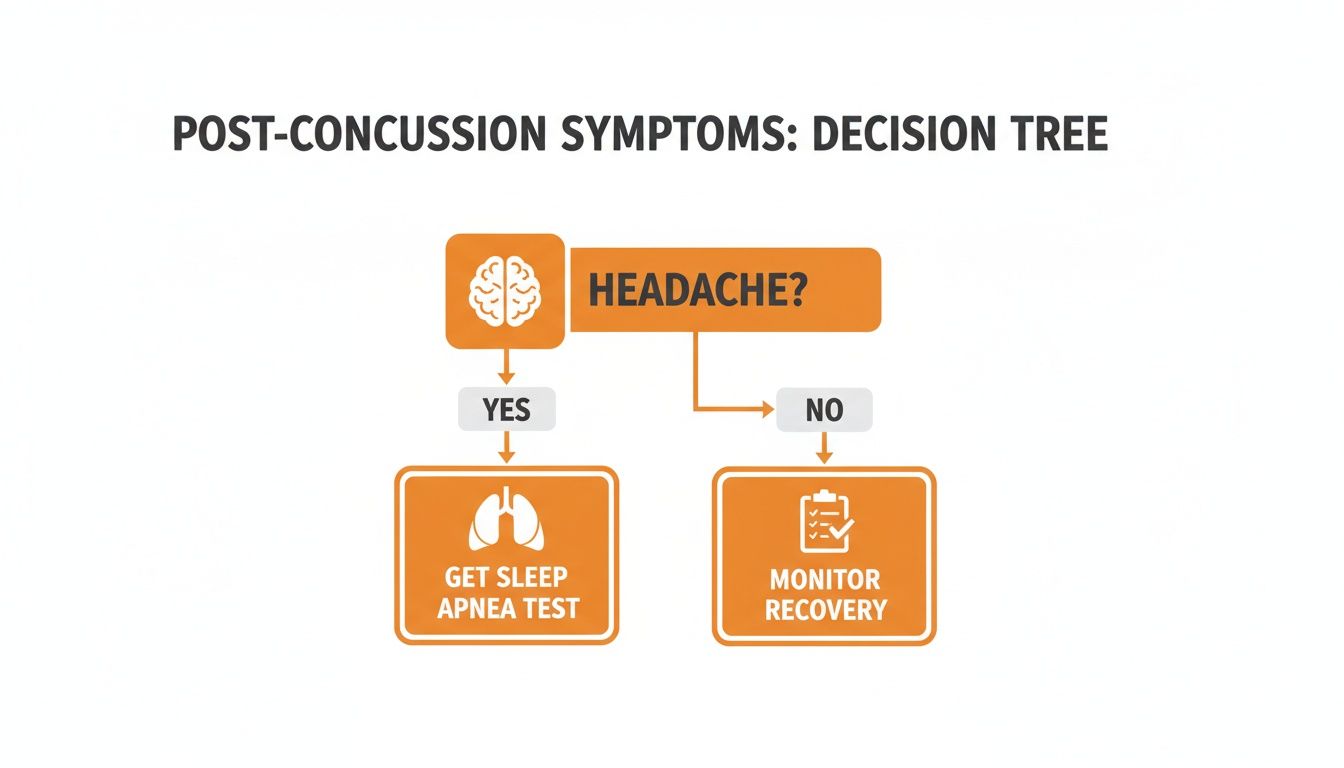
The key takeaway is that while some symptoms are part of normal recovery, others—like a persistent headache—might signal it's time to look into related issues, such as sleep apnea.
When to Go to the Emergency Room
The vast majority of concussions heal just fine at home. However, you absolutely must know the "red flag" symptoms that signal a true medical emergency, like a bleed in the brain.
If you spot any of the signs in the table below, it's time to go to the emergency room immediately. Don't wait.
Concussion Red Flag Symptoms Requiring Immediate Medical Attention
Red Flag Symptom | Description (What it Looks/Sounds Like) | Why It Is an Emergency |
|---|---|---|
Worsening Headache | A headache that becomes severe, unbearable, or suddenly spikes in pain. | Could indicate increasing pressure inside the skull from swelling or bleeding. |
Repeated Vomiting | Not just once right after the injury, but vomiting again and again. | A sign of significant brain irritation or rising intracranial pressure. |
Unusual Behaviour | Acting confused, agitated, irritable, or just not like themselves. | Suggests the injury may be affecting brain function more severely. |
Slurred Speech | Words are garbled, they're having trouble speaking, or can't find words. | Points to potential damage to the brain's language or motor control centres. |
Seizures | Any kind of convulsion, twitching, or uncontrolled shaking of the body. | A clear sign of abnormal electrical activity in the brain caused by the injury. |
Cannot Be Awakened | You cannot rouse them at all, even with a firm shake or loud voice. | Indicates a serious decrease in consciousness and is a critical emergency. |
This isn't just a list for the first night, either. These are warning signs to keep in mind throughout the entire initial recovery period. For a deeper dive into the full recovery journey, our guide on complete concussion management is a great resource.
Monitoring Children and Toddlers
When it comes to kids, especially toddlers and babies, the approach needs a slight adjustment. They can't always tell you what’s wrong with words, so you have to become a detective of their behaviour.
Practical Example: A normally happy 2-year-old bumps his head. After a nap, he won't stop crying, refuses his favorite snack, and just wants to be held. This change in behavior is a significant red flag. Trust your parental instincts—if something feels off, it’s always better to get it checked out.
While the wake-up check still applies, keep an eye out for these specific signs in children:
Inconsolable Crying: They simply will not stop crying, no matter what you try.
Changes in Eating or Nursing: A sudden refusal to feed or nurse is a big warning sign.
Lack of Interest in Favourite Toys: They seem unusually listless and have no interest in things they normally love.
Balance Issues: A toddler who was walking steadily is now wobbly or falling down.
By having a clear and practical plan, you can confidently manage those first 48 hours after a concussion, making sure your loved one is safe while getting the rest they need to heal.
Can You Oversleep with a Concussion?
After a head injury, the first instinct for many is to just curl up and hibernate. We used to hear the old advice to just “sleep it off,” and while we now know that quality rest is absolutely a cornerstone of recovery, some surprising research has turned that old wisdom on its head. It turns out, you can have too much of a good thing.
When it comes to a concussion, oversleeping might actually be a red flag. This isn't about skipping the crucial sleep your brain needs to heal. It’s about finding that healthy middle ground. Hypersomnia—that deep, bone-weary exhaustion—is a normal part of the process, but clocking excessive hours in bed could be a sign that recovery isn’t going as smoothly as we'd like.
Finding the Sweet Spot Between Rest and Recovery
Think of your brain's recovery like tending to a delicate plant. If you don't give it enough water (sleep), it’s going to wither. But if you give it too much, you can actually drown the roots and cause a whole new set of problems. The real goal is to provide just the right amount to help it thrive.
For a concussion, this means striking a careful balance between passive rest and gentle, active recovery. It might feel productive to spend the entire day in bed, but that can sometimes create a state of inertia that actually makes other symptoms, like fatigue and brain fog, feel much worse.
This is particularly true for adolescents. A landmark Canadian study involving 291 youths treated for concussions revealed that while sleep is vital, too much of it can be counterproductive. Researchers found that approximately 51% of children face sleep disturbances within the first week. More importantly, the study showed that sleeping too much was linked to worse outcomes. You can discover more about these findings on sleep and concussion recovery and see how this data challenges older ideas.
The study specifically linked average nightly sleep of more than 9.5 hours in the first week to a higher symptom burden. This effect became more pronounced with longer sleep durations, suggesting oversleeping may be a marker of a more difficult recovery ahead.
Why Does Too Much Sleep Hinder Recovery?
The link between oversleeping and prolonged symptoms is complex, but a few key theories are emerging. It's not that the sleep itself is causing more damage. Instead, think of the excessive need for sleep as a signal—an indicator of a more significant injury or a major disruption to the brain’s regulatory systems.
Oversleeping might be a sign that:
The initial injury was more severe: The brain could be demanding more resources simply because it has a bigger repair job to do.
Inflammation is higher: Significant inflammation in the brain can ramp up fatigue and the powerful drive to sleep.
Brain networks are dysregulated: The injury may have thrown the sleep-wake cycle so far off-kilter that it's struggling to find its natural rhythm again.
Essentially, needing to sleep for 11 or 12 hours a day isn't the cause of a poor recovery, but it’s a very clear symptom of one. For caregivers and clinicians, this is a critical signal that it's time to take a closer look.
Actionable Tip: Create a 'Rest and Active Recovery' Schedule
Knowing this, the focus shifts from just "getting more rest" to building a structured "rest and active recovery" plan. This approach is designed to honour the brain's need for healing while gently re-engaging it to help push recovery forward.
Practical Example of a Balanced Day
Here’s a sample schedule for a few days after a concussion, once the most acute symptoms have settled down:
Morning (9 AM): Wake up after a solid 8-9 hours of sleep. Start the day with a protein-rich breakfast.
Late Morning (11 AM): Try a light cognitive task that isn't screen-based, like listening to a podcast or an audiobook for about 15-20 minutes.
Midday (1 PM): Go for a short, 20-minute walk outside, preferably in a quiet area. Gentle movement is the goal here.
Afternoon (3 PM): If you feel that heavy fatigue setting in, schedule a 20-30 minute nap. It's important to keep it short to avoid messing with your nighttime sleep.
Evening (7 PM): Wind down with some quiet time with family, making sure to avoid bright lights and loud noises.
This isn't a rigid prescription, but more of a framework. The key is to introduce light activity in short, manageable bursts and pay close attention to symptoms. If an activity makes headaches or dizziness worse, you pull back. This is where having objective data can make a world of difference.
Cognitive tracking tools, like those we've developed at Orange Neurosciences, can help you and your doctor find that perfect balance. By getting an objective profile of your attention, memory, and processing speed, you can see exactly how different levels of activity are impacting your brain function. This data-driven approach takes the guesswork out of recovery, helping to personalize your plan and make sure you're moving forward safely. To see how this works, visit our website and see how our platform transforms recovery.
Guiding Your Recovery With Cognitive Assessments
Relying on how you feel to track a concussion recovery is a bit like trying to navigate a new city without a map. You might get there eventually, but you’re just as likely to take a wrong turn that delays you or, worse, leads you somewhere unsafe. When it comes to the brain, guesswork simply isn’t good enough. This is where objective cognitive assessments come in, providing the hard data needed for a safe, effective recovery plan.
After a concussion, it’s common to have days where you feel great, followed by others where brain fog and fatigue are overwhelming. This up-and-down rollercoaster of symptoms makes it incredibly difficult to know if you're truly ready to get back to your life. Are you healed, or just having a good day?

This is precisely the problem that modern cognitive assessments solve. They cut through the subjective feelings to give you a clear, measurable snapshot of your brain's actual performance.
From Guesswork to Precision
Think of a cognitive assessment as a detailed performance review for your brain. Instead of just asking, "How's your memory?" these tools measure it precisely. Platforms like OrangeCheck create a specific profile of your key brain functions, giving clinicians concrete data on areas like:
Attention and Concentration: How well can you focus on a task without getting sidetracked?
Processing Speed: How quickly can you take in information and react to it?
Memory: Are there measurable dips in your short-term or working memory?
Executive Function: How is your brain handling complex jobs like planning and problem-solving?
With this kind of objective data in hand, a clinician's job becomes much clearer. They can see exactly which cognitive "muscles" are still weak and need more time to heal before being put back to work.
A Practical Example: A Student-Athlete's Safe Return
Let’s imagine a teenage soccer player who got a concussion during a game. Two weeks later, she insists she feels fine and is desperate to play in the championship match. Her parents are nervous, and her coach is feeling the pressure to put her back on the field.
Without objective data, this decision is a tug-of-war between opinion and emotion. But if she completes a cognitive assessment, the entire situation changes.
The assessment might reveal that while her memory scores are back to her pre-injury baseline, her processing speed is still 15% slower than normal. This is a critical finding. It means her ability to react to a fast-moving ball or another player is compromised, putting her at a much higher risk for a second, more severe injury.
Armed with this data, the decision is no longer a guess. The clinician, coach, and parents can confidently agree to keep her on the sidelines, protecting her long-term brain health. This is where modern science meets practical care, preventing potentially devastating outcomes. You can learn more about tracking the full picture of recovery by exploring our guide on the Rivermead post-concussion symptom questionnaire.
This same principle applies to returning to school or work. An assessment can show whether a student is ready for a full day of classes or if an employee can safely return to a job that demands high levels of concentration. It empowers everyone involved to make informed decisions based on solid evidence, not just wishful thinking.
Ready to take the guesswork out of recovery? Visit our website to see how our platform can provide the clarity and confidence you need for a safe journey back to health.
Your Questions About Concussion and Sleep, Answered
When it comes to a head injury, it’s completely normal to have a flood of questions and feel a bit of uncertainty. Let's walk through some of the most common concerns we hear from families and caregivers about sleep after a concussion.
Should I Wake My Child Up Every Hour After a Head Injury?
This is probably one of the most persistent myths out there. The old advice to wake someone up every hour is no longer the standard of care.
Current medical guidance has shifted. Instead, for the first night, you should simply check on them every 2-3 hours. You don’t need to jolt them fully awake. Just a gentle nudge or saying their name to make sure they stir or respond is enough. The goal is to ensure their condition isn't getting worse, while still allowing their brain to get the deep, restorative rest it desperately needs to heal.
What if They Can’t Fall Asleep After the Concussion?
Trouble falling or staying asleep is incredibly common after a head injury. The brain’s internal clock gets thrown off, and when you add in pain from the injury or anxiety about the situation, insomnia can easily set in.
Here is an actionable plan to improve sleep:
Make the bedroom as dark, quiet, and cool as possible.
Put away all phones, tablets, and TVs for at least an hour before bed. The blue light is particularly disruptive.
Avoid caffeine or any other stimulants, especially in the afternoon and evening.
Practical Example: Try a "wind-down" routine. At 8 PM, turn off the TV, dim the lights, and listen to some calming music or a quiet audiobook for 30 minutes before trying to sleep. This signals to your brain that it's time to power down.
If insomnia hangs on for more than a few nights, contact your doctor. Getting enough sleep is a non-negotiable part of recovery, and persistent sleep problems can really slow things down.
Is It Okay to Use Sleeping Pills to Help?
This is a firm no, unless you have been explicitly told to do so by a medical professional. You should never take any sleep medication—including over-the-counter aids or even natural supplements like melatonin—without clearing it with a doctor first.
These substances can be dangerous because they might mask worsening symptoms that would otherwise be red flags for a serious problem. They can also get in the way of the brain's natural healing rhythms. Always get the green light from a professional before introducing any new medication after a concussion.
How Long Will Sleep Be a Problem After a Concussion?
There’s a wide range of normal here. For many people, sleep patterns start to get back on track within a couple of weeks.
However, it's not unusual for sleep disturbances to last for months. If you find that sleep just isn't improving with time, it's a really important sign that a follow-up evaluation is needed. A healthcare professional can help you get to the bottom of it and figure out the next steps for your recovery. For more personalized guidance based on your symptoms, feel free to sign up for our newsletter where we share the latest tips and research on concussion recovery.
Understanding how the brain is functioning is a critical part of a safe recovery. Orange Neurosciences provides objective assessments that take the guesswork out of the healing journey. Discover how our platform empowers clinicians and families with precise, data-driven insights by visiting our website.
Orange Neurosciences' Cognitive Skills Assessments (CSA) are intended as an aid for assessing the cognitive well-being of an individual. In a clinical setting, the CSA results (when interpreted by a qualified healthcare provider) may be used as an aid in determining whether further cognitive evaluation is needed. Orange Neurosciences' brain training programs are designed to promote and encourage overall cognitive health. Orange Neurosciences does not offer any medical diagnosis or treatment of any medical disease or condition. Orange Neurosciences products may also be used for research purposes for any range of cognition-related assessments. If used for research purposes, all use of the product must comply with the appropriate human subjects' procedures as they exist within the researcher's institution and will be the researcher's responsibility. All such human subject protections shall be under the provisions of all applicable sections of the Code of Federal Regulations.


© 2026 by Orange Neurosciences Corporation