8 Cognitive Assessment Examples: A 2026 Clinical Guide

You're often making the decision under pressure. A parent wants answers about attention at school. A family physician wants a quick screen for memory concerns. A rehab team needs to know whether a slow recovery reflects fatigue, executive dysfunction, or both. In each case, the first question isn't whether cognitive testing matters. It's which assessment gives you usable information without creating more delay than clarity.
That's why broad lists of cognitive assessment examples can be frustrating. They usually name tests, but they don't help much with interpretation, workflow, or next steps. A recall task, a clock draw, a timed sequencing exercise, and a digital attention task can all be useful, but they answer different clinical questions and carry different trade-offs.
Short screening tools became standard for a reason. A Cleveland Clinic overview notes that common cognitive screening formats can be completed in about 3, 10, or 15 minutes, depending on the tool, which fits the pace of primary care and other busy settings in its cognitive test overview. If you're also comparing developmental and behavioural pathways, Insight Diagnostics Global for ADHD and autism is one example of how adjacent assessment questions often overlap in real practice.
The better approach is simple. Match the tool to the referral question, know what poor performance might mean, and decide in advance what result would change care. The eight options below are practical cognitive assessment examples that clinicians, educators, and rehabilitation teams use for exactly that reason.
1. Montreal Cognitive Assessment MoCA
A common referral looks like this: an older adult still holds a normal conversation, pays the bills, and arrives to clinic alone, but the spouse reports repeated questions, missed appointments, and a new dependence on sticky notes. That is the lane where the MoCA tends to help most. It is built to catch mild cognitive changes that can slip past casual conversation and simpler bedside screens.
The value of the MoCA is its spread across domains. In about 10 minutes, it samples attention, language, visuospatial construction, abstraction, delayed recall, executive function, and orientation. That wider sampling matters because early decline is often patchy. A patient may stay fully oriented yet struggle with set shifting, word retrieval, or recall after a delay.
What it looks like in practice
The task mix is familiar but clinically useful if you score and interpret it carefully:
Delayed recall: learning a short word list, then retrieving it later
Executive function: alternating between numbers and letters or following a rule change
Visuospatial skills: copying a figure or drawing a clock accurately
Language and abstraction: naming items and explaining how two concepts are alike
Attention: digit span, vigilance, or serial subtraction
A quick total score helps with screening. The pattern of errors usually helps more.
For example, weak delayed recall with limited benefit from cueing raises a different concern than poor performance driven by slowed processing, anxiety, or weak attention during encoding. A disorganized clock drawing with intact naming and orientation can point toward visuospatial or executive difficulty that deserves a closer look. Those distinctions affect what happens next.
How to interpret it without overcalling it
The MoCA is a screen, not a diagnosis. I use it to decide whether the history and day-to-day function need a closer review, not to label a cause on the spot.
Three interpretation habits improve its usefulness:
Read the misses by domain, not only by total score. A mildly low score with a clear executive pattern can be more informative than a lower score scattered across tasks after poor effort or fatigue.
Check whether the result fits the story. If the patient reports sleep loss, depression, recent illness, medication changes, or limited education in the test language, those factors can pull the score down.
Pair the score with function. Ask what has changed at home, at work, or in medication management. Screening results matter most when they match real-world decline.
One practical trade-off is access. Paper screening is familiar and fast, but it still depends on trained administration, clean scoring, and follow-up availability. Digital platforms can reduce some of that friction by standardizing delivery, capturing response patterns automatically, and making repeat testing easier to compare over time. If you are deciding between classic screening options, this MoCA versus MMSE comparison guide gives a useful side-by-side view, and platforms such as Orange Neurosciences reflect the broader shift toward faster, more accessible cognitive assessment workflows.
A low MoCA should change the next step, not end the workup. Review medications. Screen mood and sleep. Get collateral history. Decide whether the patient needs repeat screening, a broader neuropsychological evaluation, or a more targeted digital battery that can test attention and executive control in greater detail.
2. Continuous Performance Test CPT
The CPT answers a narrower question than a broad cognitive screen. It asks how well someone can sustain attention, inhibit impulsive responses, and stay engaged over a repetitive task. That's why it comes up so often in ADHD workups, concussion follow-up, and return-to-learn or return-to-work planning.
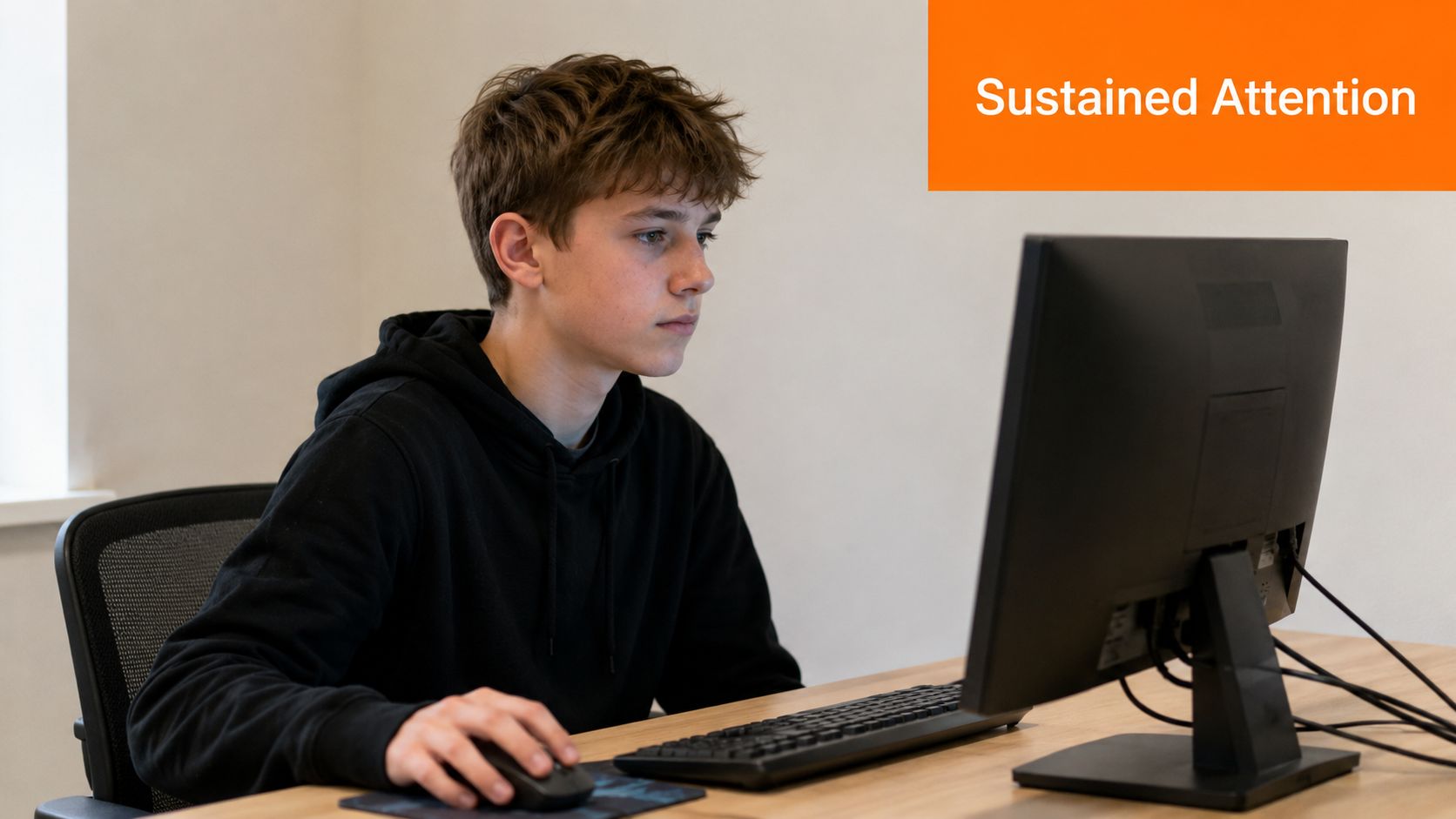
In real life, the CPT is most useful when the complaint is specific. “He can start tasks but drifts off.” “She's fast but careless.” “Since the concussion, he can't stay on task long enough to finish assignments.” Those are attention regulation questions, not general intelligence questions.
What clinicians should watch for
Most CPTs present repeated targets and non-targets while the patient responds under time pressure. The output usually focuses on accuracy, response consistency, and commission versus omission patterns. The appeal is objectivity. The risk is overconfidence.
A poor CPT can reflect distractibility, yes. It can also reflect fatigue, anxiety, poor sleep, misunderstanding of instructions, low motivation, visual strain, or a testing room with too many interruptions. I'd treat CPT results as strongest when they match the history and the behavioural observations, not when they stand alone.
Helpful administration habits:
Control the setting: Reduce noise, movement, and interruptions before you start
Clarify the rule: Ask the patient to explain the task back to you
Time around medication thoughtfully: If stimulants or sedating medications are relevant, note the timing
Watch effort in real time: Performance drop-off can be as informative as global weakness
A flat, error-filled CPT from a patient who looks exhausted should trigger a workflow question before it triggers a diagnostic label.
Among cognitive assessment examples, the CPT is one of the clearest reminders that precision depends on context. Good data can still produce the wrong conclusion if the setup is poor.
3. Cambridge Neuropsychological Test Automated Battery CANTAB
CANTAB sits in a different category from quick office screens. It's a computerized battery that lets you sample specific domains with more granularity, often through touchscreen tasks. That makes it attractive when you need more than “impaired or not impaired” but don't yet need a full traditional neuropsychological battery.
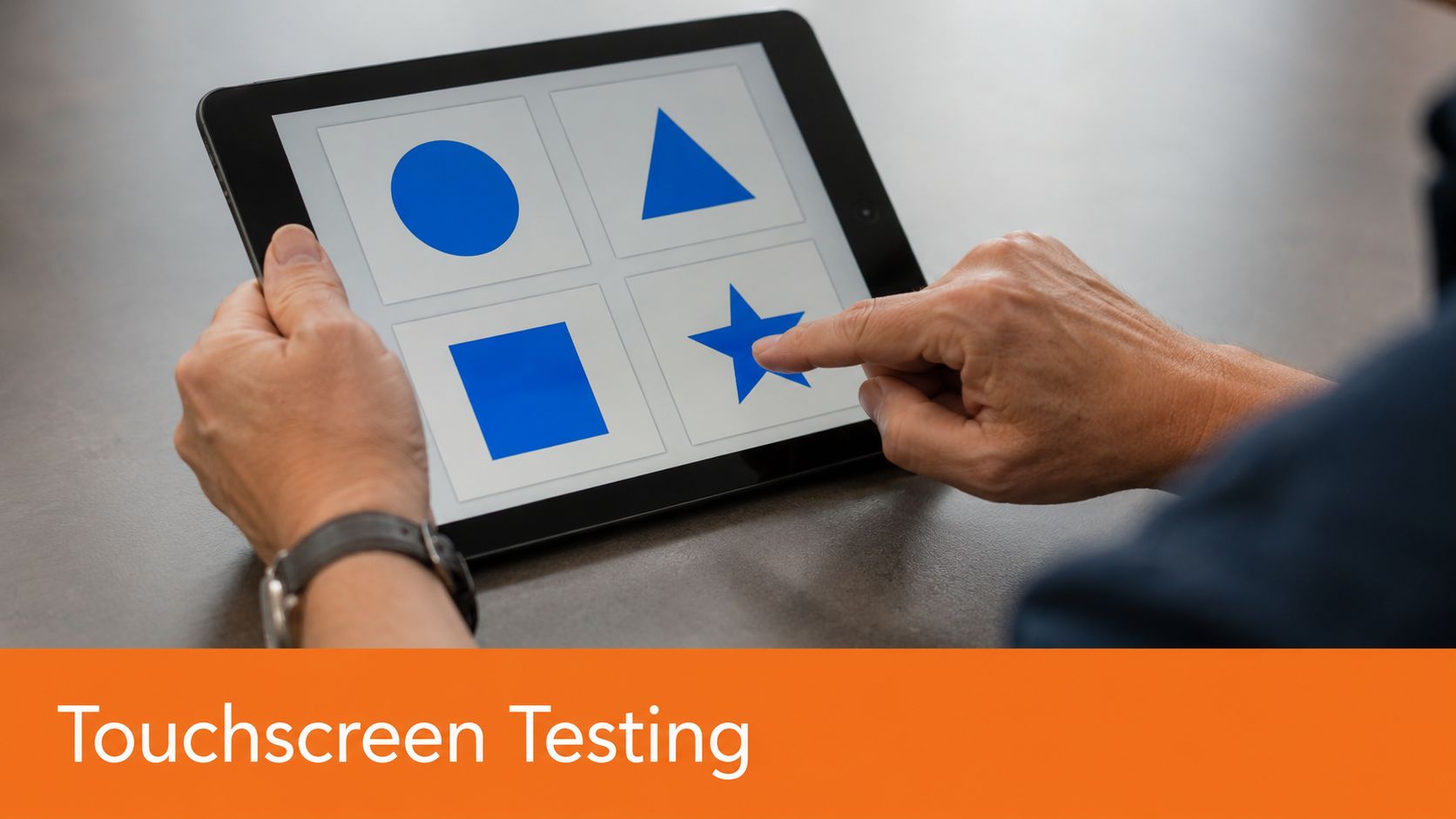
A useful vignette is a memory clinic patient whose brief screen is borderline, but whose family reports a clear functional shift. Another is a research participant or clinical trial candidate who needs repeatable, standardized measurement across visits. In those situations, digital batteries can help separate memory encoding issues from retrieval difficulty, or executive inefficiency from generalized slowing.
When it works best
CANTAB is strongest when you choose subtests to answer a hypothesis. If the referral question is executive dysfunction after neurological illness, build around that. If the concern is early memory change, choose tasks that test the memory systems you care about. Running broad digital batteries without a plan often gives you more output but not more clarity.
Good practice usually looks like this:
Start with the referral question: Don't let the software choose your clinical priorities
Orient the patient first: Touchscreen unfamiliarity can distort results
Standardize repeat testing: Same room, similar timing, similar instructions
Integrate with behaviour: Hesitation, frustration, and strategy use matter
What doesn't work is treating digital output as self-explanatory. A clean graph can hide a messy testing session. If the patient repeatedly asks for instructions, uses a highly inefficient strategy, or struggles with the device itself, those observations belong in the interpretation.
Among modern cognitive assessment examples, CANTAB shows the upside of digital testing clearly. Better repeatability, cleaner timing data, and easier longitudinal comparison. The trade-off is that clinicians still need to do the interpretive work.
4. Wechsler Adult Intelligence Scale WAIS and Wechsler Intelligence Scale for Children WISC
The Wechsler scales remain central when the question is cognitive profile, not just screening. They help when you need to understand strengths and weaknesses across verbal reasoning, working memory, processing speed, and related domains in a structured way. That's why they appear so often in school planning, developmental assessment, acquired brain injury work, and complex differential diagnosis.
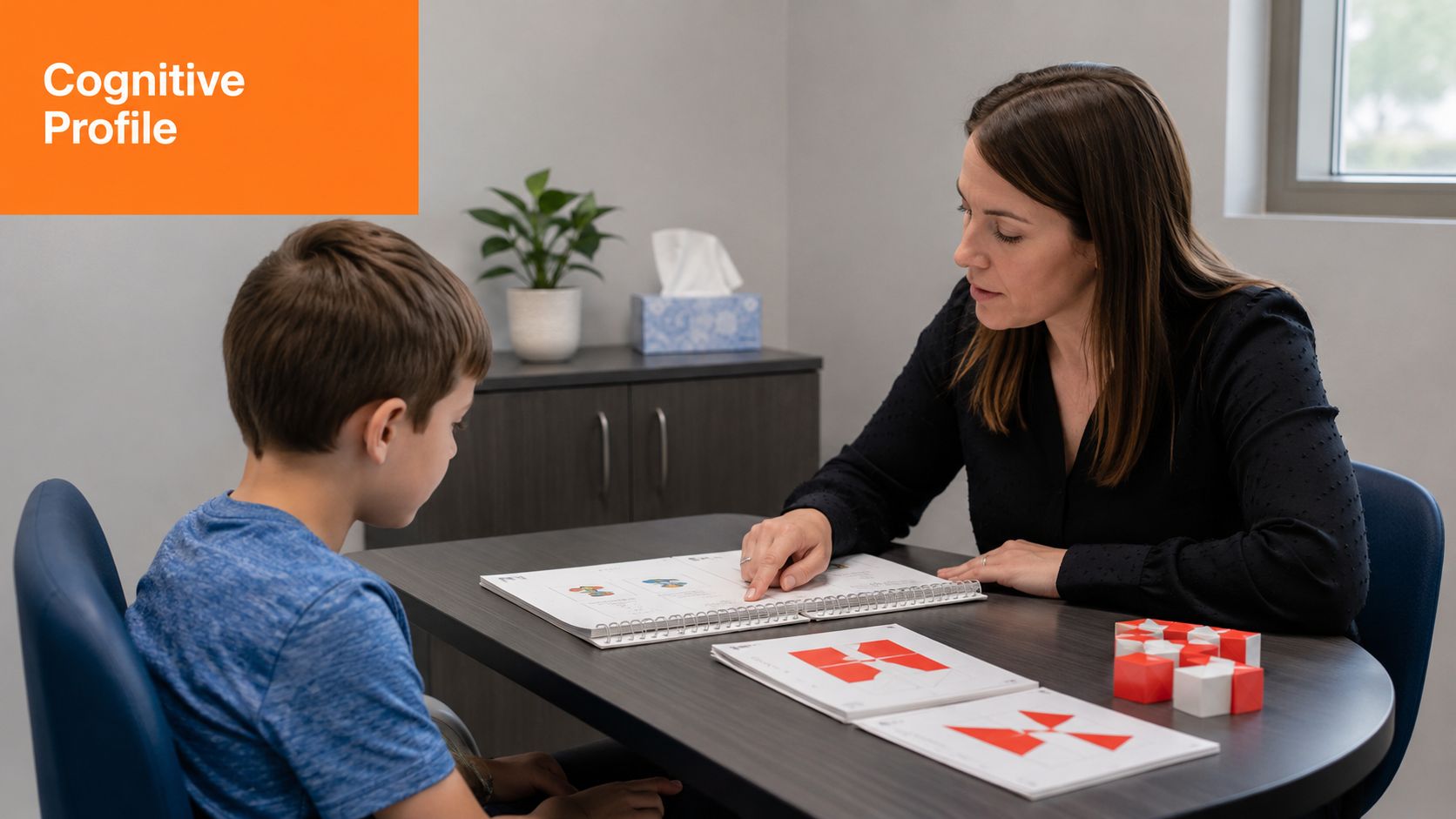
A common school-age scenario is the child who seems bright in conversation but falls apart with timed work, written output, or multi-step instructions. A total score won't explain that. The subtest pattern might. You may see strong verbal reasoning paired with weaker working memory or processing speed, which changes how you talk to teachers and families about support.
What to pay attention to beyond the scores
The best Wechsler interpretations combine performance data with behaviour during testing. Did the child give up quickly on difficult visual tasks? Did the adult need repeated redirection? Did anxiety spike when timing was introduced? Those observations often explain discrepancies that would otherwise look puzzling.
A few practical habits make these tests much more useful:
Test at the right time of day: Fatigue can distort speed and working memory
Build rapport early: Especially with children, cooperation changes the quality of the data
Record strategy use: Slow doesn't always mean weak. It may mean cautious or perfectionistic
Use strengths actively: Strong verbal reasoning or visual problem-solving can guide intervention planning
If you work with school-age referrals, this guide to the Wechsler Intelligence Scale for Children is a practical reference point.
The biggest mistake with WAIS or WISC is reducing the whole profile to one label. These tools are most valuable when they help answer, “What does this person do well, where do they struggle, and what should we change because of that?”
5. Mini-Mental State Examination MMSE and revised versions such as 3MS
A common consult starts this way: an older adult is more forgetful than usual, the family is worried, and the team needs a quick baseline before deciding what happens next. The MMSE still fills that role because it is familiar, fast, and easy to repeat across settings.
Used well, the MMSE gives a brief sample of orientation, immediate recall, delayed recall, attention, language, and simple visuoconstruction. The 3MS expands that screen with broader item coverage and often gives a bit more range when a plain MMSE score feels too blunt. The trade-off is practical. A shorter tool fits busy primary care or inpatient workflows, but brevity also means missed mild impairment, especially when the concern is early change or frontal-executive difficulty.
Where the MMSE still earns its place
The MMSE is useful when the immediate question is basic cognitive status, not a fine-grained profile. That includes hospital delirium workups, admission screening in long-term care, and follow-up visits where you need to know whether someone looks roughly stable or clearly worse.
Common item types include:
Orientation: date, location, and situation
Registration and recall: repeating words, then recalling them after a delay
Attention: serial subtraction or spelling a word backward
Language and comprehension: naming, repetition, reading, writing, and following a command
Construction: copying a simple figure
Interpretation matters more than the total alone. A patient who loses points mainly on orientation during an acute illness raises a different question from a patient who manages orientation but misses delayed recall, misnames objects, and struggles to follow written instructions. The first pattern may fit fluctuating medical or environmental factors. The second may push you toward a fuller dementia workup.
One caution comes up often in practice. A respectable MMSE score can falsely reassure clinicians when the underlying problem sits in planning, judgment, or real-world task management. If family reports missed bills, unsafe driving, repeated medication errors, or getting lost on familiar routes, those functional changes outweigh a mildly reassuring screen.
The revised 3MS can help when you want a broader bedside measure without moving straight to a full battery. If the referral question is more about flexibility, feedback use, and set shifting than memory or orientation, a tool focused on executive control may answer more. This Wisconsin Card Sorting Test guide for clinicians is a useful reference for that distinction.
Among cognitive assessment examples, the MMSE still has a place. It works best as an opening screen, followed by clinical history, informant report, and, when needed, a digital or standardized follow-up that captures the deficits the MMSE often misses.
6. Wisconsin Card Sorting Test WCST
The WCST is the test many clinicians think of when they want to stress executive flexibility. It asks the patient to discover a sorting rule, adapt when the rule changes, and avoid getting stuck on a now-wrong strategy. That makes it particularly revealing when the referral question involves frontal systems, planning, error monitoring, or cognitive rigidity.
A practical use case is the patient who can answer direct questions reasonably well but struggles when routines change. Another is the adult recovering from neurological injury who seems “fine” until work demands require set shifting, self-correction, and complex problem solving. The WCST often exposes that gap between basic competence and real-world flexibility.
What the error pattern can tell you
This isn't just a right-or-wrong exercise. Perseverative responding matters. So does how the person reacts after feedback. Some patients notice the pattern shift and adapt. Others keep applying the old rule despite repeated evidence that it no longer works.
That difference can shape rehabilitation planning:
Frequent perseveration: Think about cognitive rigidity and poor feedback use
Rapid frustration: Consider emotional regulation and stamina, not just executive skill
Slow but adaptive performance: That may support compensatory strategies rather than broad pessimism
Chaotic responding from the start: Recheck comprehension, attention, and effort
The Wisconsin Card Sorting Test guide is helpful if you need a concise clinical refresher.
What doesn't work with the WCST is interpreting it in isolation. Anxiety, low frustration tolerance, and reduced task engagement can all worsen performance. The test is informative, but only if you separate executive dysfunction from the emotional and situational factors that can mimic it.
7. Trail Making Test TMT A and B
The Trail Making Test is one of the fastest ways to sample processing speed, visual scanning, sequencing, and set shifting. TMT-A is simpler and often reflects speeded sequencing and attention. TMT-B raises the demand by requiring alternation, which pulls in executive control more directly.
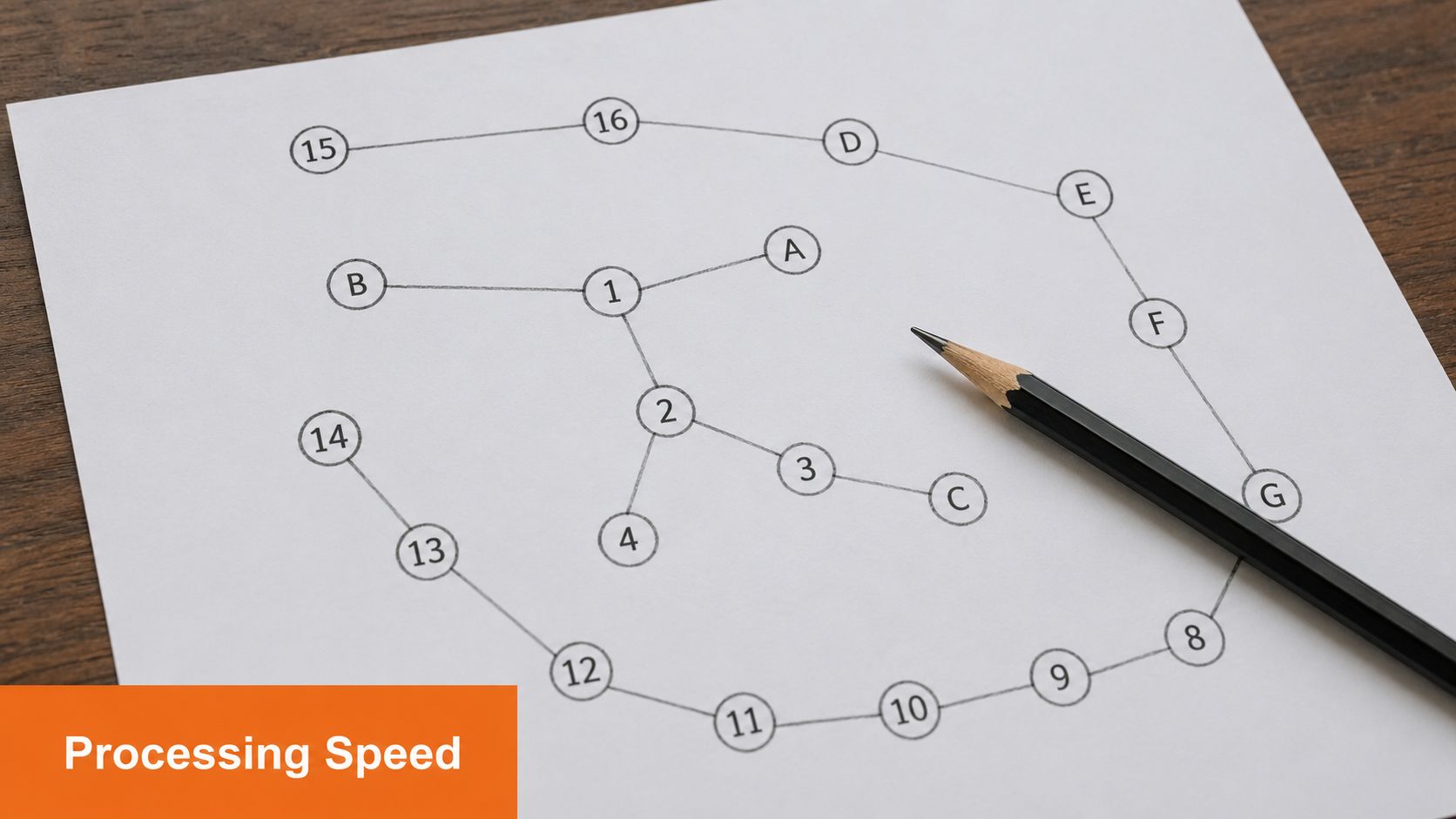
This test is especially useful when you need a quick read during neurology, rehab, or geriatric assessment. A patient who moves smoothly through Part A but becomes disorganized on Part B raises a different concern than someone who is slow on both because of visual or motor issues.
A simple test with easy traps
The biggest interpretation error is assuming Trails only measures cognition. It doesn't. Vision, literacy with letters, hand speed, tremor, pain, and anxiety can all affect performance. If a patient struggles to see the page or manipulate a pencil, the timing result won't mean what you think it means.
Keep these practical checks in mind:
Screen visual and motor barriers first: Otherwise the cognitive interpretation gets muddy
Use the practice items seriously: They catch misunderstanding early
Document qualitative errors: Rule violations and self-corrections matter
Compare A and B thoughtfully: The contrast can be more informative than either score alone
Fast completion with repeated self-corrections tells a different story than slow, methodical, accurate work.
If you want a clinical overview before using it in workflow, this Trails A and B guide is a solid reference.
Among cognitive assessment examples, TMT is one of the highest-yield tools for the time invested. It's quick, but it rewards careful observation.
8. Flanker Task and Attention Network Test ANT
The Flanker Task and ANT are strong examples of how digital assessment can isolate attention mechanisms that look blended together in conversation. Instead of asking whether attention is “good” or “bad,” these tasks can help clarify conflict monitoring, distractor interference, readiness, and selective focus.
That matters when a patient's complaint is slippery. A child may look inattentive in class but struggle most when competing information is present. An anxious adult may report poor concentration, yet the bigger issue may be conflict resolution under stress rather than sustained attention across the board. These distinctions can shape intervention choices.
Why these tasks are useful in modern workflows
Digital attention tasks are increasingly practical because they can be delivered outside traditional clinics. The U.S. Office of Personnel Management defines cognitive ability tests as measures of reasoning, perception, memory, verbal and mathematical ability, and problem solving in its overview of cognitive ability tests. In the same verified context, digital cognitive assessment tools are described as evaluating memory, attention, and executive function outside traditional clinics, with self-administered or remotely monitored options to increase access and reduce clinician time.
That shift is important. It means computerized cognitive assessment examples are no longer just research tools. They're becoming part of scalable care pathways, triage models, and longitudinal monitoring.
Use these tasks well by:
Providing enough practice: Early confusion can contaminate the data
Monitoring engagement: Fatigue often shows up before the patient reports it
Using age-appropriate presentation: Visual design affects cooperation
Linking findings to function: A conflict-monitoring issue should connect to a real-life problem, not stay abstract
The Flanker Task and ANT are most helpful when you need a cleaner read on attention architecture, not just a broad impression.
Comparison of 8 Cognitive Assessment Tools
A side-by-side table is only useful if it helps with the next decision. In practice, the question is rarely "Which test exists?" It is "Which tool answers this referral question with the least wasted time, patient burden, and interpretive risk?"
Tool | Implementation complexity | Resource requirements | Best fit question | Common misinterpretation | Best paired with |
|---|---|---|---|---|---|
Montreal Cognitive Assessment (MoCA) | Low to moderate | Paper or digital administration, brief training, about 10 to 12 minutes | Is there enough multidomain concern to justify fuller workup or monitoring? | Treating a normal total score as proof that cognition is intact, especially in highly educated patients or very focal deficits | Functional history, medication review, depression screen, digital follow-up testing |
Continuous Performance Test (CPT) | Moderate | Computerized setup, quiet space, supervision, about 15 to 20 minutes | Is sustained attention or response control a likely driver of day-to-day difficulty? | Reading every omission or commission pattern as ADHD without considering sleep loss, anxiety, pain, concussion, or low effort | Symptom rating scales, sleep history, processing speed measures, repeated digital monitoring |
CANTAB | High | Licensed software, touchscreen device, trained staff, longer administration if multiple modules are used | Do you need domain-specific data with standardized computerized delivery and repeatable follow-up? | Assuming automated outputs replace clinical interpretation, or overtesting when a narrower referral question would do | Brief screener first, collateral history, targeted executive or memory measures |
WAIS / WISC | High | Licensed materials or digital platform, trained examiner, 60 minutes or more depending on scope | Do you need a cognitive profile that will guide diagnosis, school planning, or disability documentation? | Overfocusing on Full Scale IQ when index-level scatter is the clinically useful finding | Achievement testing, adaptive functioning data, language assessment, attention measures |
MMSE / 3MS | Low | Paper form, minimal materials, about 5 to 10 minutes | Is there obvious global impairment that needs quick bedside or intake screening? | Using it to rule out mild cognitive impairment or subtle executive dysfunction | MoCA, informant report, brief executive tasks, serial follow-up if decline is suspected |
Wisconsin Card Sorting Test (WCST) | Moderate to high | Card or computerized version, standard instructions, experienced interpretation | Is cognitive flexibility or perseveration a central concern? | Equating poor performance with frontal lobe dysfunction alone, without checking comprehension, fatigue, or processing speed constraints | Trail Making Test B, functional examples of set shifting, behavioral observations |
Trail Making Test (TMT A & B) | Low | Paper, pencil, stopwatch, very brief administration | Is slowed processing speed or reduced set shifting showing up in a fast screen? | Treating a slow score as purely executive when visual scanning, motor speed, education, or language factors may be involved | MoCA or MMSE, motor exam, visual screening, executive interview probes |
Flanker Task / Attention Network Test (ANT) | Moderate | Computerized administration, practice trials, about 15 to 20 minutes | Which attention network looks inefficient: alerting, orienting, or conflict control? | Treating lab-style attention effects as self-explanatory without linking them to classroom, work, or driving complaints | CPT, symptom history, ecological examples, remote digital reassessment platforms such as Orange Neurosciences |
The useful distinction here is breadth versus precision. MoCA and MMSE help with triage. WAIS or WISC and larger computerized batteries help with profile building. CPT, TMT, WCST, Flanker, and ANT are often better when the referral question is narrower and the intervention depends on identifying the affected process, not just confirming that something is off.
In clinic, pairing often matters more than choosing a single winner. A brief screen can tell you whether to go deeper. A targeted task can tell you where to go deeper. Digital platforms have made that sequencing faster by reducing setup time, standardizing administration, and making repeat testing more realistic when the goal is monitoring change rather than producing one static score.
The Future of Cognitive Assessment Is Here
The main challenge isn't finding cognitive assessment examples. It's choosing the one that matches the decision in front of you. If the question is subtle cognitive decline, a broad screen such as the MoCA may be the best opening move. If the issue is sustained attention or response control, a CPT or another digital attention task may answer it more directly. If you need cognitive profile data for school planning or complex diagnosis, Wechsler testing gives you much more than a brief screen can.
The trade-offs are consistent across settings. Traditional tools are familiar, fast, and often easy to explain. They also leave gaps. A short paper screen can miss domain-specific weakness. A single total score can flatten a highly uneven profile. A long in-person battery can produce rich data, but it can also create delays, access barriers, and fatigue that work against timely care.
That's why workflow design matters as much as test selection. One of the more useful Canadian care examples comes from Ontario's Primary Care Collaborative Memory Clinic model, which used a structured triage-and-assessment pathway with standardized referral, brief pre-clinic assessment, and multidisciplinary review to improve access for patients with suspected cognitive impairment in this case example document. The lesson is practical. Assessment works best when it sits inside a pathway that tells clinicians what to do next.
Digital platforms fit naturally into that model when they reduce friction without oversimplifying interpretation. Orange Neurosciences is one relevant option for teams that want a faster, more scalable approach. According to the publisher information provided, the platform delivers a complete cognitive assessment in under 30 minutes and generates objective profiles across domains including attention, memory, executive function, perception, processing speed, and eye-hand coordination. Used appropriately, that kind of system can help clinicians triage sooner, monitor progress more consistently, and decide when deeper evaluation is warranted.
The future of assessment isn't paper versus digital. It's better matching of tool, patient, and setting. Use brief screens when you need efficient signal detection. Use deeper batteries when the referral question demands nuance. Use digital systems when access, repeatability, and speed are the bottlenecks. If you build your workflow around that logic, the test stops being a formality and starts becoming a real decision tool.
If you want a faster path from symptoms to usable cognitive data, explore Orange Neurosciences. It's a practical option for clinicians, educators, and care teams who need scalable digital assessment, clearer profiling across core cognitive domains, and a workflow that supports follow-up rather than delaying it.
Orange Neurosciences' Cognitive Skills Assessments (CSA) are intended as an aid for assessing the cognitive well-being of an individual. In a clinical setting, the CSA results (when interpreted by a qualified healthcare provider) may be used as an aid in determining whether further cognitive evaluation is needed. Orange Neurosciences' brain training programs are designed to promote and encourage overall cognitive health. Orange Neurosciences does not offer any medical diagnosis or treatment of any medical disease or condition. Orange Neurosciences products may also be used for research purposes for any range of cognition-related assessments. If used for research purposes, all use of the product must comply with the appropriate human subjects' procedures as they exist within the researcher's institution and will be the researcher's responsibility. All such human subject protections shall be under the provisions of all applicable sections of the Code of Federal Regulations.


© 2026 by Orange Neurosciences Corporation