Top 10 Evidence-Based Exercises for the Brain in 2026
Mar 12, 2026
In a world demanding constant mental sharpness, the desire to boost our cognitive abilities is stronger than ever. But beyond generic advice like 'do puzzles,' what does the science actually say about effective exercises for the brain? This article moves past the myths to provide a detailed roundup of evidence-based cognitive training techniques, many of which are used in clinical and research settings to target and improve specific mental functions.
We will explore 10 specific exercises organised by the cognitive domain they strengthen, from attention and memory to executive function and processing speed. Forget vague tips; we provide clear, actionable instructions for each technique. You'll find guidance on session length, repetition, and even adaptations for different age groups or clinical needs.
For instance, understanding core learning principles is key to making these exercises stick. Concepts like the forgetting curve, which explains how we lose information over time without reinforcement, show why consistent, structured practice is vital for long-term cognitive gains.
This guide is designed for a professional audience, including healthcare providers, therapists, and researchers, as well as individuals seeking to systematically improve their mental performance. You will learn not just what to do, but why a particular exercise works, how to implement it correctly, and ways to measure your progress using assessment tools. Let's get started on building a stronger, more resilient brain.
1. N-Back Training
N-Back Training is a well-researched cognitive task designed to strengthen working memory, which is the system responsible for temporarily holding and manipulating information. The exercise presents a sequence of stimuli (such as letters, numbers, or images) one by one. The user must decide if the current stimulus matches one that appeared ‘N’ items ago in the sequence. For example, in a 2-back task, you must respond if the current image is the same as the one shown two steps before.
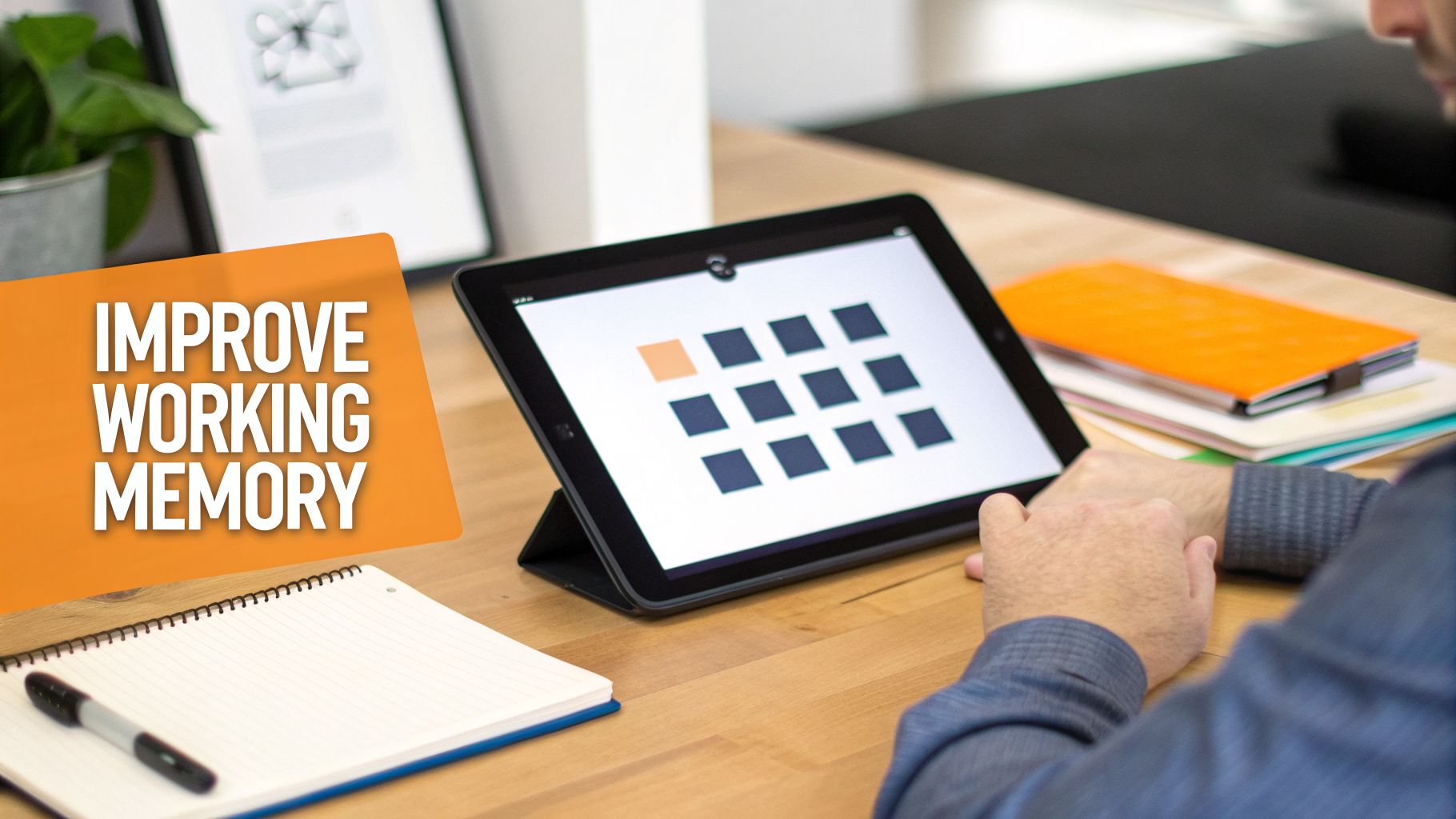
This method directly challenges your ability to update, monitor, and manage information in real time, making it a powerful tool for cognitive profile assessment and one of the most effective exercises for the brain. Its difficulty can be precisely scaled by increasing the value of ‘N’, from a simple 1-back to a highly demanding 3-back or 4-back. This scalability makes it suitable for various populations, from children with attention deficits to adults undergoing cognitive rehabilitation after a stroke. For a deeper understanding of the mechanisms behind this system, you can explore Orange Neurosciences' guide on how to improve working memory.
How to Implement N-Back Training
To get started, begin with the simplest level (1-back) to build confidence and understand the mechanics.
Practical Example: Find a free N-back app on your phone. In a visual 1-back task, you'll see a sequence of squares appearing in different positions on a grid. You tap the screen only when the current square appears in the same position as the one immediately before it.
Session Length: Aim for short, focused sessions of 15-20 minutes daily. Consistency is more important than duration.
Progression: Only increase the 'N' level once you achieve a consistent accuracy of 80-90% at your current level. This gradual approach prevents frustration and ensures the brain is adequately challenged without being overwhelmed.
Modalities: Adapt the task by using either visual (shapes, colours) or auditory (spoken letters, sounds) stimuli based on the user's sensory strengths or therapeutic goals.
Performance Tracking: For a complete picture of cognitive gains, track both accuracy percentage and reaction time. An improvement in both metrics indicates a more efficient working memory.
N-back training is not just a game; it is a structured exercise with a strong evidence base. Research pioneered by Dr. Susanne Jaeggi showed that consistent dual n-back training (simultaneously tracking visual and auditory sequences) can lead to measurable gains in fluid intelligence, the ability to solve new problems.
2. Dual Coding and Visualization Tasks
Dual coding and visualization tasks are powerful exercises for the brain that operate on the principle that humans process information through two distinct channels: a verbal channel (language) and a non-verbal/visual channel (imagery). These exercises require you to simultaneously engage both systems, for example, by creating a detailed mental image of a word or concept you read. This multi-modal approach strengthens memory consolidation, perception, and even eye-hand coordination by building more robust and interconnected neural pathways for information retrieval.
The method is highly adaptable, making it effective in diverse settings. It is used in education to help students grasp complex scientific concepts, in rehabilitation for patients with visual-spatial deficits after a stroke, and in language learning to connect new vocabulary with imagery. By actively linking words to mental pictures, you give your brain two ways to remember the information, significantly increasing the likelihood of successful recall. It’s a foundational technique for improving how we learn and retain knowledge.
How to Implement Dual Coding and Visualization Tasks
To begin, choose simple, concrete concepts that are easy to visualize before moving to more abstract ideas.
Practical Example: Read a paragraph from a book. After finishing, close your eyes and try to create a detailed mental "movie" of the scene described. Who was there? What were they wearing? What objects were in the room? This actively combines the verbal information you read with visual imagery you create.
Session Length: Dedicate 10-15 minutes per session. Focus on the quality of the mental imagery rather than the quantity of items.
Progression: Start with single-word-to-image pairings (e.g., read the word "apple" and picture a shiny red apple). Advance to visualizing entire sentences, short stories, or complex procedures.
Modalities: Enhance the exercise by adding a physical component. For instance, after visualizing an object, draw it or use hand gestures to describe its shape. This integrates a kinesthetic layer, further improving eye-hand coordination.
Performance Tracking: Measure success by your ability to both describe the visual details of your mental image and accurately recall the associated verbal information. For example, after visualizing a process, can you both draw the diagram and write down the steps?
The theory behind this, Allan Paivio's Dual Coding Theory, suggests that storing information in both verbal and visual formats creates a stronger memory trace. If one memory cue fails, the other can still trigger recall, making it a remarkably resilient strategy for learning and memory.
3. Stroop Test and Variants
The Stroop Test is a classic neuropsychological tool used to measure cognitive control, selective attention, and processing speed. The task challenges your brain's ability to inhibit a dominant, automatic response in favour of a less familiar one. In its standard format, you are shown words for different colours printed in an ink that doesn't match the word itself (e.g., the word "BLUE" printed in red ink) and must name the colour of the ink, ignoring the word you read. This creates cognitive interference, forcing your executive functions to work harder.
This exercise directly targets your brain's capacity for inhibitory control, a core executive function. Digital versions of the Stroop Test, like those used in clinical assessment batteries, offer millisecond-level precision in measuring reaction times, providing objective data for progress monitoring. It is widely applied in diagnosing and tracking conditions such as ADHD, traumatic brain injury, and cognitive decline associated with Alzheimer's disease. As one of the fundamental exercises for the brain, its results give a clear window into attentional processing.
How to Implement the Stroop Test
To effectively use the Stroop Test for assessment or training, a structured approach is necessary to ensure the data is reliable.
Practical Example: Create a simple list of color words (RED, BLUE, GREEN, YELLOW) but write each word in a different color ink (e.g., the word 'RED' is written in blue ink). Time yourself as you go down the list, saying the ink color aloud, not the word you are reading. This forces you to inhibit your automatic reading response.
Standardized Instructions: Always provide clear, consistent instructions before each session to minimize variability caused by misunderstanding the task.
Controlled Environment: Ensure the visual display parameters, such as screen brightness and font size, remain consistent across all sessions to prevent environmental factors from affecting performance.
Session Timing: Conduct testing early in a session when attention is at its peak. Monitor for fatigue, as it can significantly skew reaction time and accuracy results.
Data Interpretation: For a complete cognitive profile, analyse reaction time alongside accuracy. Slower times with high accuracy can indicate different cognitive processing than fast times with low accuracy.
The Stroop effect, first described by J. Ridley Stroop in 1935, demonstrates the measurable delay in reaction time when there is a mismatch between the word's meaning and its print colour. This delay is a powerful indicator of executive function efficiency and processing speed, making it an indispensable tool in clinical neuropsychology worldwide.
4. Memory Palace (Method of Loci) Training
The Memory Palace, also known as the Method of Loci, is an ancient mnemonic strategy that strengthens episodic memory, attention, and visuospatial processing. It works by associating pieces of information with specific points or ‘loci’ within a familiar physical space you can easily visualise. To recall the information, you mentally "walk" through your palace, retrieving the items from their designated locations.
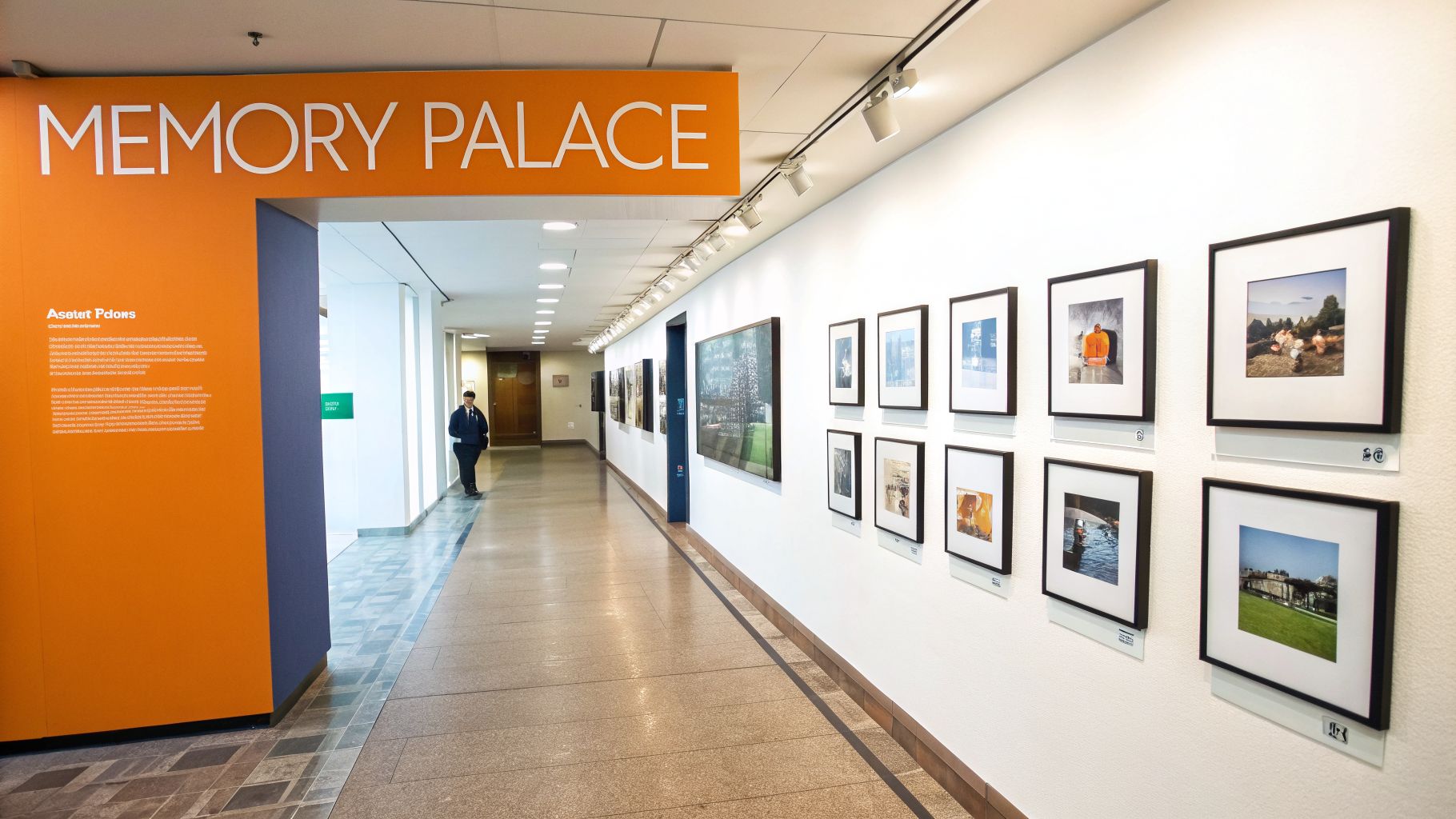
This powerful technique has been used for centuries, from ancient Roman orators memorising long speeches to modern-day memory champions. Its applications are broad, proving effective in medical education for remembering complex anatomy, in legal studies for case law, and in rehabilitation settings for patients with traumatic brain injuries rebuilding their memory function. By connecting abstract data to a concrete spatial map, it becomes one of the most robust exercises for the brain, turning recall into an active, engaging process.
How to Implement Memory Palace Training
Getting started requires selecting a familiar location and populating it with vivid mental imagery. Your own house or daily commute to work are excellent starting points.
Practical Example: To memorize a grocery list (milk, eggs, bread), use your home as a palace. Picture an overflowing carton of milk flooding your front doorway (Locus 1). Then, imagine fragile eggs splattered all over your hallway table (Locus 2). Finally, see a giant loaf of bread blocking the entrance to your kitchen (Locus 3). To recall the list, you just mentally walk this path.
Establish Your Palace: Begin with a location you know intimately, such as your childhood home. Mentally walk through it and identify 20-30 distinct ‘stations’ or loci in a logical order (e.g., front door, hallway table, kitchen counter).
Create Vivid Imagery: To encode information, create a vivid, unusual, or emotionally charged image and place it at a station. The more absurd the image, the more memorable it will be.
Practise a Mental Walkthrough: Walk through your palace daily during the initial training phase to solidify the associations. Do this both forwards and backwards to strengthen the neural pathways.
Track Performance: Monitor your progress by tracking both the accuracy of your recall and the speed at which you can navigate your palace. Improvement in both measures signals greater cognitive efficiency and stronger memory consolidation.
Research led by neuroscientist Eleanor Maguire showed that the brains of superior memorisers, many of whom use the Method of Loci, are not anatomically different. Instead, they exhibit distinct functional connectivity patterns in brain regions linked to visuospatial memory and navigation, suggesting this skill is a result of dedicated practice, not innate ability.
5. Wisconsin Card Sorting Test (WCST) and Cognitive Flexibility Tasks
The Wisconsin Card Sorting Test (WCST) is a foundational neuropsychological assessment that measures executive functions, particularly cognitive flexibility. This test challenges an individual's ability to deduce abstract rules and, more importantly, to shift their thinking when those rules change without warning. Participants sort a series of cards based on colour, shape, or number, but the correct sorting principle changes throughout the test, requiring them to abandon an old strategy and discover a new one.
This task directly evaluates a person's capacity for abstract reasoning and their resistance to perseveration, which is the tendency to get stuck on a rule that is no longer correct. It is a powerful tool for identifying specific executive deficits, making it one of the more diagnostic exercises for the brain. Its application is widespread, from assessing cognitive decline in frontotemporal dementia and Parkinson's disease to measuring improvements in ADHD management. You can discover more about its clinical applications in Orange Neurosciences' detailed overview of the Wisconsin Card Sorting Test.
How to Implement WCST-Style Tasks
While the formal WCST is administered by clinicians, its principles can be adapted into training exercises to improve mental set-shifting.
Practical Example: Take a deck of playing cards. First, sort the entire deck by color (red vs. black). Once you're done, immediately re-sort the same deck by suit (hearts, diamonds, spades, clubs). Then, try sorting it by number (all the 2s together, all the 3s, etc.). The act of rapidly switching your sorting rule is a direct exercise in cognitive flexibility.
Instruction: Begin with minimal instructions. The goal is for the user to discover the rule through trial and error, which directly engages problem-solving skills.
Performance Tracking: Monitor key metrics like the number of categories completed, total errors, and perseverative errors. A reduction in perseverative errors specifically indicates an improvement in cognitive flexibility.
Integration: While the WCST is a classic tool, you can also explore a variety of other cognitive flexibility exercises to keep your brain agile and adaptable.
Developed by Dr. David Grant in 1948, the WCST remains a gold standard in clinical neuropsychology. Its ability to distinguish between different types of errors (e.g., perseverative vs. non-perseverative) provides a nuanced picture of executive dysfunction, helping clinicians to pinpoint whether a person struggles with generating new ideas or letting go of old ones.
6. Sustained Attention Tasks (CPT - Continuous Performance Test)
Continuous Performance Tests (CPTs) are established cognitive exercises for the brain designed to measure and train sustained attention, which is the ability to maintain focus on an activity over a prolonged period. During a CPT, the user is presented with a continuous stream of stimuli, such as letters or shapes, and must respond only when a specific "target" stimulus appears, while withholding responses to all other "non-target" stimuli. This structure directly challenges vigilance and impulse control.
CPTs provide precise, quantifiable metrics on performance, including reaction time, omission errors (failing to respond to a target), and commission errors (incorrectly responding to a non-target). This makes them a fundamental tool in clinical settings for diagnosing conditions like ADHD, assessing attentional deficits after a concussion, or monitoring cognitive recovery in substance abuse treatment. The data gathered helps distinguish between inattention and impulsivity, guiding more effective intervention strategies.
How to Implement Sustained Attention Tasks
To get the most out of a CPT, proper administration and interpretation are key. These tasks are less about 'winning' and more about understanding attentional patterns.
Practical Example: Set a timer for 5 minutes. Watch the second hand on a clock and tap your finger every time it passes the "12," but do not tap for any other number. This simple task forces you to maintain vigilance for a specific target while inhibiting responses to frequent non-targets, directly training sustained attention.
Session Length: CPT sessions are typically 15-20 minutes long to effectively measure vigilance without causing excessive fatigue. Consistency in timing is vital for reliable progress tracking.
Clear Instructions: Before starting, ensure the user fully understands the difference between target and non-target stimuli. A few practice trials are essential to confirm comprehension and establish a baseline.
Progression: Difficulty can be adjusted by changing the speed of stimulus presentation, the frequency of targets, or by introducing auditory or visual distractors. Progression should be based on consistent performance and specific therapeutic goals.
Performance Tracking: For a complete cognitive profile, analyse reaction time variability alongside accuracy. High variability can indicate lapses in attention, even if overall accuracy is good.
Continuous Performance Tests, such as the Conners CPT or the Test of Variables of Attention (TOVA), have a long history in neuropsychological assessment. Their value lies in standardising the measurement of attention, providing objective data that can track the effects of medication, therapy, or brain training over time. This makes them indispensable exercises for the brain in both clinical and research contexts.
7. Visuospatial Working Memory and Mental Rotation Tasks
Visuospatial working memory and mental rotation tasks are powerful exercises for the brain designed to strengthen spatial reasoning and visual processing. These exercises require you to mentally hold, manipulate, and track visual objects or patterns. Mental rotation, specifically, involves looking at two objects, often rotated in space, and determining if they are identical or mirror images of each other. This directly engages working memory and your ability to visualize and transform information.
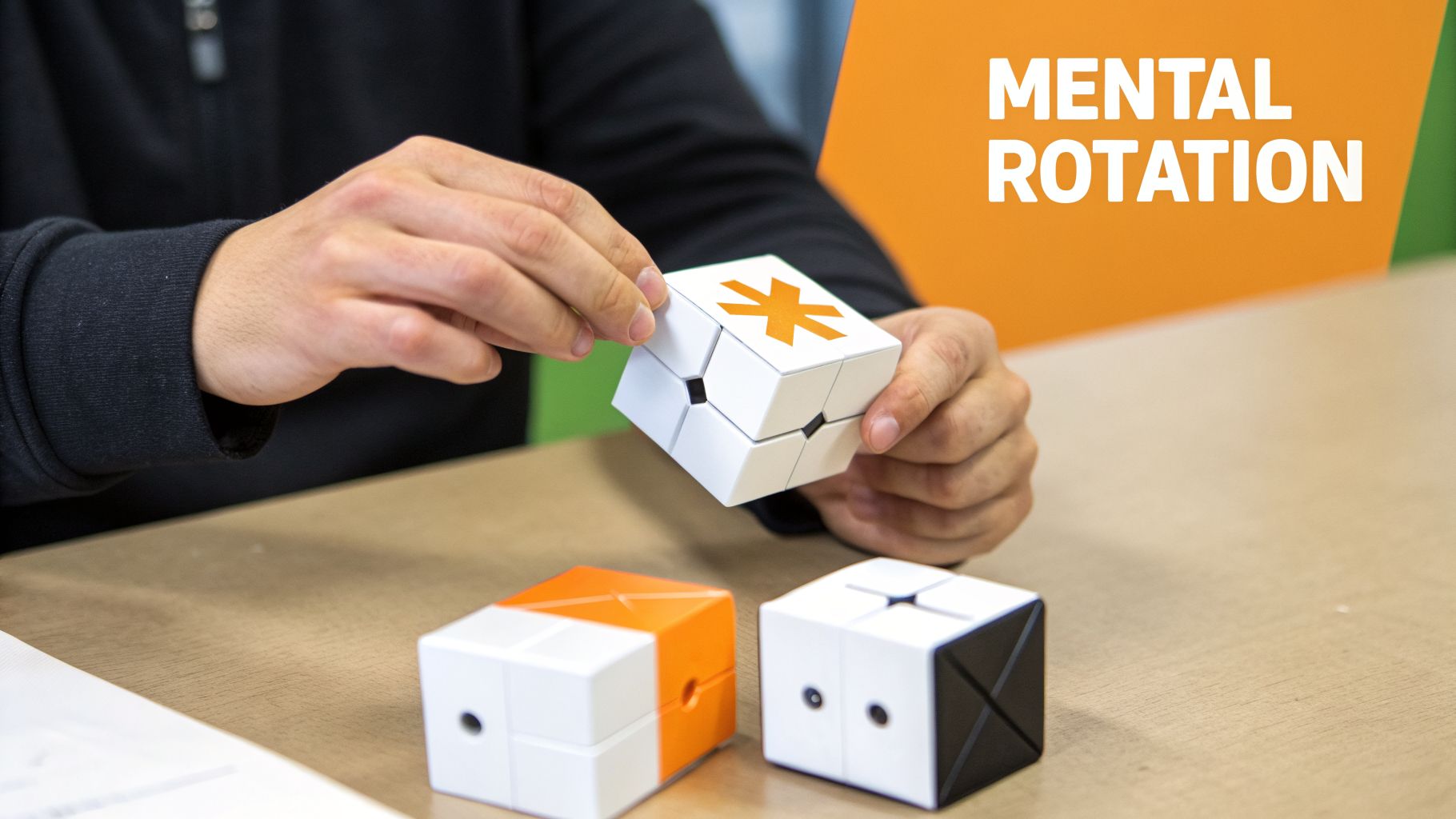
These tasks are fundamental to many real-world skills and have broad applications. They are integrated into STEM curricula to improve mathematical and engineering abilities, applied in rehabilitation for patients with spatial neglect after a stroke, and used in occupational therapy to support motor planning. Because they challenge your ability to perceive and reason about objects in three dimensions, they are essential for anyone in a profession that depends on strong spatial awareness, from architecture to surgery. To discover how these assessments are integrated into a complete cognitive profile, you can learn more about Orange Neurosciences' comprehensive cognitive assessment tools.
How to Implement Visuospatial and Mental Rotation Tasks
To begin, start with simple, recognizable objects before moving to more abstract or complex shapes. This helps build a foundation in the core skill of mental manipulation.
Practical Example: Look at an object in your room, like a chair. Now, close your eyes and mentally rotate it 90 degrees to the right. What does it look like from that new angle? Now, mentally flip it upside down. This act of manipulating a 3D object in your mind's eye is a direct mental rotation exercise.
Session Length: Dedicate 10-15 minutes per day to these exercises. Consistent, short practice is more effective for building spatial skills than infrequent, long sessions.
Systematic Progression: Vary rotation angles systematically (e.g., 45°, 90°, 180°) to measure improvement across different levels of difficulty. This controlled approach helps pinpoint specific areas of challenge.
Stimulus Variety: Use multiple sets of stimuli to prevent reliance on memory and ensure that the brain’s spatial reasoning abilities, not just object familiarity, are being trained.
Performance Tracking: For a clear picture of progress, track both accuracy and the time it takes to respond (latency). Improvement in both metrics signals that your visual processing is becoming more efficient.
Foundational research by Shepard and Metzler in 1971 first demonstrated that the time it takes to mentally rotate an object is directly proportional to the angle of rotation. This finding confirmed that we manipulate mental images in a way that mirrors physical rotation, establishing these tasks as a valid measure of spatial cognition.
8. Verbal Fluency Tasks (Phonemic and Semantic)
Verbal fluency tasks are powerful exercises for the brain that assess and stimulate language production, executive function, and the speed of lexical access. These tasks require a person to generate as many words as possible within a set time, usually 60 seconds, based on a specific rule. The two main types are phonemic fluency, where words must begin with a certain letter (e.g., 'F'), and semantic fluency, where words must belong to a specific category (e.g., 'animals').
This simple yet effective exercise challenges cognitive flexibility (switching between subcategories), retrieval strategies, and vocabulary breadth. It is a standard component of many neuropsychological evaluations, including the Montreal Cognitive Assessment (MoCA), to screen for dementia and assess language function in conditions like aphasia or Parkinson's disease. Performance metrics like total word count, clustering (generating related words together), and switching (moving between clusters) provide a detailed snapshot of cognitive health. For those interested in related activities, Orange Neurosciences offers a guide on word games for the elderly that can help maintain verbal skills.
How to Implement Verbal Fluency Tasks
To effectively use this task for assessment or practice, clarity and standardization are key.
Practical Example: Set a timer for 60 seconds. Try to name as many animals as you can (semantic fluency). When the timer is up, reset it and try to name as many words as you can that start with the letter 'P' (phonemic fluency), excluding names. This quick exercise directly challenges your brain's word-retrieval systems.
Session Length: A single timed trial for each condition takes only 60 seconds, but a full session including multiple trials can be completed in 5-10 minutes.
Clear Instructions: Ensure the user fully understands the rules before starting the timer. For example, specify if proper nouns are allowed or if different forms of a word (e.g., run, running) count separately.
Standardized Categories: For progress tracking, use standardized and comparable categories or letters across sessions. Common choices include the letters F, A, and S for phonemic fluency and 'animals' or 'fruits' for semantic fluency.
Performance Analysis: Beyond the total word count, analyse the pattern of responses. A person who lists "dog, cat, hamster" and then "lion, tiger, bear" is demonstrating effective semantic clustering. Difficulty switching between clusters may indicate an executive function deficit.
A key diagnostic insight comes from comparing performance on the two task types. Individuals with executive dysfunction (often linked to frontal lobe issues) may struggle more with the phonemic task, which requires more self-generated strategy. In contrast, those with semantic memory deficits (common in Alzheimer's disease) may perform worse on the category task.
9. Eye-Hand Coordination and Fine Motor Training (Pursuit Tracking and Dexterity Tasks)
Eye-hand coordination exercises combine visual tracking with precise motor control, requiring the brain to process visual information and guide hand movements in real-time. These exercises, often involving pursuit tracking and dexterity tasks, challenge the neural pathways connecting the eyes, brain, and hands. Digital versions can track eye gaze and hand movements simultaneously, offering detailed metrics on coordination, reaction time, and accuracy, making them powerful exercises for the brain.
This type of training is essential for functional independence and skilled performance in many daily activities. It is widely used in occupational therapy to help children with neurodevelopmental disorders like DCD, in physical therapy for motor recovery after a stroke, and in sports training to give athletes a competitive edge. The ability to scale difficulty by adjusting target speed, size, or task complexity makes it adaptable for individuals at any motor ability baseline. To discover more activities that build these skills, you can read this guide on hand-eye coordination exercises.
How to Implement Eye-Hand Coordination Training
To begin, start with tasks that have slower speeds and larger targets to establish a solid baseline and build confidence before advancing to more demanding challenges.
Practical Example: Draw a wavy line on a piece of paper. Now, use your non-dominant hand to trace over the line as accurately as possible without touching the sides. To increase the difficulty, try to do it faster, or draw a more complex shape like a spiral. This simple action forces your eyes to guide your hand's precise movements.
Session Length: Aim for focused sessions of 10-15 minutes, with adequate rest between trials to minimize the effects of physical and mental fatigue.
Gradual Progression: Start with slower target speeds or simpler motor tasks. Gradually increase the difficulty once a consistent performance level is achieved, ensuring the brain and body can adapt.
Real-Time Feedback: Use programs that provide immediate visual or auditory feedback on performance. Seeing the hand's trajectory in relation to the target helps the user make instant corrections and learn more effectively.
Performance Tracking: For a full picture of improvement, monitor metrics like target accuracy, path efficiency (how direct the movement is), and completion time. Progress in these areas signals improved sensorimotor integration.
Eye-hand coordination is not a single skill but a complex interplay between the visual, motor, and cognitive systems. Tasks like pursuit tracking, originally developed from tools like the pursuit rotor, directly challenge the cerebellum and parietal cortex, areas critical for coordinating movement based on spatial information.
10. Inhibitory Control and Response Inhibition Training (Go/No-Go Tasks)
Inhibitory control training, often implemented through Go/No-Go tasks, is a fundamental method for strengthening the brain's ability to regulate impulses and suppress automatic responses. These exercises challenge a person to respond quickly to specific target stimuli ('go' trials) while actively withholding a response to non-target stimuli ('no-go' trials). This process directly targets executive functions, particularly the capacity for self-control, which is critical for focused attention and goal-directed behaviour. This type of brain training is not about speed alone; it is about controlled, deliberate action.
The task’s design makes it an effective diagnostic and training tool. By analyzing commission errors (responding on a 'no-go' trial) and omission errors (failing to respond on a 'go' trial), clinicians can gain detailed insight into a person's impulse control. Its application is widespread, from being a standard tool in ADHD assessment and monitoring medication response to its use in tracking recovery in substance abuse treatment. Further details on how these tasks function can be found in this overview of reaction time games, which often incorporate Go/No-Go principles.
How to Implement Go/No-Go Training
Effective implementation requires careful setup to ensure the task accurately measures inhibitory control rather than other cognitive skills.
Practical Example: Ask a friend to say a series of random words. Your task is to clap your hands every time you hear a word that is an animal ('Go' signal), but you must remain silent for any other word ('No-Go' signal). To make it harder, have your friend say the 'Go' words less frequently to build up a response habit that you then have to inhibit.
Session Length: Begin with short sessions of 10-15 minutes per day to build foundational skills without causing mental fatigue.
Stimulus Clarity: Use highly contrasting visual or auditory stimuli (e.g., a green circle for 'go' and a red square for 'no-go') to ensure the user can clearly discriminate between them.
Varying Ratios: Adjust the difficulty by changing the ratio of 'go' to 'no-go' stimuli. A high ratio of 'go' trials (e.g., 90/10) builds response momentum, making the occasional 'no-go' trial a greater test of inhibition.
Performance Tracking: Monitor both commission and omission errors separately. A high rate of commission errors suggests poor impulse control, while a high rate of omission errors may indicate inattention.
The Go/No-Go paradigm is a cornerstone of clinical neuropsychology, found in respected assessment batteries like CANTAB and CNS Vital Signs. Its ability to produce quantifiable data on impulse control makes it an indispensable part of a comprehensive executive function profile.
Comparison of 10 Brain Exercises
Task | Implementation complexity | Resource requirements | Expected outcomes | Ideal use cases | Key advantages |
|---|---|---|---|---|---|
N-Back Training | Moderate — adaptive algorithms and progressive difficulty | Low–moderate — digital platform and performance logging | Improved working memory, attention; possible fluid intelligence gains | Working memory training, cognitive rehab, remote assessment | Evidence-based; quantifiable metrics; remote delivery |
Dual Coding & Visualization | Moderate — multimodal content design and integration | Low–moderate — visual/verbal materials or multimedia tools | Stronger encoding and long-term retention; improved pattern recognition | Education, learning disabilities, memory consolidation in rehab | Leverages dual pathways; richer memory representations |
Stroop Test & Variants | Low — simple stimuli but requires controlled presentation | Low — paper/digital with millisecond timing preferred | Measures cognitive control, interference, processing speed | Clinical assessment of executive function, ADHD, dementia screening | Quick, gold-standard, highly sensitive to executive dysfunction |
Memory Palace (Method of Loci) | High — extensive instruction and guided practice (weeks) | Low — instructional time and practice sessions | Dramatic long-term retention and improved metamemory | Memorization-heavy training (students, professionals), memory rehab | Scalable; high retention; historically validated technique |
Wisconsin Card Sorting Test (WCST) | Moderate — rule-shifting logic and automated scoring useful | Moderate — clinician oversight and digital scoring recommended | Measures cognitive flexibility, perseveration, abstract reasoning | Frontal lobe dysfunction assessment, neurodegenerative and psychiatric evaluation | Gold-standard for cognitive flexibility; clear behavioral markers |
Continuous Performance Test (CPT) | Moderate — longer sessions and variant designs | Moderate — precise timing software and monitoring | Quantifies sustained attention, omission/commission patterns | ADHD diagnosis/titration, sleep deprivation and concussion assessment | Objective, sensitive to attention deficits over time |
Visuospatial Working Memory & Mental Rotation | Moderate — stimulus manipulation and difficulty scaling | Low–moderate — visual stimuli generation, digital timing | Improved spatial reasoning, rotation speed and accuracy; STEM transfer | Spatial skills training, rehab for spatial neglect, occupational screening | Trainable with transfer to real-world spatial tasks; engaging |
Verbal Fluency (Phonemic & Semantic) | Low — timed prompts and standardized scoring | Minimal — examiner or simple digital recorder | Measures lexical access, retrieval speed, clustering/switching | Dementia screening, aphasia assessment, language monitoring | Quick, easy to administer; sensitive to language and executive deficits |
Eye‑Hand Coordination & Fine Motor Training | Moderate–high — requires synchronized tracking and feedback | High — motion/eye-tracking hardware or specialized devices | Improved motor precision, response latency, movement smoothness | Physical/occupational therapy, cerebellar rehab, sports training | Sensitive to motor coordination deficits; functional relevance |
Go/No‑Go (Inhibitory Control) | Low–moderate — simple paradigm with variant probabilities | Low — digital implementation with timing and response logging | Quantifies response inhibition, commission/omission errors, reaction time | ADHD and impulse-control assessment, substance use interventions | Brief, objective measure of inhibitory control; responsive to interventions |
From Exercises to Outcomes: Your Next Step in Cognitive Health
You have journeyed through a detailed roundup of ten powerful, evidence-based exercises for the brain. The central message is clear: our cognitive abilities are not fixed. Just as we train our muscles, we can systematically strengthen our neural pathways through targeted, consistent effort. These are not just mental pastimes; they are structured interventions designed to isolate and challenge specific cognitive functions.
Key Insights: From Passive Knowledge to Active Practice
The true value of this information lies not in simply knowing it, but in applying it. Here are the most actionable insights to turn knowledge into results:
Be Specific: To improve your memory for names, use the Memory Palace technique. To get less distracted, practice Sustained Attention Tasks. A one-size-fits-all approach to brain health is ineffective. To see real improvement, you must challenge the specific area directly.
Be Consistent: The brain adapts through repeated stimulation. Short, regular sessions, such as 15 minutes of a verbal fluency task daily, will yield far more significant gains than a single, two-hour session once a month. Create a sustainable routine you can stick with.
Be Measured: How do you know if it's working? Objective data provides undeniable proof of progress. Tracking your performance—whether it's items recalled in a Memory Palace or your reaction time in a Go/No-Go task—is essential for staying motivated and adjusting your strategy.
Bridging the Gap Between Effort and Evidence
This brings us to the most critical step: transforming these exercises for the brain into a structured and measurable program. The challenge for many has always been the practical implementation and tracking of these methods. Manually administering and scoring these tests is time-consuming and inconsistent.
This is precisely where modern assessment tools make a profound difference. They provide the missing link between the what (the exercises) and the how (the implementation and tracking), turning abstract principles into an engaging, data-driven plan.
Actionable Tip: The goal of using a digital tool is not to replace the principles of cognitive training but to amplify them. It allows for rapid baseline data collection, the delivery of game-based training modules, and objective progress measurement. This data-driven approach removes guesswork and enables truly personalised care.
Imagine generating a detailed cognitive profile in under 30 minutes, identifying specific areas of strength and weakness across memory, attention, and executive function. This initial assessment becomes the foundation for a targeted training plan. By using digital versions of the very exercises discussed, training becomes an engaging experience rather than a clinical chore. Progress is no longer an opinion but a clear, visualised trend line, providing powerful feedback and motivation.
Your journey toward improved cognitive health has a clear path forward. It begins with understanding the specific exercises for the brain that target your goals, committing to a consistent practice schedule, and integrating a system for objective measurement. By doing so, you move from hoping for improvement to actively building and witnessing it.
Ready to stop guessing and start measuring your cognitive health? Orange Neurosciences digitises gold-standard neuropsychological assessments and training exercises into an engaging, game-based platform. Build a precise cognitive profile and create data-driven training plans by visiting our website at Orange Neurosciences to see how our tools can support your work. For more actionable insights, be sure to subscribe to our newsletter for exclusive content delivered straight to your inbox.
Orange Neurosciences' Cognitive Skills Assessments (CSA) are intended as an aid for assessing the cognitive well-being of an individual. In a clinical setting, the CSA results (when interpreted by a qualified healthcare provider) may be used as an aid in determining whether further cognitive evaluation is needed. Orange Neurosciences' brain training programs are designed to promote and encourage overall cognitive health. Orange Neurosciences does not offer any medical diagnosis or treatment of any medical disease or condition. Orange Neurosciences products may also be used for research purposes for any range of cognition-related assessments. If used for research purposes, all use of the product must comply with the appropriate human subjects' procedures as they exist within the researcher's institution and will be the researcher's responsibility. All such human subject protections shall be under the provisions of all applicable sections of the Code of Federal Regulations.


© 2026 by Orange Neurosciences Corporation