Your Guide to Taking a Cognitive Screening Test Online
Nov 23, 2025
Think of an online cognitive screening test as a quick, accessible check-up for your brain. You can do it right from your computer or tablet, and it gives you a brief look at key functions like memory, focus, and problem-solving. It’s not a full-blown diagnosis, but more like a first glance—a practical first step to spot any changes that might be worth discussing with a doctor.
What Is an Online Cognitive Screening Test

At its heart, a cognitive screening test is a preliminary tool. It’s designed to be a simple, low-stress way to get an initial reading on your cognitive health without needing a trip to a clinic. You can learn more about the broader field in our guide on what cognitive assessment is.
Proactive Steps for Your Brain Health
Taking an online cognitive test is a proactive step in looking after your long-term well-being. It gives you a valuable snapshot of where you’re at right now, creating a baseline that you can compare against in the future. Catching subtle shifts early on can open the door to much more effective management and interventions.
Practical Example: Imagine a 65-year-old who feels perfectly fine but decides to take a screening to set a baseline. A year later, they take it again and notice a slight drop in their score for short-term memory. This small, objective change gives them a concrete reason to book a doctor's appointment, allowing them to address potential issues much earlier than if they had waited for more obvious symptoms.
Exploring Different Types of Online Cognitive Tests
When you start looking for a cognitive screening test online, you'll find they aren't all created equal. There's a whole spectrum of tools out there, each designed for different purposes and levels of clinical oversight. Understanding these categories is the first actionable step to choosing the right tool for yourself or a loved one.
The biggest difference comes down to whether you take a test on your own or with a professional guiding you. It’s like exercise: you can follow a workout video on your own, or you can book a virtual session with a personal trainer who watches your form. Both work, but they serve very different needs.
Self-Administered Cognitive Screening
Just as the name suggests, these are assessments you can do by yourself, right from your own computer or tablet. The biggest win here is convenience. You're in a familiar, comfortable space, without the stress that can sometimes come with a clinical appointment.
This approach gives you privacy and flexibility. It's an excellent place to start if you just want to get a personal baseline of your cognitive health.
Here’s what makes self-administered tests so appealing:
Accessibility: You can take them anywhere you have an internet connection. This is a huge advantage for Canadians living in remote areas or for anyone facing mobility challenges.
Low Pressure: Completing a test at your own speed in your own home can dial down anxiety, which means the results are more likely to reflect your true abilities.
Immediate Insight: Most of these tools give you results right away. This quick snapshot can help you decide what to do next.
Actionable Insight: Use a self-administered test annually to track your cognitive health, just as you would monitor your blood pressure. If you observe a consistent downward trend over two or three tests, that's your cue to share the results with your doctor.
In Canada, these kinds of digital solutions are also helping to ease the strain on our healthcare system. The MoCA XpressO, a self-guided digital version of the respected Montreal Cognitive Assessment, found a 91% sensitivity in flagging individuals who might need a closer look for conditions like mild cognitive impairment. It’s a powerful demonstration of how these tools are being validated for real-world use.
Professionally Proctored Online Tests
On the other side, you have professionally proctored—or supervised—online cognitive tests. Here, a trained clinician administers the test remotely using a secure telehealth platform. You’re still in the comfort of your home, but a professional is on the other side of the screen, walking you through it, observing your responses, and ensuring everything is done correctly.
The real value of a proctored assessment is the human element. A clinician can notice subtleties that an automated program cannot, such as hesitation, non-verbal cues, or specific types of errors, adding a crucial layer of clinical judgment to the final score.
This approach blends the ease of telehealth with the thoroughness of a clinical assessment. It's often the logical next step if a self-administered screening raises a red flag, or when a doctor wants a more controlled evaluation. It's especially useful for looking at more complex cognitive areas, like executive functions. If you want to dive deeper into these higher-level brain processes, our detailed test for executive dysfunction guide is a great resource.
Ultimately, the choice comes down to your goals. For a private, preliminary check-in, a self-administered tool is an empowering first step. But if you or a healthcare provider need a more definitive measure with professional oversight, a proctored online test provides much greater clinical insight.
Comparing Remote and In-Person Cognitive Screenings
Choosing between a cognitive screening test online or heading to a clinic in person is a pivotal decision. Each path has its own set of real-world benefits and potential trade-offs. The best route often boils down to your unique situation—where you live, how comfortable you are with technology, and the kind of detail you or your doctor need.
You can think of it like deciding between a home workout app and a session with a personal trainer. The app is incredibly convenient, but the trainer offers expert eyes and immediate, personalized feedback. Neither is better; they just serve different needs.
The Major Differences: Accessibility and Convenience
For many Canadians, especially those in rural or remote areas, just getting to an appointment can be a major hurdle. Online cognitive screenings completely sidestep geographical barriers, long drives, and waitlists for specialist visits.
Practical Example: An elderly individual living in a small town hours away from the nearest neurological centre can complete a screening from their living room. This allows them to get preliminary data to their family doctor quickly, potentially saving months of waiting and a stressful, expensive trip.
This is a massive plus for anyone with mobility challenges or for those who find clinical settings stressful. Being able to take an assessment in the familiar comfort of your own home can often lead to a truer snapshot of your cognitive abilities.
Clinical Observation and Nuance
While online tests win on convenience, in-person screenings provide something technology can't yet: direct human observation. A trained clinician can pick up on subtle, non-verbal cues during an assessment.
A slight hesitation before answering, a shift in body language, or even the way someone holds a pen can offer invaluable clinical insights. A computer program is going to miss that every time. This qualitative information adds a rich, human layer of context to the final test score.
These small observations are incredibly important. They help a professional understand not just what answers a person gave, but how they got there, offering clues into their problem-solving strategies.
This decision tree can help you map out whether an independent online screening or one involving a clinician is the right first step for you.
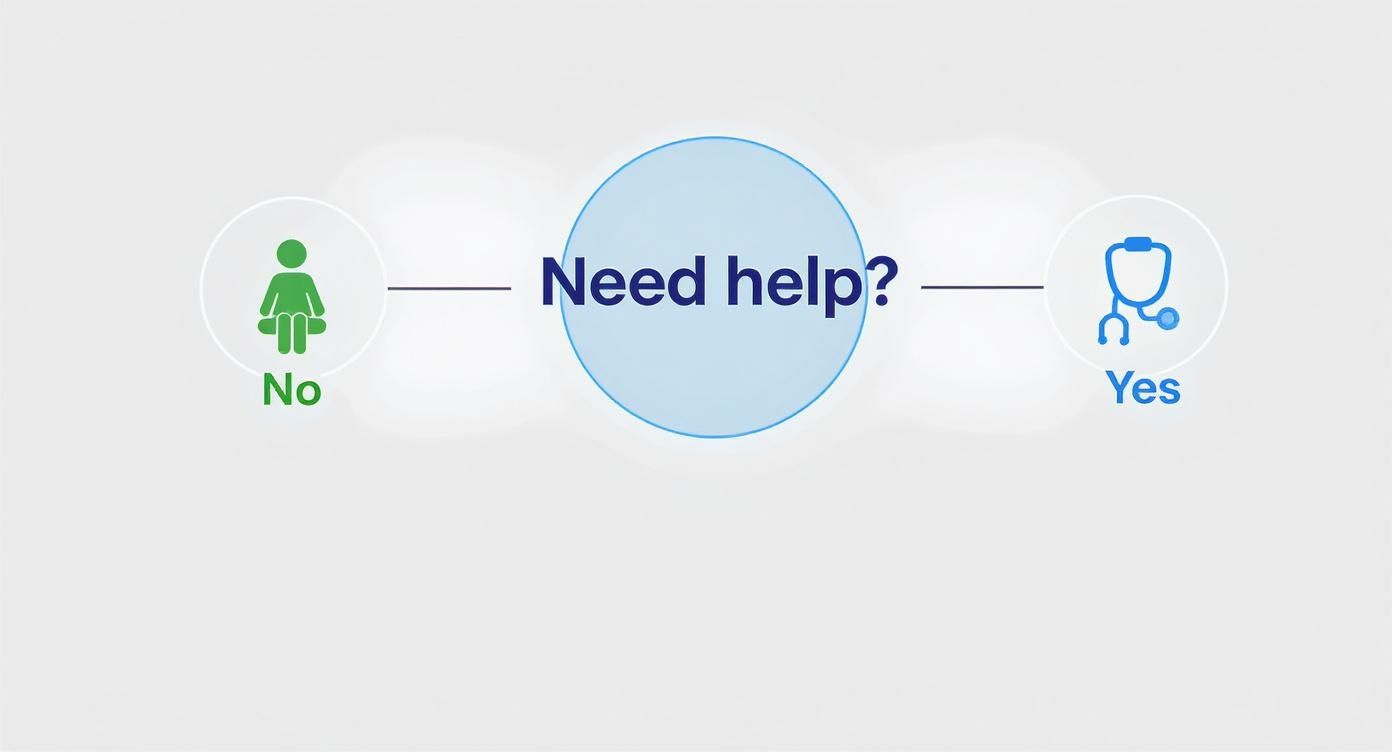
Actionable Insight: Look at the image. If your goal is to get a personal baseline without immediate pressing concerns (the "No" path), a self-administered online test is an excellent starting point. If you have specific, noticeable symptoms that worry you (the "Yes" path), involving a medical professional from the start is the wiser choice.
Accuracy and Reliability Considerations
One of the first questions people ask is, "Can a remote test really be as accurate as an in-person one?" The short answer is yes—scientifically validated online tools are built to be highly reliable. But the testing environment is a huge factor. Distractions at home, a spotty internet connection, or being unfamiliar with the device can all skew the results.
In-person assessments are done in a controlled setting designed to minimize those variables. To get a better handle on how we measure consistency, you can check out our guide on test-retest reliability statistics. It's also useful to look at the broader debate on the effectiveness of online versus in-person formats to understand all the factors at play.
Online vs In-Person Cognitive Screening: A Head-to-Head Comparison
Feature | Online Screening | In-Person Screening |
|---|---|---|
Accessibility | High; available anywhere with an internet connection. | Low; requires travel to a specific clinic location. |
Convenience | Excellent; flexible scheduling and no travel required. | Moderate; bound by clinic hours and appointment availability. |
Clinical Insight | Limited to test performance data. | High; includes non-verbal cues and direct observation. |
Environment | Uncontrolled; subject to home-based distractions. | Highly controlled; optimized for standardized testing. |
Cost & Time | Often more affordable and requires less time commitment. | Can be more costly and time-consuming with travel. |
Best For | Initial screenings, baseline tracking, remote residents. | Comprehensive evaluations, complex cases, diagnostic workups. |
It's not about online versus in-person screenings being competitors. They are complementary tools. An accessible online test can be a crucial first step, flagging individuals who might benefit from a more detailed, in-person evaluation.
How to Choose a Reliable Online Cognitive Test
With so many options popping up, picking a dependable cognitive screening test online can feel overwhelming. This guide will give you a clear checklist to tell the difference between a credible tool and a simple online quiz.
Think of it like choosing a smoke detector. You wouldn't just grab any old one. You’d want one that’s sensitive enough to catch real smoke but won't blare every time you make toast. The same principle applies here.
Start with Scientific Validation
This is the most important factor. A reliable online cognitive test isn't just a series of fun brain games. It's a tool that has been meticulously tested against established, traditional neuropsychological methods to prove it measures what it claims to measure.
Actionable Insight: Before taking any test, look for an "About Us," "Science," or "Research" section on the website. A trustworthy provider will be upfront and transparent about its scientific foundation and may even link to peer-reviewed studies. If you can't find this information easily, that’s a big red flag.
Look for tests that:
Have been developed by neuropsychologists, neurologists, or cognitive scientists.
Are backed by peer-reviewed research studies that confirm their accuracy.
Clearly state their intended purpose (e.g., as a screener, not a diagnostic tool).
Decode Sensitivity and Specificity
As you look into validated tests, you'll run into two critical terms: sensitivity and specificity.
Sensitivity refers to the test's ability to correctly identify people who may have a cognitive issue. High sensitivity means it’s great at catching potential problems.
Specificity is the test's ability to correctly identify people who likely do not have a cognitive issue. High specificity means it avoids flagging healthy people unnecessarily.
A well-designed screening tool strikes a careful balance. It needs to be sensitive enough not to miss real concerns, but specific enough to avoid causing needless worry with false alarms.
Practical Example: A test with 90% sensitivity will correctly flag nine out of ten people who have an underlying cognitive impairment. A test with 85% specificity will correctly give a "normal" result to 85 out of 100 people who are cognitively healthy.
Prioritise Data Privacy and Security
This is non-negotiable. You are sharing sensitive health information. Before starting any cognitive screening test online, take a moment to look over the platform's privacy policy. A reputable tool, especially one designed for clinical use in Canada, should be compliant with privacy laws like PIPEDA (Personal Information Protection and Electronic Documents Act).
Actionable Insight: Use your browser's "Find" function (Ctrl+F or Cmd+F) on the privacy policy page and search for terms like "encrypt," "share," and "PIPEDA." This can help you quickly find the key statements on how your data is protected. If the policy is vague, steer clear. This becomes even more critical when moving to a more detailed evaluation, which you can learn about in our overview of what is a neuropsychological assessment.
Evaluate the User Experience
Finally, a good test has to be easy to use. If a test is meant for older adults, it should have clear instructions, large fonts, and intuitive controls. A clunky or confusing interface can lead to frustration, which can drag down performance and skew the results. The point is to measure cognition, not computer literacy.
What to Do After You Get Your Results
So, you've completed an online cognitive screening and have the results. What now? It's normal to feel a mix of emotions. The key thing to remember is that this result isn't a final diagnosis. Think of it as an important first clue, a starting point for a more informed conversation.
This initial data is a powerful tool. It gives you and your healthcare team objective information to work with, helping to shape a clear path forward for maintaining your brain health and ensuring good continuity of care.
Creating Your Action Plan
Waiting for a doctor's appointment can feel passive, but there's plenty you can do to be proactive. Getting organised can feel empowering and helps ensure your upcoming appointment is as productive as possible.
Here's your actionable checklist:
Your Screening Report: Print the results from your cognitive screening test online. Highlight any sections that you found confusing or particularly concerning.
List of Symptoms: Jot down specific changes you or a loved one have noticed. Instead of "memory is bad," try "forgot two appointments this month" or "had trouble remembering the name of a close friend yesterday."
Medication List: Make a complete list of all prescriptions, vitamins, and supplements, including dosages.
Questions for Your Doctor: Write down every question that comes to mind. Examples: "What do these results mean in my specific case?" or "What are the next steps you recommend?"
This simple act of preparation transforms your screening result from a single data point into the foundation for a meaningful, well-informed conversation.
When to Seek Further Support
Based on your discussion, your doctor might suggest anything from lifestyle changes and ongoing monitoring to a referral for a more detailed assessment. It's also never a bad idea to focus on your overall mental well-being.
If your results and conversation point toward needing more support, resources like Cognitive Behavioral Therapy (CBT) can be incredibly helpful for managing stress, building mental resilience, and developing coping strategies.
The journey to understanding your cognitive health doesn't end with a test result. Here at Orange Neurosciences, we're focused on providing the tools and resources you need to take that next step with confidence. Explore our platform to see how our assessments provide the clear, objective data that you and your doctor can use to build a comprehensive plan.
Common Questions About Online Cognitive Screenings
As taking a cognitive screening test online becomes more common, it's natural to have a few questions. This final section is dedicated to giving you clear, straightforward answers so you feel confident taking the next step.
How Accurate Is an Online Cognitive Screening Test?
This depends on the test you choose. A scientifically validated tool can be incredibly accurate at flagging potential cognitive changes that deserve a closer look. However, the tool is only half the story. The environment where you take the test plays a huge role.
Actionable Insight: To get the most accurate result possible, take these practical steps before you begin:
Choose a quiet time of day.
Put your phone on silent and in another room.
Let family members know you need 20-30 minutes of uninterrupted time.
Use a comfortable chair in a well-lit space.
It's critical to remember that these are screeners, not diagnostic tools. Their job is to act as an early warning system—a signal that it's time to have a conversation with a healthcare professional.
Who Should Consider Taking an Online Cognitive Test?
Online cognitive tests are useful for a wide range of people. Consider taking a screening if you are:
An older adult noticing subtle changes, like misplacing things more often or finding it harder to recall recent conversations.
A caregiver concerned about a loved one who seems more confused or is showing changes in their personality.
An individual of any age who wants to get a baseline measurement of their cognitive function. This gives you a personal benchmark, making it easier to spot meaningful changes down the road.
Someone living in a remote part of Canada where getting to a specialist is a challenge. An online screening can bridge that gap.
Actionable Insight: If you're a caregiver, suggest taking the test together with your loved one. This can make the process feel less intimidating and more like a collaborative health activity.
Is My Personal Data Safe with These Online Tests?
When it comes to health information, data privacy is non-negotiable. Reputable, medical-grade screening platforms are legally required to comply with strict privacy laws, like Canada's Personal Information Protection and Electronic Documents Act (PIPEDA).
Before you start any test, take a minute to look over the platform's privacy policy. A trustworthy provider will be upfront about how your data is encrypted, where it's stored, and exactly who has access to it.
Be extra careful with free "brain game" websites that aren't connected to a recognized healthcare institution. When in doubt, stick with a tool recommended by your doctor or a trusted healthcare organisation.
What Happens If My Results Suggest a Problem?
First, try not to panic. A result that flags a potential issue is not a diagnosis—it's a signal to start a conversation.
Here’s a simple, practical plan:
Book an Appointment: The very next step is to schedule a visit with your family doctor.
Bring Your Report: Print the results from your cognitive screening test online and bring the physical copy.
Discuss the Full Picture: Your doctor will interpret the results within the context of your overall health, lifestyle, and other symptoms.
Follow Medical Advice: They'll suggest what to do next. This might involve a referral to a specialist for a more in-depth assessment.
An online screening result is just the first piece of the puzzle. It gives you objective data to start a productive dialogue with your healthcare team.
At Orange Neurosciences, we are committed to providing clinically validated tools that offer clear, reliable data to support these important health conversations. Our platform is designed to give individuals, families, and clinicians the insights needed to build a proactive and informed plan for long-term cognitive well-being.
Take the first step toward understanding your cognitive health. Explore the solutions available at https://orangeneurosciences.ca or contact us to learn how our assessments can help you and your doctor make better-informed decisions.
Orange Neurosciences' Cognitive Skills Assessments (CSA) are intended as an aid for assessing the cognitive well-being of an individual. In a clinical setting, the CSA results (when interpreted by a qualified healthcare provider) may be used as an aid in determining whether further cognitive evaluation is needed. Orange Neurosciences' brain training programs are designed to promote and encourage overall cognitive health. Orange Neurosciences does not offer any medical diagnosis or treatment of any medical disease or condition. Orange Neurosciences products may also be used for research purposes for any range of cognition-related assessments. If used for research purposes, all use of the product must comply with the appropriate human subjects' procedures as they exist within the researcher's institution and will be the researcher's responsibility. All such human subject protections shall be under the provisions of all applicable sections of the Code of Federal Regulations.


© 2026 by Orange Neurosciences Corporation