Your Brain Injury Recovery Timeline Explained
Mar 16, 2026
When a family is grappling with a brain injury, one of the first and most pressing questions is always, "How long will this take?" The honest answer is that there’s no fixed schedule. Recovery is a deeply personal journey, unfolding differently for every single person.
While we can't give you a precise calendar, we can offer a roadmap. This journey is typically understood in three main stages: acute (the first days), sub-acute (weeks to months), and chronic (months to years). Progress through these stages depends heavily on the severity of the injury and a whole host of individual factors.
A Roadmap for Brain Injury Recovery
Trying to understand the recovery timeline can feel overwhelming. It might help to think of it like restoring a city’s power grid after a massive storm. Some neighbourhoods, like a mild injury, get their power back in a few days. Others, representing a severe injury, need months or even years of extensive rewiring and repair. Recovery isn't a straight line; it's a complex process of rebuilding.
This visual gives a great overview of the journey, breaking it down into its three core stages.
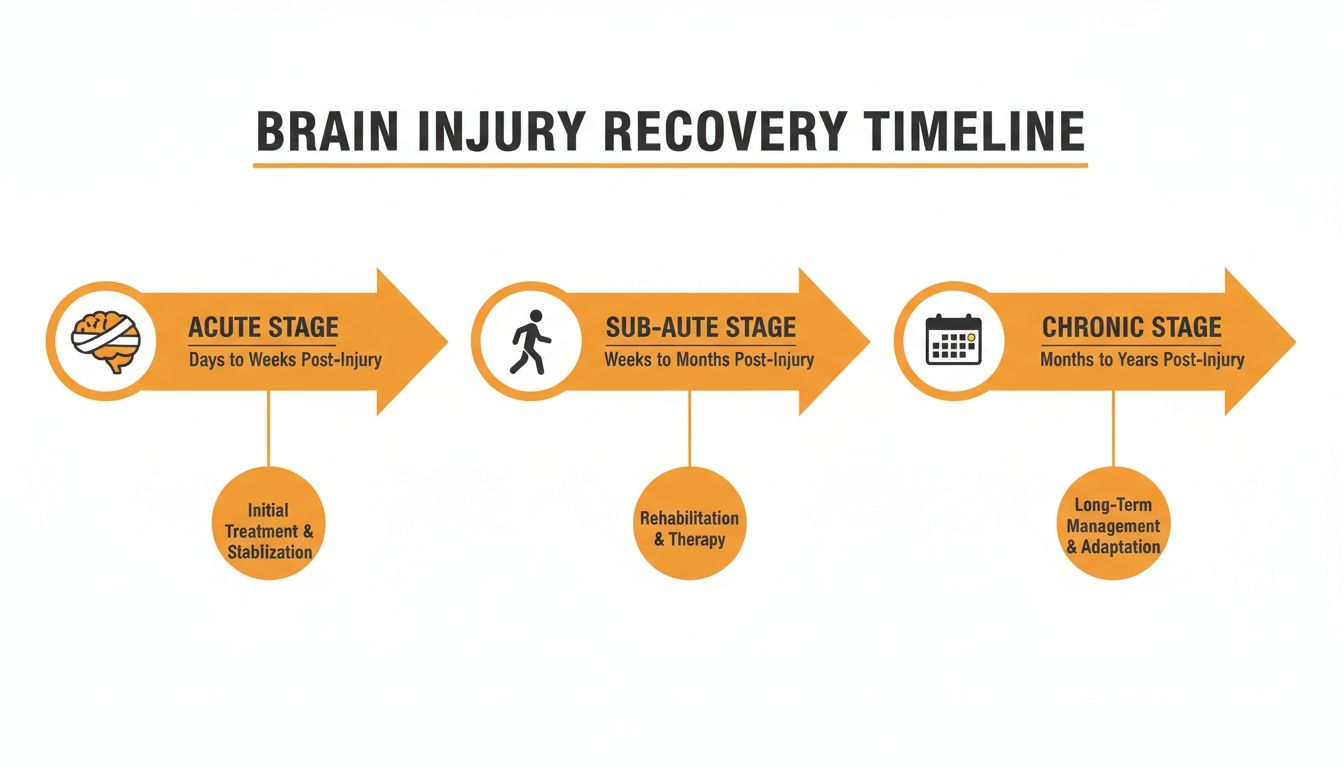
As you can see, healing begins right away. But the nature of that healing and the focus of rehabilitation shift dramatically over time, moving from immediate medical stabilization to long-term adaptation and learning to live a new normal.
Understanding the Stages of Healing
Knowing what to expect in each phase helps everyone—clinicians, families, and the individual—set realistic goals and plan for the right kind of support at the right time.
The Acute Stage (First Days): Right after the injury, the entire focus is on medical stability. In the hospital, the team works around the clock to prevent any further damage and manage the immediate crisis. This is a time of intensive medical care.
The Sub-Acute Stage (Weeks to Months): This is where the hard work of active rehabilitation really kicks into high gear. The brain is in a state of heightened neuroplasticity, like a sponge ready to soak up new information. This makes it an incredibly important window for therapies to make a significant impact.
The Chronic Stage (Months to Years): Recovery doesn't just stop after a few months. It continues, often for years. While progress might feel slower and more gradual, meaningful improvements in function and quality of life are absolutely still possible with persistence and the right adaptive strategies.
The brain's incredible ability to reorganize itself and form new connections, a process called neuroplasticity, is the engine that drives all recovery. This timeline isn’t about passively waiting for time to pass; it’s about actively stimulating that healing process through targeted, consistent rehabilitation.
Understanding the general timeline and how long it takes for the brain to heal is vital for managing expectations. It reinforces the need for patience and persistence. The scale of this challenge is not small; in California alone, in 2014, nearly 32,900 people were hospitalized with a non-fatal traumatic brain injury, with another 251,000 treated in emergency rooms.
To create a truly effective therapy plan, you need a detailed map of the person's cognitive strengths and weaknesses. A formal evaluation pinpoints specific deficits, which allows therapists to tailor their approach for a much more efficient and successful recovery. You can learn more about this in our guide on neuropsychological assessments.
For a quick reference, the table below gives a high-level summary of what to expect based on the injury's severity.
Overview of Brain Injury Recovery Timelines by Severity
This table outlines the typical phases and goals you might see for mild, moderate, and severe brain injuries. Remember, these are general guidelines, and every person's path will be unique.
Injury Severity | Typical Acute Phase (First 2 Weeks) | Sub-Acute Phase (2 Weeks to 6 Months) | Chronic Phase (6+ Months) | Key Recovery Goal |
|---|---|---|---|---|
Mild | Symptoms often resolve in days to weeks with focused rest and monitoring. | Return to daily activities, usually with some monitoring and gradual re-engagement. | Full functional return is common, with strategies to manage any lingering symptoms like headaches or fatigue. | Symptom Resolution |
Moderate | Usually requires hospitalization. Post-traumatic amnesia is common. | A period of intensive rehab (PT, OT, SLP) where significant functional gains are made. | Progress may slow, with a focus on maximizing independence and learning adaptive strategies. | Functional Independence |
Severe | Often involves ICU care, potential coma, and a primary focus on medical stabilization. | Extensive inpatient rehabilitation is required. Progress in basic functions can be slow and hard-won. | Requires ongoing, often lifelong support. The focus shifts to maximizing function and ensuring quality of life. | Maximizing Function |
This table helps illustrate how the intensity of the injury dictates the recovery path. While the journey after a severe injury is longer and more complex, progress is always the goal.
Navigating the First Month of Recovery
The first four weeks after a brain injury are without a doubt the most critical, and often the most chaotic, part of the entire recovery journey. This is the acute phase. The primary, all-consuming goal is medical stabilization—keeping the person alive and preventing any further damage to the brain. It's a time filled with tremendous uncertainty, but understanding what’s happening can be a powerful anchor for both clinicians and families.
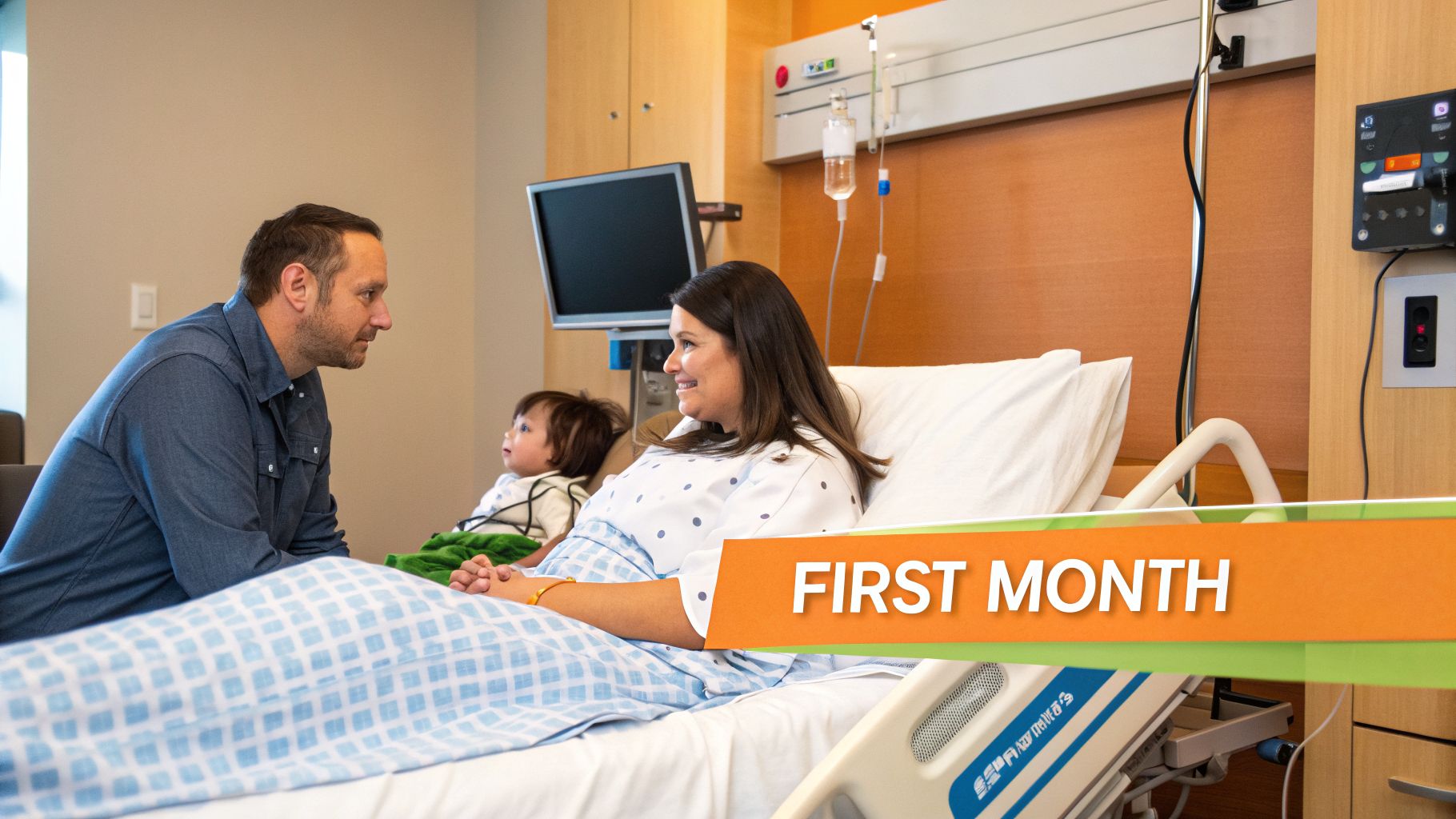
In the immediate aftermath of the injury, the brain kicks off a massive inflammatory response called neuroinflammation. I often tell families to think of it like an emergency crew rushing to a disaster site. While their intention is purely to help, the sheer volume of activity can create its own congestion and collateral damage. Medical teams work around the clock to manage this swelling and intracranial pressure, fighting to protect the healthy brain tissue that survived the initial impact.
This intense period is almost always spent in the Intensive Care Unit (ICU), a setting that can be incredibly overwhelming for families. The constant chorus of beeping machines, the tangle of tubes, and the foreign medical jargon can feel like being dropped into another world.
What to Expect in the ICU
For families, the ICU environment itself is intimidating. But knowing the "why" behind the chaos can go a long way in easing that anxiety. Every single machine and monitor is there for a reason, tracking stability and providing essential life support.
Practical Tip for Families: Don't ever be afraid to ask the nurses to explain what a machine does. For example, simply asking, "What does that beep mean?" can transform anxiety. Learning that a specific sound is a routine pressure check—and not a new crisis—can bring a profound sense of relief and a sliver of control.
Communication during this time is often minimal, if not entirely non-verbal. A squeeze of the hand, a flicker of the eyes, a soft groan—these might be the only signs of connection you get. It’s absolutely crucial for caregivers to recognise these moments as the significant steps forward they truly are, no matter how small they seem.
Assessing Severity and Tracking Early Progress
For the clinical team, the immediate priority is to get a handle on the extent of the damage. One of the cornerstone tools we use right at the bedside is the Glasgow Coma Scale (GCS). This scale gives us a quick, objective score based on a person’s eye, verbal, and motor responses.
A GCS score is vital for a few key reasons:
Establish a baseline: It gives us that first snapshot of the injury's severity right out of the gate.
Monitor for changes: A drop in the GCS score is a red flag. It can signal a worsening condition, like increased brain swelling, and tells us we need to intervene immediately.
Inform prognosis: While it's no crystal ball, the initial GCS score provides early insights into the potential long-term recovery timeline.
As the person begins to stabilise, they may emerge into a state of post-traumatic amnesia (PTA). This is a period of deep confusion and disorientation where they simply can't form new day-to-day memories. It can be deeply distressing for families to see their loved one agitated, confused, or even unable to recognise them. Please know, this is a very common and usually temporary stage of healing.
Actionable Insight: Create a calm, reassuring environment. Speak in a gentle tone, keep visitors to a minimum, and play soft, familiar music. A practical step is to put a sign on the door asking visitors to speak quietly and stay for only short periods. The goal is to reduce agitation and give the brain the quiet space it needs to heal.
The journey out of PTA is a major milestone, signalling a move toward more consistent awareness. Managing stimulation during this transition is absolutely critical. An injured brain is easily overwhelmed, which can stall recovery and cause significant distress. This is also when sleep becomes profoundly important for healing; you can learn more about its impact in our guide to managing sleep after concussion.
This first month truly sets the foundation for everything that comes next. By navigating the acute medical crisis while fostering a supportive, low-stress environment, the team and family together pave the way for the intensive rehabilitation journey that lies ahead. We're shifting the goal from just surviving to actively recovering.
The Critical Window for Rehabilitation
When we talk about brain injury recovery, there’s a period we in the field often call the “critical window.” This timeframe, typically from one to six months post-injury, is when the brain’s natural ability to heal and form new connections—what we call neuroplasticity—is firing on all cylinders.
Imagine the brain in this sub-acute stage as incredibly fertile soil. It’s uniquely ready for intensive, targeted therapy to plant the seeds of recovery. This is when we can make the most significant gains, and it’s why rehabilitation becomes the absolute priority.
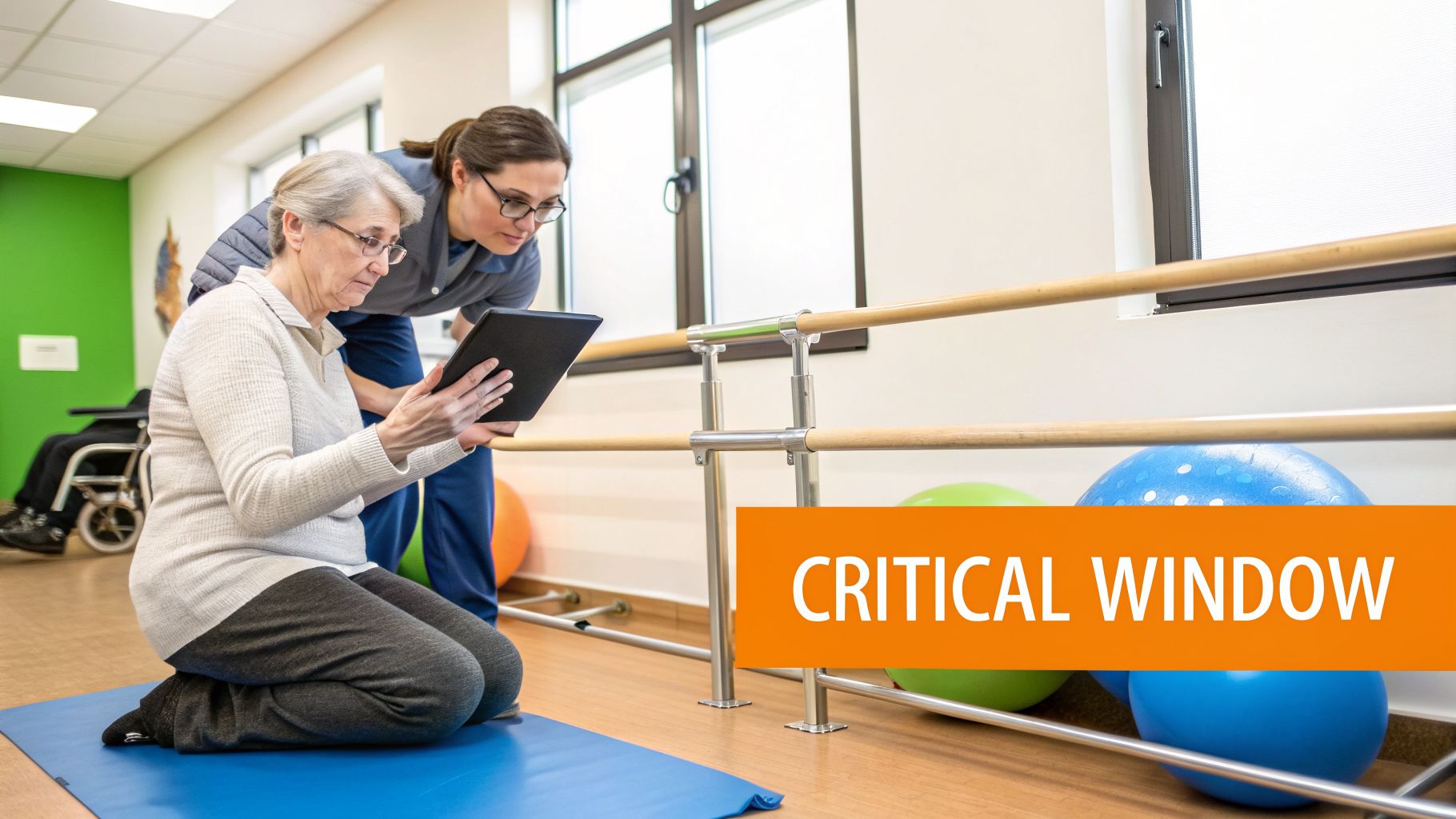
During this time, it’s all hands on deck. A coordinated team of specialists comes together, each bringing their expertise to address different facets of the injury. This team approach is essential to capitalize on this period of heightened brain activity and help individuals reclaim as much function as possible.
The Collaborative Rehabilitation Team
No one person can tackle a brain injury alone. True recovery is a team sport, requiring a multi-disciplinary group that builds a complete, person-centred plan.
Physiotherapists: These are the experts in rebuilding gross motor skills. For example, in the beginning, that might be something as fundamental as learning to sit up in bed. As the person gets stronger, the work evolves to practicing balance while standing, and eventually walking down a hallway with assistance.
Occupational Therapists (OTs): OTs are all about helping people get back to the “occupations” of daily living. For example, this could mean relearning the sequence of getting dressed, or it could be more complex, like practicing how to safely make a sandwich in the rehab kitchen.
Speech-Language Pathologists (SLPs): When communication is a struggle, SLPs step in. They work on everything from finding the right words (aphasia) and speaking clearly (dysarthria) to understanding what others are saying. They’re also critical for addressing swallowing problems (dysphagia) and rebuilding the cognitive skills needed for conversation.
Neuropsychologists: These specialists help navigate the cognitive and emotional aftermath. They work with individuals on strategies to manage memory gaps, attention problems, and the powerful, often disorienting, emotional shifts that are so common after a brain injury.
Getting access to comprehensive support, like specialized physical therapy and fitness rehabilitation services, is a game-changer during this critical period. This teamwork ensures that every piece of the recovery puzzle is being worked on at the same time.
From Basic Mobility to Complex Cognition
Therapy in this window isn't static; it has to adapt as the person recovers. We always start with the fundamentals and then progressively build toward more complex skills that layer on top of each other.
Practical Example: An OT might start by helping someone simply practice holding a fork correctly. A few weeks later, the goal might shift to eating an entire meal on their own. Down the road, that same person might be working on planning and preparing a simple lunch—a task that ties together memory, sequencing, and fine motor skills.
The goal isn't just to repeat tasks but to challenge the brain to form new connections. Each successful attempt, no matter how small, reinforces these new neural pathways, making the skill stronger and more automatic over time.
Of course, this journey has its bumps. Overwhelming fatigue and sudden emotional ups and downs are incredibly common, and they can feel like huge setbacks. It’s so important for families and individuals to know that this is a normal part of the healing process, not a sign of failure. A huge part of rehab is learning practical ways to handle these hurdles, like energy conservation techniques and emotional regulation skills. We dive deeper into this process in our guide on neurorehabilitation strategies.
Maximizing Progress with Objective Data
Because this critical window is so precious, we have to make every single therapy session count. This is where getting good, objective data becomes indispensable. Relying only on observation to figure out a specific deficit can take weeks of valuable time. A precise, data-driven assessment can often get to the heart of the problem in minutes.
Actionable Insight: A therapist might use a 30-minute OrangeCheck assessment to see if a patient’s trouble following instructions is coming from a working memory deficit or a slow processing speed. With that specific insight, they can immediately adjust therapy to target the root cause—making much faster progress and truly capitalizing on the brain's heightened neuroplasticity. The need for this kind of precise care is staggering. A landmark UCSF study pointed out that while prognoses are getting better, the long-term recovery for the thousands of people hospitalized for TBI in a place like California each year depends on getting timely, effective rehabilitation.
Adapting to Life After Six Months
Once the initial whirlwind of intensive therapy begins to settle, many individuals and their families find themselves in what’s often called the chronic phase of brain injury recovery. This stage, which usually starts around the six-month mark, can feel unsettling. The dramatic, day-to-day leaps in progress might not be as obvious anymore, but it's a huge mistake to think recovery has come to a standstill.
This isn't about reaching an end point. It’s about a change in direction. The focus makes a critical shift from intensive, facility-based rehab to the messy, real-world challenge of getting back into the rhythm of daily life. The goal changes from "recovering" skills in a clinic to "adapting" and using those hard-won skills at home, school, or work.
Debunking the Recovery Plateau
One of the most persistent and damaging myths in the world of brain injury is the idea of a “plateau.” It’s the belief that after a certain point—usually six months to a year—progress just stops, and the abilities a person has are all they will ever have. This is simply not true.
While the brain’s incredible capacity for neuroplasticity does slow down after that initial, critical window, it never shuts off completely. Think of it like learning any complex new skill. At first, you make huge strides, but over time, improvement becomes more gradual. It takes more focused, deliberate practice to keep moving forward. Meaningful gains in cognitive function, independence, and quality of life can, and do, continue for years—even decades—after an injury.
The "chronic phase" is not a phase of stagnation; it is a phase of endurance and adaptation. This is where consistent, real-world application of skills and compensatory strategies builds lasting change.
This shift calls for a new mindset. Instead of just waiting for the brain to heal on its own, the focus moves to actively creating strategies and environments that fuel ongoing progress.
Managing Persistent Long-Term Challenges
As people start to re-engage with their world, certain challenges often become much more apparent. These aren't new problems, but underlying deficits that are put under a microscope by the demands of everyday life.
Common long-term issues that surface include:
Executive Dysfunction: This is a catch-all term for difficulties with things like planning, organizing, and problem-solving. A practical example is someone who can follow a recipe step-by-step just fine but feels completely overwhelmed trying to plan a week's worth of meals on their own.
Anxiety and Emotional Changes: Stepping back into social circles or a classroom can be incredibly daunting. The fear of "not keeping up" or making a mistake can easily lead to social withdrawal and crippling anxiety.
Cognitive and Physical Fatigue: The brain is still working much harder to do things that used to be automatic. This mental heavy lifting is exhausting and leads to a deep fatigue that a simple nap can't fix.
The key to managing these issues isn't to just "try harder," but to work smarter. This is where compensatory tools come in—practical aids that help bridge the gap between a person’s current ability and a task’s demands. For instance, a student struggling with memory and organization could use a digital calendar packed with multiple alarms and detailed notes for every assignment. The tool doesn't "fix" the memory deficit, but it empowers them to succeed in spite of it. To learn more, you can explore our guide on the long-term effects of concussion and the strategies to manage them.
From Passive Waiting to Active Management
In this long-term phase, waiting for a major problem to pop up before seeking help is a recipe for setbacks. A much more effective path is active management, driven by objective data.
Actionable Insight: Imagine a family notices a loved one is having more trouble with their daily routine, but they can't quite put their finger on why. Instead of just worrying, they could use a tool from Orange Neurosciences for a periodic cognitive check-in. If the results show a measurable dip in memory scores over three months, they now have concrete data to bring to their neurologist.
This simple step turns a vague concern into a clear action plan. It allows the care team to intervene proactively—maybe by tweaking a strategy or adjusting therapy—long before the decline impacts safety or independence. This approach transforms families from passive observers into active partners on their own long-term recovery journey.
Key Factors That Influence Your Recovery Timeline
Why do two people with seemingly similar injuries often have vastly different recovery journeys? The truth is, there's no single script for brain injury recovery. The timeline is shaped by a handful of critical factors that can either clear the path for progress or create significant roadblocks.
For clinicians and families, understanding these variables is a game-changer. It helps paint a clearer picture of the unique challenges and strengths each person has, which leads to more realistic goals and much more effective support.
The Individual’s Personal Profile
The starting point for any recovery journey is the person themselves. Two of the biggest pieces of the puzzle are age and any pre-existing health conditions, as they really set the stage for how well the brain can heal.
A person's age when the injury happens plays a huge role. Younger brains generally have more neuroplasticity, which is the brain's incredible ability to adapt and rewire itself. This often means a faster and more complete recovery compared to an older adult with a similar injury.
This is especially true for older adults, who may already be facing other health risks. For instance, adults in California aged 55 and older are particularly vulnerable; data shows thousands of deaths and hospitalizations from TBIs in this group each year. For them, recovering from even a mild injury can be a longer road, while more severe injuries can lead to lasting challenges that demand long-term therapy. You can explore the data on TBI outcomes in California to get a deeper look at the numbers.
The Nature of the Brain Injury
No two brain injuries are exactly alike. The specific details of the injury—its location, type, and severity—are powerful clues to the recovery path that lies ahead. The location of the injury is especially critical.
Think of the brain as a highly specialized company. An injury to the "communications department" (the temporal lobe) will likely cause speech and language issues. But if the "CEO's office" (the frontal lobe) is hit, you’ll see problems with planning, decision-making, and emotional regulation.
A small, focused injury in a critical area like the brainstem, which controls our most basic life functions, can be far more devastating than a larger injury in an area with more redundant functions. The "where" matters just as much as the "how bad."
The severity, which is graded in the hospital using tools like the Glasgow Coma Scale, also sets the initial trajectory. A mild TBI might clear up in a few weeks, but a severe injury will require months, if not years, of dedicated rehabilitation.
Quality and Consistency of Therapeutic Care
Getting the right therapy at the right time is one of the most powerful ways to speed up recovery. On the flip side, uncoordinated or generic therapy can stall progress, wasting precious time in those crucial early months.
Below is a table outlining some of the key factors that can either speed up or slow down recovery, along with some practical advice for clinicians and caregivers.
Factors Impacting Brain Injury Recovery Speed
Factor | Accelerating Influence (Positive Example) | Decelerating Influence (Negative Example) | Actionable Insight |
|---|---|---|---|
Therapy Engagement | A family that actively practices speech exercises at home, reinforcing what's learned in therapy sessions. | A patient who only engages in therapy during scheduled appointments, with little practice in between. | Turn therapy into a 24/7 process. Integrate simple, targeted exercises—like memory games on a tablet during breakfast—into daily routines to maximize repetition and learning. |
Care Coordination | The inpatient rehab team provides a detailed handover to the outpatient therapists, ensuring a seamless transition. | Poor communication between care providers leads to a loss of momentum and conflicting therapy plans. | Prioritize a unified care strategy. Ensure all therapists and doctors are on the same page. Our guide to ensuring continuity of care in neurorehabilitation offers a framework for this. |
Emotional Support | A strong, positive support system (family, friends, support groups) that provides encouragement and reduces stress. | Social isolation or a stressful home environment, which can lead to depression and anxiety, hindering cognitive recovery. | Build a strong support network. Emotional and psychological well-being is just as important as physical therapy for brain healing. Seek out local or online TBI support groups. |
Early Intervention | Comprehensive cognitive assessments are performed early on, allowing for a precise, targeted therapy plan from day one. | A "wait-and-see" approach where specific deficits are not identified until weeks or months post-injury. | Don't guess, assess. Use detailed assessments right away to identify the exact cognitive deficits and design a personalized plan. This allows for immediate, targeted action. |
This table shows just how much is within our control. The most successful recovery journeys don't just happen; they are actively built through consistent, coordinated, and personalized effort from everyone involved.
Ultimately, the best therapy is precise. By using an advanced assessment platform to get a detailed cognitive profile from the beginning, clinicians can skip the guesswork. They can design a therapy plan that zeroes in on specific deficits—like a processing speed issue versus an attention problem—which can shorten the recovery timeline and dramatically improve the final outcome.
Taking the Guesswork Out of Recovery
When you're navigating the brain injury recovery timeline, it's easy to feel like you're just waiting for things to get better. But here’s a critical truth we’ve learned from working with families and clinicians: recovery isn't a passive waiting game. It's a process you can actively shape.
The journey through the acute, sub-acute, and chronic phases is full of real-world challenges. How do you pinpoint the exact cognitive slip-ups? How do you keep motivation from tanking when progress feels slow? A proactive, data-informed approach is the answer, turning those vague worries into a clear, actionable plan.
This is where the theory we talk about in clinics and labs meets the pavement of real life. Instead of guessing why a patient is struggling, objective data gives you a map.
From Guesswork to a Precise Plan
Think about a common scenario: a child goes back to school after a concussion and just can't keep up. The teacher says they're not paying attention. But is it really an attention deficit? Or is it slowed processing speed? Maybe it's a short-term memory issue? Without a clear answer, any school accommodation plan is just a shot in the dark.
Actionable Insight: A clinician can use a platform like our ReadONPlus to get a clear cognitive profile in less than 15 minutes. The results might show that the child’s attention is perfectly fine, but their processing speed is lagging.
That single insight changes everything. The plan can now focus on giving the student extra time on tests instead of a generic, and often frustrating, focus on "trying to pay attention."
By pinpointing the exact nature of a cognitive deficit, therapists can design truly targeted interventions right from day one. This cuts out weeks of trial-and-error, making therapy far more efficient and speeding up progress during those all-important recovery windows.
Keeping the Engine Running for Long-Term Gains
Another huge hurdle, especially in long-term recovery, is just keeping everyone engaged. Repetitive, boring exercises can lead to burnout for the patient and frustration for the family. This is a massive risk during the chronic phase, where the gains are often smaller and harder-won.
This is where game-based training offers a powerful, human-centred solution. By weaving therapeutic exercises into genuinely engaging activities, platforms from Orange Neurosciences make cognitive training feel less like a chore and more like play.
This isn't just about making things "fun." It’s a strategic approach that boosts motivation and encourages the consistent, daily practice needed to drive neuroplasticity and forge lasting skills.
This modern approach empowers everyone involved—clinicians, therapists, and families—to take real charge of the recovery journey. By replacing uncertainty with objective data and swapping frustration for engaging therapy, you can optimize the entire brain injury recovery timeline from start to finish.
Ready to see how a data-driven platform can bring this level of clarity to your practice or your family? Explore how Orange Neurosciences delivers the insights you need to optimize cognitive care.
Frequently Asked Questions About Brain Injury Recovery
When a loved one suffers a brain injury, the path ahead can feel overwhelming and full of uncertainty. Families and clinicians alike often grapple with the same tough questions. Let's tackle some of the most common concerns we hear from people navigating the recovery journey.
How Long Does Brain Swelling Last After a Severe Injury?
The initial, most aggressive brain swelling is a major focus for the medical team in the first few days right after the injury. They work intensively to manage it. But the effects of that inflammation on things like thinking and concentration can stick around for weeks, or even months.
Practical Example: A survivor might seem to be doing well, but a month after coming home, they suddenly struggle with paying attention. This isn't a new problem popping up out of nowhere. It's often the lingering echo of that initial swelling. This is exactly why we can't stop monitoring progress just because someone has left the hospital.
Can a Person Fully Recover From a Severe Brain injury?
The term "full recovery" can be a painful trap. It sets an expectation of returning to the exact person they were before, which isn't always possible and can lead to a lot of frustration. A much healthier and more empowering way to think about it is aiming to maximize functional ability and quality of life. Some changes might be permanent, but they absolutely do not define a person's future.
Recovery is about progress, not perfection. Continuous rehabilitation and the use of adaptive strategies can lead to remarkable levels of independence and a rich, fulfilling life.
Practical Example: Someone who now struggles with their memory might not get their old recall ability back. But by mastering memory aids, setting alarms on their phone for appointments, and using organizational apps, they can absolutely succeed at their job and manage their life with confidence. That is what a successful recovery looks like.
What Is the Best Way to Track Cognitive Progress at Home?
Keeping a daily journal to note behaviours, moods, and small wins is a wonderful way to stay connected to the process. The trouble is, it's subjective. It tells you how things feel, but not always what's really happening under the surface. For care that truly makes a difference, you need objective data.
Actionable Insight: Partner with clinicians who use validated tools to get reliable data on specific cognitive functions like attention, processing speed, and memory. This changes the game for caregivers. You're no longer just a passive observer; you become an active, informed partner in the recovery process. Instead of saying, "he seems more forgetful this week," you can point to data showing a specific dip in working memory, which allows therapists to provide faster, more targeted support.
Understanding the brain injury recovery timeline means moving beyond guesswork and intuition. Orange Neurosciences provides the objective data and engaging therapy tools you need to build clear, effective, and truly personalized recovery plans. Learn how to bring data-driven clarity to your cognitive care today at orangeneurosciences.ca.
Orange Neurosciences' Cognitive Skills Assessments (CSA) are intended as an aid for assessing the cognitive well-being of an individual. In a clinical setting, the CSA results (when interpreted by a qualified healthcare provider) may be used as an aid in determining whether further cognitive evaluation is needed. Orange Neurosciences' brain training programs are designed to promote and encourage overall cognitive health. Orange Neurosciences does not offer any medical diagnosis or treatment of any medical disease or condition. Orange Neurosciences products may also be used for research purposes for any range of cognition-related assessments. If used for research purposes, all use of the product must comply with the appropriate human subjects' procedures as they exist within the researcher's institution and will be the researcher's responsibility. All such human subject protections shall be under the provisions of all applicable sections of the Code of Federal Regulations.


© 2026 by Orange Neurosciences Corporation