Your Guide to Modern Cognitive Assessment Tools in 2026
Mar 28, 2026
Cognitive assessment tools are standardized methods we use to measure an individual's specific cognitive abilities—things like memory, attention, and how they solve problems. Think of it as a 'check-up for your brain's engine.' It moves us beyond guesswork to give a clear, objective picture of how different parts of the brain are performing, providing actionable insights for support and intervention.
Understanding Cognitive Assessment Tools
These tools aren't just for finding problems. Their real power lies in mapping a person's unique profile of cognitive strengths and weaknesses. Professionals in both healthcare and education depend on them to gather objective data, which is absolutely vital for creating care plans that are both effective and truly personalized.
For example, a therapist might use an assessment to figure out why a student is struggling with reading comprehension. Instead of just assuming it's a lack of effort, the data might point to an issue with working memory. This is an actionable insight because it leads to a new strategy: instead of "try harder," the new approach might involve using memory aids or breaking down instructions into smaller steps.
Why Actionable Data Is Crucial
Subjective reports from patients, parents, or teachers are valuable, of course, but they can be incomplete or even unintentionally biased. A child who is described as "inattentive" might actually have a slow processing speed. That single distinction can completely redirect how we provide support.
Cognitive assessment tools provide the hard data needed to get to the root cause.
This evidence-based approach has several key benefits:
Creating a Reliable Baseline: An initial assessment establishes a clear and reliable starting point. This baseline is invaluable for measuring progress or decline over time, especially after an injury or a new intervention.
Tracking Progress Objectively: After a period of therapy or educational support, a follow-up assessment can show concrete, measurable improvement, providing clear justification for the care plan.
Informing Personalized Plans: The detailed data allows clinicians and educators to move away from a one-size-fits-all approach. Instead, they can build targeted interventions that address specific cognitive needs.
The demand for these precise instruments is growing fast. In 2023, the global cognitive assessment and training market was valued at USD 6.05 billion, with North America holding a 38.7% share. This growth is fuelled by an aging population and a much greater focus on mental health in both clinical and corporate settings.
A cognitive assessment provides the "what" and "why" behind the behaviours we observe. It replaces assumptions with evidence, empowering professionals to build support strategies that genuinely work because they are tailored to an individual's specific cognitive architecture.
The modern view of cognitive support also includes digital aids designed to help with daily functioning. For instance, understanding the wide range of helpful autism communication tools gives us context for how technology can support cognitive processes in real-world scenarios.
Ultimately, whether it's for assessment or support, these tools are all about gaining clarity. If you're interested, you can take a deeper dive into what cognitive assessment is in our related guide.
The Evolution of Cognitive Assessment Tools
Not too long ago, a cognitive assessment meant sitting in a quiet room with a neuropsychologist, a stack of paper, and a stopwatch. These classic paper-and-pencil tests were the gold standard for decades, and they laid the very foundation of how we measure cognitive skills. They gave us invaluable insights, and many are still in use today.
A practical example is the Trail Making Test, where a person connects a series of dots in a specific sequence. While powerful, these traditional methods have challenges in a busy clinic or classroom. They take a lot of time to administer, score by hand, and interpret, which can mean a long, frustrating wait between testing and getting the help a person needs.
The Shift to Computerized Assessments
Then came the computers, and everything started to change. Early computerized cognitive assessments took the trusted principles of the paper tests and put them on a screen. This brought a level of speed and consistency that was simply impossible before. Suddenly, scoring was instant and automatic. The risk of human error in scoring vanished, and the administrative headache for practitioners was dramatically reduced.
A test that might have taken an hour to score by hand could now produce a report in seconds. The precision was also a game-changer. A computer can track reaction time down to the millisecond—a level of detail you just can't get with a manual stopwatch. This opened the door to a much deeper analysis of cognitive domains like processing speed and attention.
But many of these first-generation digital tools were just that: digital versions of old paper forms. They were more efficient, yes, but not always more engaging. A simple task asking you to press a button when a shape appears can feel clinical and impersonal, and it might not show how a person's brain really works in the real world.
The Rise of Gamified and Interactive Tools
This brings us to today, where the most exciting developments are happening with gamified and interactive cognitive assessment tools. These modern platforms are where sophisticated psychometric science meets engaging, game-like design. This isn’t about making tests "fun" just for the sake of it; it's about creating an experience that is more natural, less stressful, and ultimately, gives us much richer and more accurate data.
Gamification can turn an assessment from a passive, often intimidating test into an active, engaging challenge. This is a massive shift, especially for children and older adults who might find traditional or sterile computerized tests confusing or overwhelming.
Let’s go back to that reaction speed test. A traditional computerized test might have you press a key when a square appears. A gamified assessment, however, could turn this into a game where you have to "catch" falling apples while ignoring falling leaves.
This small change provides actionable insights by giving us so much more information:
Selective Attention: Can the user stay focused on the apples and tune out the distracting leaves?
Response Inhibition: How well do they stop themselves from clicking on the wrong item?
Sustained Performance: Does their speed or accuracy drop off as the game goes on, showing signs of fatigue?
This kind of layered data provides a far more complete picture of executive functions than a simple button-press ever could.
Why Engagement Drives Better Data
It's simple, really: an engaged person is more likely to show us what they can truly do. When someone, especially a child, feels bored, anxious, or pressured, their test performance can reflect their emotional state more than their actual cognitive ability. Game-based cognitive assessment tools get around this by creating a motivating and encouraging environment.
This journey from paper to gamification is more than just a tech upgrade. It’s a fundamental change in how we think about measuring cognition. We've moved from static, one-dimensional tasks to dynamic assessments that give us data with far greater ecological validity—meaning it better reflects how a person thinks, learns, and solves problems in their everyday life. This journey ensures the insights we gain are not only more precise but also more meaningful for creating support plans that truly work.
To see how these modern tools are being used in practices right now, you can explore our resources on cognitive assessment online and get a clearer picture of their real-world application.
How to Choose the Right Cognitive Assessment Tool
Choosing the right cognitive assessment tool can feel like a daunting task. With so many options out there, it’s easy to get lost. But it doesn't have to be overwhelming. The real secret is finding a tool that fits your specific environment and goals—one that bends to your workflow, not the other way around.
It all starts with two non-negotiable cornerstones: validity and reliability. Think of it this way: validity asks, "Is this tool actually measuring what it says it's measuring?" Meanwhile, reliability asks, "If I run this test again, will I get a consistent result?"
Any tool that's weak on either front is like a compass that points somewhere different every time you use it. It’s not just unhelpful; it's actively misleading. A truly great assessment gives you data you can hang your hat on, empowering your clinical judgment and helping you build care plans that actually work.
Aligning the Tool with Your Needs
Once you’ve confirmed a tool is psychometrically sound, the next step is to hold it up against the realities of your practice. A rapid screener designed for a busy primary care office has a totally different job than a deep, comprehensive battery used in a dedicated neuropsychology clinic. Your needs dictate the tool.
This flowchart maps out a simple way to think about your starting point, whether your practice is built on traditional methods, digital efficiency, or interactive engagement.
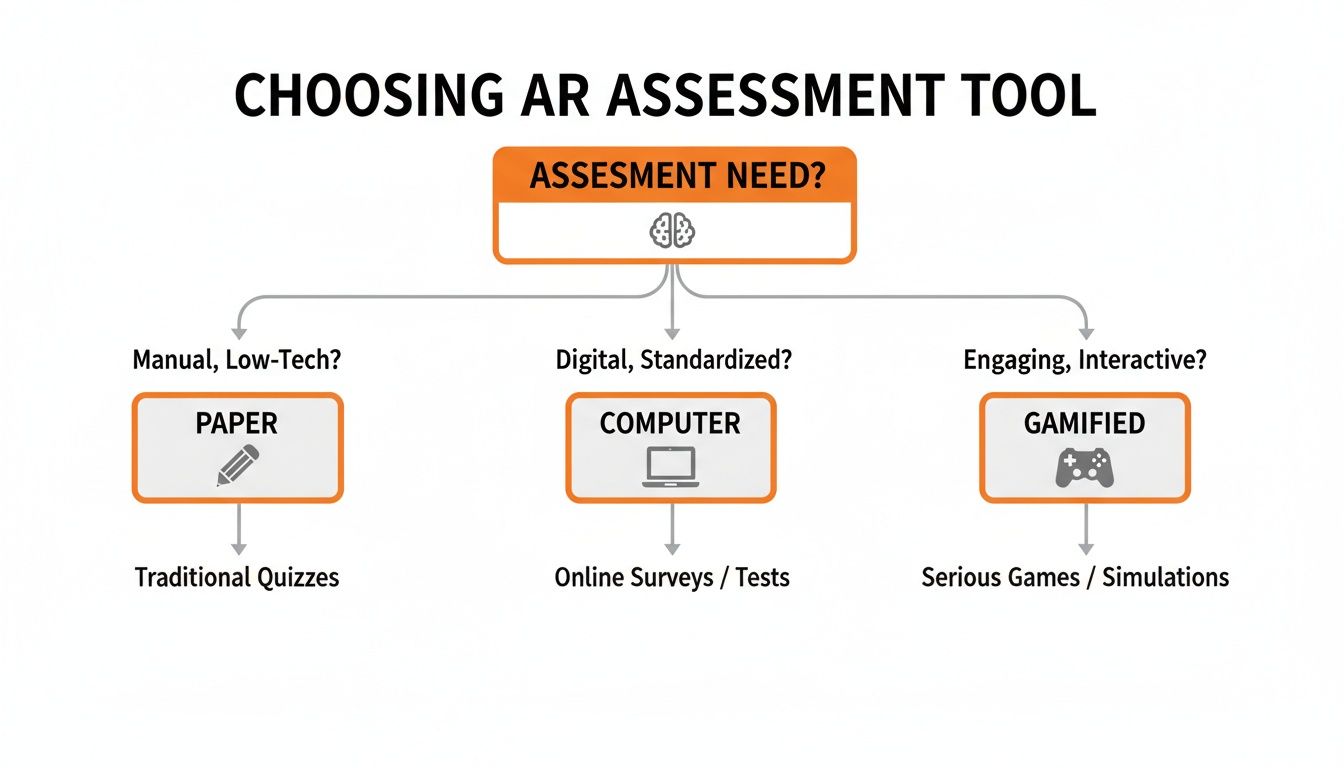
As you can see, the core need of your practice—be it documentation, speed, or engagement—is the clearest signpost pointing you toward the right type of assessment.
A Practical Checklist for Selection
To feel confident in your decision, run through these questions. They're designed to pinpoint the tool that will feel like a natural extension of your work.
Target Population: Who are you serving? A gamified assessment might be brilliant for getting a child with suspected ADHD to participate, while a simpler interface could be far better for an older adult facing motor challenges.
Clinical or Educational Setting: Where will the testing happen? A quiet, controlled clinic offers a different environment than a bustling school hallway. You need a tool that can capture solid data even when the world around it is chaotic.
Administration Time: Let's be honest—how much time do you really have? Modern platforms like Orange Neurosciences are built to deliver a full cognitive profile in under 30 minutes, respecting both your packed schedule and your client's attention span.
Scoring and Reporting: How fast do you need the results? Automated scoring and instant reports are no longer a luxury; they're essential for efficiency. The best tools give you reports that are clear, easy to understand, and ready to share with families or educators.
The push for these kinds of efficient solutions is exploding, especially in North America. By 2025, the region is set to command a 56.40% share of the global cognitive assessment market in healthcare. This market is projected to soar from USD 5.91 billion in 2025 to a staggering USD 26.32 billion by 2034. A huge part of this growth is fueled by the demand for scalable software that can help with early detection of conditions like ADHD and dementia. You can read the full research on this expanding market to dig into the trends.
Integration and Cost Considerations
Finally, think about the nuts and bolts. How will a new tool plug into your existing systems, like your Electronic Health Record (EHR) or Learning Management System (LMS)? A tool that integrates seamlessly can save you hundreds of administrative hours and prevent frustrating data-entry errors.
The best cognitive assessment tool is one that empowers your practice without disrupting it. It should feel like a natural extension of your expertise, providing the objective data you need to make confident, evidence-based decisions for the people you support.
Cost, of course, is always a factor. Look beyond the sticker price to the total cost of ownership, which includes subscriptions, per-assessment fees, and any necessary hardware. An affordable, scalable solution means you can offer these critical assessments more widely, improving access to care for everyone.
By thinking through these criteria, you can choose a tool that doesn't just give you accurate data, but genuinely enhances your ability to provide personalized, effective support. To explore how modern tools are being used in practice, visit our website or send us an email to discuss your specific needs.
Seeing Cognitive Assessment Tools in Action
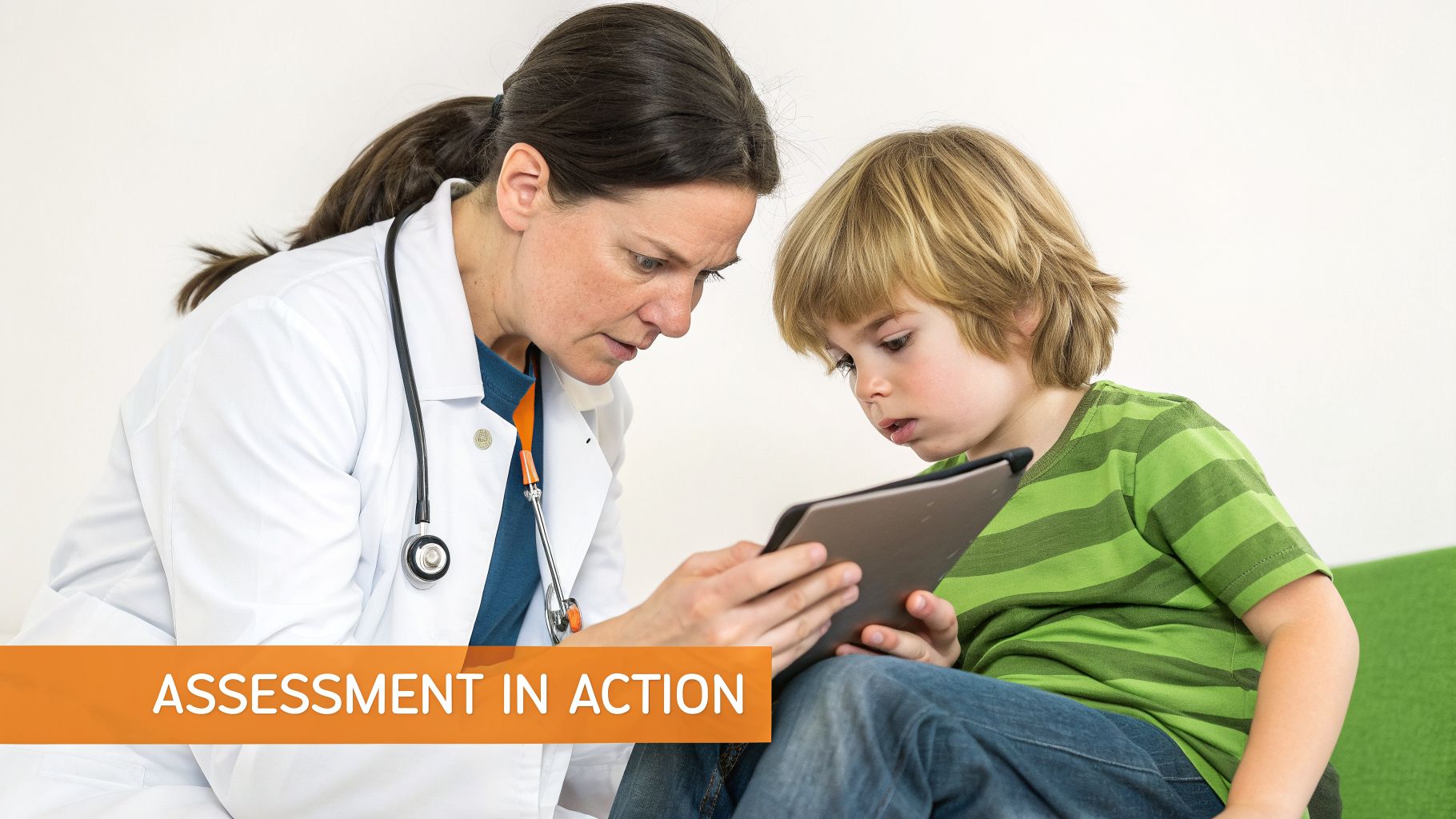
Understanding the theory behind cognitive assessment tools is one thing, but their real power comes alive when you see them in action—when they directly improve outcomes for students, patients, and seniors.
These tools are all about transforming subjective observations ("he seems distracted") into objective, actionable data. Let's step into a couple of real-world settings to see exactly how this works.
In a Developmental Pediatrician's Office
Imagine Dr. Anya Sharma, a developmental pediatrician, meeting her new patient, seven-year-old Leo. His parents and teachers describe him as "bright but constantly distracted," struggling to finish tasks. They suspect ADHD, but Dr. Sharma knows from experience that many different issues can look like inattention.
Instead of just observing, she turns to a game-based assessment tool. For the next 20 minutes, Leo is happily playing engaging games on a tablet, but he’s also being discreetly measured on his selective attention, response inhibition, and working memory.
The results are immediate. The report reveals that while Leo's working memory is perfectly fine for his age, his response inhibition is significantly below the baseline. He has a hard time stopping himself from reacting to distractions—a very specific weakness in his executive functions.
This single piece of objective data changes everything. Instead of a general ADHD diagnosis, Dr. Sharma can now explain to Leo's parents that the core issue is his brain's "braking system." Her actionable insight allows her to create a targeted intervention plan focused on impulse control, and just as importantly, they now have a clear, objective baseline to track his progress against over the next six months.
This evidence-based approach is a big reason why North America's cognitive assessment and training market in healthcare took over 37.0% of global revenues in 2023. This growth is heavily pushed by clinical trials, which accounted for 42.0% of all applications as clinicians lean more on precise data. Desktop-based assessments in controlled clinical settings are particularly valued, making up 61.7% of revenues because of the calibrated precision they give to neuropsychologists. You can discover more insights about the cognitive healthcare market on Grandview Research.
In a School Psychology Setting
Now, let's picture Mr. David Chen, a school psychologist updating an Individualized Education Program (IEP) for a student named Maria. Maria has a learning disability, but her current plan feels generic and isn't working. David has a hunch that her cognitive profile is more complex than her file lets on.
He uses a gamified assessment to get a clearer, more nuanced picture of her cognitive strengths and weaknesses. The results show something completely unexpected: while Maria struggles with verbal memory, her visual-spatial reasoning skills are exceptionally high.
This one insight is a game-changer for her IEP. Here’s how David turns that data into direct action:
Instructional Changes: Her teachers start using more visual aids, diagrams, and mind maps instead of just talking at her.
Assessment Accommodations: Maria is now allowed to show what she knows through projects and diagrams, not just written essays.
Building Confidence: By playing to her strengths, Maria becomes more engaged and, for the first time in a while, feels confident in her ability to learn.
The assessment didn't just flag a problem; it uncovered a hidden strength that became the key to unlocking her potential. To see how these principles apply to specific tools, take a look at our guide on the PI Cognitive Assessment.
Beyond the Clinic and Classroom
The use of cognitive assessment tools goes far beyond just pediatrics and education. Their impact is broad and growing:
Rehabilitation Centres: When a patient suffers a mild traumatic brain injury (TBI), therapists use regular cognitive assessments to track their recovery. The actionable insight here is using the data to objectively measure improvements in processing speed and attention, giving them concrete evidence for insurance providers and helping them decide when it's safe for the patient to go back to work or driving.
Senior Care Homes: A care facility starts using routine cognitive screening for all its residents. When one resident’s memory test scores start to decline subtly over several months, the staff gets an early alert. This lets them bring in a physician and implement supportive interventions long before the changes would have been obvious from just day-to-day observation.
In every one of these cases, the tools provide the actionable insights needed to shift from a reactive to a proactive model of care. They empower professionals with objective data, which leads to more personalized interventions and, ultimately, better and more measurable outcomes for everyone involved.
How AI Is Reshaping Cognitive Assessment
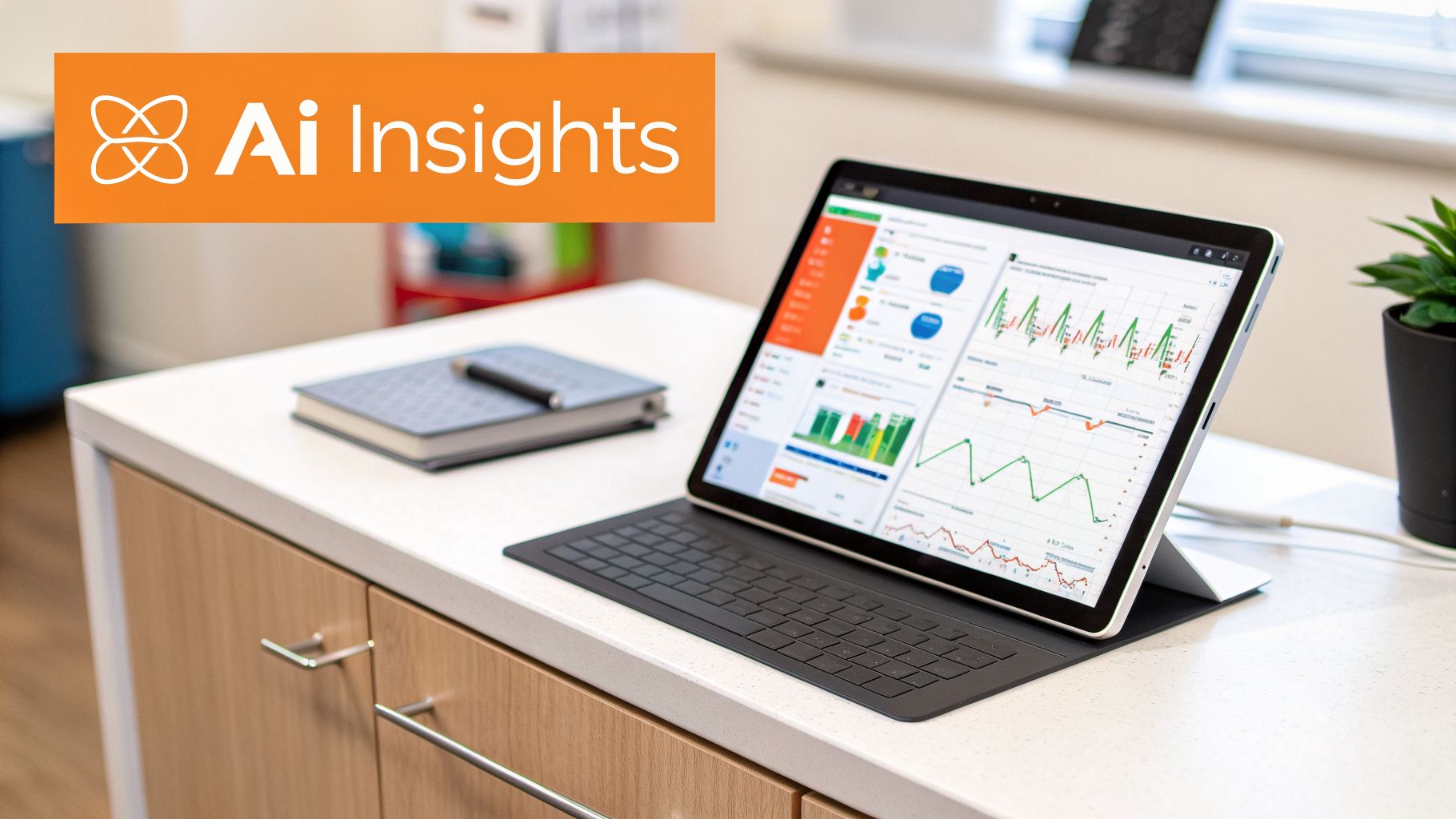
The next step in cognitive assessment is already here, and it’s driven by artificial intelligence. But this isn't just about scoring tests faster. AI is changing the very nature of the insights we can get from cognitive assessment tools, moving us away from rigid, one-size-fits-all tests and toward a more dynamic and personalized approach.
Here's a practical example of AI in action: a standard memory test asks a client to recall a list of words. An AI-powered version notices the client consistently struggles with words at the end of the list. It can instantly pivot—a process called adaptive testing—to present shorter lists or switch to a different memory task to zero in on the problem. The actionable insight is a clear distinction: is it a short-term recall issue, or is something else like auditory processing at play?
Finding the Patterns Hidden in the Data
Where AI really shines is in its ability to spot patterns that are practically invisible to the human eye. While a clinician is making crucial behavioural observations, an AI system can analyze thousands of data points every second.
For example, it can pick up on minuscule hesitations in response time, tiny movements in an eye-tracking task, or slight dips in performance that signal cognitive fatigue. These nearly imperceptible details can point to attention lapses or motor planning difficulties that might otherwise be missed. This gives you a much clearer, more detailed picture of an individual's cognitive profile.
AI doesn't replace a clinician's expert judgment—it sharpens it. By shouldering the heavy lifting of data analysis, AI frees you up to do what humans do best: interpret the findings in the context of a person's life and build a strong therapeutic relationship.
Making High-Quality Assessment More Accessible and Actionable
Perhaps one of the most important ways AI is helping is by making excellent assessments available to more people. AI-powered platforms like Orange Neurosciences can deliver engaging, evidence-based, game-like assessments that are both affordable and easy to scale. As the technology grows, we're seeing more innovative, skill-building AI learning tools for kids that open up new ways to support learning and development.
This technology delivers an objective cognitive profile that helps you:
Make faster, more informed decisions with instant reports and clear data.
Build truly personalized intervention plans based on a detailed map of cognitive strengths and weaknesses.
Track progress objectively over time with consistent and reliable data.
The integration of AI makes cognitive assessment more precise, practical, and powerful. Of course, knowing how to read and apply these advanced reports is critical, which is why getting comfortable with the language of assessment is so vital for today's professionals.
Putting Your Cognitive Assessment Plan into Practice
You’ve done the research and picked out a cognitive assessment tool. That’s a huge step. But now comes the real work: making it a natural part of your practice. A good plan isn't just about logistics; it’s about making the entire process smooth and meaningful for you, your team, and the people you help.
Let's walk through how to turn that tool into a powerful asset, breaking it down into three simple stages that transform raw data into real-world action.
Stage 1: Administration and Preparation
This first stage is all about setting the scene. Proper administration is so much more than just handing over a tablet or a form. An accurate assessment depends on creating the right conditions, both in the environment and in the person's mindset.
Start with the space itself. It needs to be quiet, comfortable, and free from distractions. A calm setting is essential for focus, especially when you're looking at domains like attention or processing speed.
Next, and just as important, is how you explain what's about to happen. Forget the clinical jargon. Your goal is to be simple and reassuring.
Here’s a practical example of what to say: Instead of, “We’re going to administer a battery of psychometric tests to evaluate your executive functions,” you could try:
“We’re going to play some brain games on this tablet today. Think of them as fun puzzles that help us see how you think and solve problems. There are no right or wrong scores—just try your best and have some fun with it.”
This kind of script instantly demystifies the whole thing. It helps lower anxiety and builds a positive rapport, which is especially critical when working with children or older adults who might be worried about being "tested."
Stage 2: Interpretation and Reporting
This is where the data starts to tell a story. Modern cognitive tools, particularly those built with AI, can generate reports almost instantly. These go way beyond a single, flat score. The real skill is knowing how to read these reports and connect the numbers to the behaviours you see every day.
You'll want to look for platforms that give you clear, visual reports that include normative comparisons. A good report will clearly show you where the strengths and weaknesses are across different cognitive domains.
An effective report does more than just list numbers; it helps you make decisions. It might flag a big difference between someone's visual memory and their verbal memory, giving you a clear, actionable starting point for your intervention plan.
A key concept here is test-retest reliability. This is a measure of how consistent a tool's results are over time. Our guide on understanding test-retest reliability gets into why this is so important for tracking progress. When a test is reliable, you can be confident that the changes you're seeing are from your intervention, not just random noise from the test itself.
Stage 3: Action and Care Planning
This is the most important stage of all—it’s where your insights become action. The data from a cognitive assessment should feed directly into a personalized care or education plan. It’s the bridge between knowing what the challenge is and knowing what to do about it.
Let's say an assessment shows a weakness in working memory but reveals strong visual-spatial skills. Your action plan becomes much clearer.
Practical Example for a student: Teach them to use mind maps (a visual strategy) to organize their notes for a test, instead of trying to rely on rote memorization (a verbal strategy that depends on working memory).
Practical Example in a clinical setting: For a patient with a slow processing speed after a traumatic brain injury, the action plan could involve breaking down tasks into smaller, more manageable steps and using checklists to help them stay on track.
This is precisely where platforms like Orange Neurosciences can make a huge difference in your workflow. An assessment takes under 30 minutes and delivers immediate, actionable reports, which cuts down on your administrative load. This frees up your time to focus on what you do best: crafting effective interventions and making a real difference for your patients and students. Visit our website to see how we can help streamline this process for you.
Questions We Hear All The Time
When you're exploring cognitive assessment tools, a few practical questions always come up. It's only natural to wonder about accuracy, how these tools fit into your daily work, and what their role really is in a professional setting. Here are some straightforward answers to the questions we hear most often.
How Accurate Are These New Digital Tools?
This is probably the most important question, and the answer is simple: the best digital cognitive assessment tools are incredibly accurate. They're built on decades of psychometric science to make sure they have high validity (meaning they measure what they say they're measuring) and reliability (they produce the same results consistently).
Think of it this way: subjective observations can differ from one day to the next, or from one person to another. These tools give you objective, data-driven insights. For example, a platform like Orange Neurosciences is carefully validated against the traditional "gold standard" tests used by clinicians for years. This process ensures the data isn't just a number, but a clinically meaningful piece of information you can trust to build your care plans.
Are They Going to Be Difficult to Set Up and Use?
Not at all. There’s a common myth that bringing in a sophisticated tool means more administrative headaches. In our experience, it's the exact opposite. Modern platforms are designed to be intuitive and to actually save you a significant amount of time.
The interfaces are user-friendly, so you and your team can get started with very little training. More importantly, they automate the tedious parts, like scoring and report generation. An assessment that takes a client under 30 minutes to complete can land a comprehensive report on your desk instantly. It’s built to slide right into your existing workflow, not disrupt it.
Do These Tools Replace a Clinician's Expertise?
Absolutely not, and they shouldn't. It's best to think of a cognitive assessment tool as a powerful assistant. It gathers crucial data to support your professional judgment, not to replace it.
A great tool provides the objective "what"—the raw data on cognitive performance. The clinician's expertise provides the essential "why" and "what's next"—interpreting that data within the full context of a person's life, history, and goals to build a plan that truly works.
This partnership between technology and your human expertise is what leads to better-informed decisions and, ultimately, more effective and personalized interventions for the people you support.
Ready to see how objective data can enhance your practice? Orange Neurosciences offers a suite of AI-powered, game-based cognitive assessment tools that deliver precise insights in under 30 minutes. Discover how our platform can help you save time, sharpen your clinical judgment, and deliver better outcomes.
Orange Neurosciences' Cognitive Skills Assessments (CSA) are intended as an aid for assessing the cognitive well-being of an individual. In a clinical setting, the CSA results (when interpreted by a qualified healthcare provider) may be used as an aid in determining whether further cognitive evaluation is needed. Orange Neurosciences' brain training programs are designed to promote and encourage overall cognitive health. Orange Neurosciences does not offer any medical diagnosis or treatment of any medical disease or condition. Orange Neurosciences products may also be used for research purposes for any range of cognition-related assessments. If used for research purposes, all use of the product must comply with the appropriate human subjects' procedures as they exist within the researcher's institution and will be the researcher's responsibility. All such human subject protections shall be under the provisions of all applicable sections of the Code of Federal Regulations.


© 2026 by Orange Neurosciences Corporation