Top 12 Resources for Your MoCA Testing PDF Needs in 2026
Mar 30, 2026
Welcome to the definitive 2026 guide for clinicians, researchers, and healthcare professionals seeking reliable MoCA testing PDF resources. Navigating cognitive screening tools can be complex, especially with evolving licensing requirements and a multitude of test versions. This curated listicle provides direct links, practical examples, and actionable insights to help you correctly source, administer, and document the Montreal Cognitive Assessment.
We will explore the official channels for downloading validated forms, clarify the critical differences between versions like MoCA-Full and MoCA-Basic, and highlight supplemental resources that improve your workflow. Each entry includes direct download links, screenshots, and specific use cases to help you find the precise tool for your needs. For instance, a busy neurology clinic will benefit from one resource, while an academic research setting will need another.
This guide also addresses the practical challenges of integrating these resources. We'll examine official training materials, administration guides, and protocols for remote or specialized assessments, like the MoCA-Blind version. Furthermore, managing patient data from multiple PDF assessments can be a significant administrative burden. For comprehensive analysis of MoCA test results, this complete guide on PDF to Excel data extraction provides essential techniques for efficient data management, helping you transition from individual scores to population-level insights.
Whether you're setting up a new clinic protocol, preparing for a research study, or simply need to ensure compliance, this article provides the clarity you need. We'll offer actionable advice to help you integrate these tools effectively, ensuring you deliver the highest standard of care.
1. MoCA Cognition — Paper: MoCA Full (v8.1, 8.2, 8.3)
For clinicians and researchers who require the official, validated Montreal Cognitive Assessment, the MoCA Cognition website is the definitive source. It serves as the central hub for accessing the most current paper-based versions of the test, ensuring compliance with licensing and proper clinical application. This is the first place you should look for a legitimate MoCA testing PDF, as it guarantees you are using a tool that meets established psychometric standards.
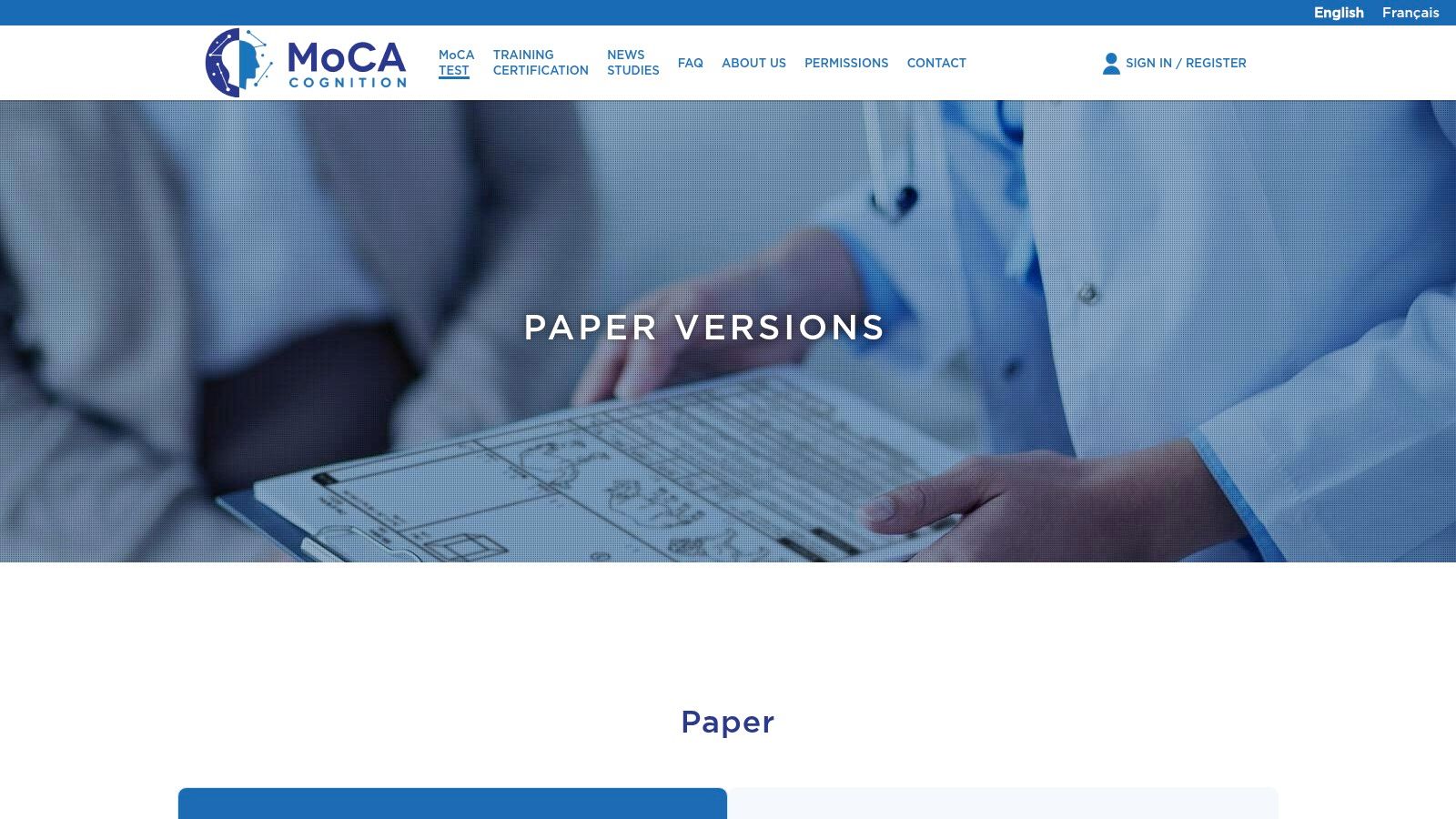
The primary advantage of using this official portal is access to the latest validated test forms (versions 8.1, 8.2, and 8.3), which include the Memory Index Score (MIS) for a more detailed assessment of memory functions. The site also provides an extensive library of over 100 translations and country-specific variants. For those interested in exploring a wider range of cognitive assessments, this official source provides a strong foundation.
Actionable Insights
Accessing the PDF materials is not a simple download. Users must first register for an account and then complete the mandatory online training and certification program.
Practical Example: A neuropsychology practice can designate a lead clinician to complete the certification. Once certified, they can download the various PDF versions and create a centralized, shared folder on the clinic's secure server, ensuring all staff use the correct, licensed forms.
Actionable Tip: The certification costs a one-time fee but grants ongoing access to all MoCA test versions and their scoring guides. Plan this into your clinic's budget to avoid delays.
Website: https://mocacognition.com/paper
2. MoCA Cognition — Paper: MoCA Basic
For clinicians working with populations where educational background or literacy levels could skew results, the MoCA-Basic is an essential tool. The official MoCA Cognition website is the sole authorized source for this specific version, providing a crucial alternative to the standard test. It is designed to assess the same cognitive domains but with adapted items that reduce educational bias, ensuring a more equitable and accurate screening. This is the correct place to find a legitimate MoCA-Basic testing PDF.
The primary advantage of the MoCA-Basic is its clinical appropriateness for specific patient groups. It maintains the 30-point scoring system and a short administration time of around 15 minutes, but modifies tasks that rely heavily on literacy or formal education. For example, instead of complex sentence repetition, it may use simpler constructs. This makes it a critical resource for clinics serving diverse, multicultural communities with varying educational histories.
Actionable Insights
Similar to the full MoCA test, accessing the MoCA-Basic PDF requires registration and completion of the mandatory training and certification program.
Practical Example: A community health worker screening elderly immigrants with limited formal education should use the MoCA-Basic. By using this version, they avoid penalizing patients for lack of literacy, getting a truer picture of their cognitive health.
Actionable Tip: Always use the version-specific scoring guides. The criteria for the MoCA-Basic differ from the standard MoCA, and mixing them up will lead to inaccurate results.
Website: https://mocacognition.com/paper
3. MoCA Cognition — Paper: MoCA Blind/Telephone
For assessments where visual tasks are not feasible, such as with visually impaired patients or during remote telehealth appointments, the official MoCA Cognition portal provides a crucial alternative. The MoCA-Blind and its telephone-adapted version offer a validated method for cognitive screening by removing all visuospatial and drawing items. This ensures clinicians can still obtain a meaningful cognitive snapshot when a standard administration is impossible.
The key distinction of this version is its 22-point scoring system, which excludes the eight points normally allocated to visual tasks like cube copying and clock drawing. The website supplies the specific PDF for this test along with administration instructions designed for voice-only interaction. This specialized moca testing pdf is supported by validation studies, confirming its reliability for these specific use cases.
Actionable Insights
Like the standard MoCA, accessing these specialized PDFs requires completing the official training and certification process.
Practical Example: A geriatrician conducting a follow-up with a homebound patient with macular degeneration can use the MoCA-Blind over the phone. This allows for continuity of care without requiring a home visit or specialized equipment.
Actionable Tip: Do not attempt to convert the 22-point score to the 30-point scale; this is not a validated procedure. Interpret the results within the context of the 22-point framework and document it clearly in the patient's record.
Website: https://mocacognition.com/paper
4. MoCA Cognition — Paper: MoCA 5‑Minute/Telephone (Mini‑MoCA)
For situations demanding rapid cognitive screening, such as high-volume clinics or telephone-based triage, the official MoCA Cognition portal provides the validated Mini-MoCA protocol. This abbreviated version is purpose-built for efficiency, allowing clinicians to obtain a reliable snapshot of cognitive function in approximately five minutes. As the official source, it ensures you are using a validated, short-form tool.
The key benefit of the Mini-MoCA is its focus on telephone-optimized administration. The 15-point protocol is specifically designed for remote use, making it an indispensable tool for telehealth appointments or initial intake calls. This official version from the MoCA Cognition website guarantees you have the correct administration and scoring instructions for this specific moca testing pdf, avoiding the potential for error that comes with using non-validated, third-party versions.
Actionable Insights
Like the full version, access to the Mini-MoCA requires registration and completion of the mandatory training and certification.
Practical Example: A primary care physician can use the Mini-MoCA during an annual wellness visit to quickly screen for cognitive changes. If the score is below the cutoff, they can then schedule a follow-up appointment for the full MoCA test.
Actionable Tip: The Mini-MoCA is a screening tool, not a diagnostic one. Use it to identify patients who need a more comprehensive evaluation, not as a substitute for the full assessment.
Website: https://mocacognition.com/paper
5. MoCA Cognition — Paper: MoCA Audiovisual (Telemedicine package)
As telehealth becomes a permanent fixture in clinical practice, the official MoCA Cognition website provides an essential resource: the MoCA Audiovisual package. This is a purpose-built version of the test designed specifically for remote administration via videoconferencing. For any clinician conducting cognitive assessments remotely, this package is the only official source for a MoCA testing PDF that has been adapted and validated for telemedicine.
The key benefit of this package is its set of telemedicine-optimized instructions and stimuli. It includes a specific administration guide that directs the clinician on how to present tasks, manage timing, and score responses within the constraints of a video call. This standardization is critical for maintaining the test's validity when physical interaction is not possible.
Actionable Insights
Similar to other official MoCA materials, access to the Audiovisual PDF package is restricted to registered and certified users.
Practical Example: A neurologist conducting a virtual consultation with a patient in a rural area can use this package. By following the precise instructions, they can confidently administer the full 30-point MoCA, including visuospatial tasks, ensuring a comprehensive remote assessment.
Actionable Tip: Before the session, do a practice run-through of the instructions. Successful remote testing requires familiarity with the protocol to manage screen sharing, timing, and patient interaction smoothly.
Website: https://mocacognition.com/paper
6. MoCA Cognition — Paper: MoCA Hearing Impairment (MoCA‑HI)
For clinicians working with patients who have significant hearing loss, the standard MoCA can present challenges, potentially confounding cognitive scores with sensory deficits. The MoCA Cognition website directly addresses this by offering a purpose-built variant, the MoCA Hearing Impairment (MoCA-HI). This version is a crucial resource for professionals in audiology, otolaryngology (ENT), and geriatric clinics.
The primary distinction of the MoCA-HI is its adaptation for visual presentation. Instead of relying on auditory cues for tasks like word recall, the test uses flash cards and other visual aids to present stimuli. This adaptation ensures that the assessment accurately measures cognitive function rather than the patient's ability to hear instructions. The availability of this specific moca testing pdf from the official source guarantees a properly researched and validated instrument.
Actionable Insights
Accessing the MoCA-HI is not a direct download and requires a certified account.
Practical Example: An audiologist screening a patient with severe presbycusis for cognitive decline can use the MoCA-HI. By using flashcards for memory tasks, they ensure the patient's poor performance isn't simply due to not hearing the words in the first place.
Actionable Tip: Prepare your materials in advance. The test requires you to print and organize the visual flash cards for use during the assessment. Having them ready saves time and makes the administration smoother.
Website: https://mocacognition.com/paper
7. MoCA Cognition — MoCA Fact Sheet (PDF)
While most clinicians search for the actual test, this resource serves a different but equally important purpose. The MoCA Fact Sheet is an official, one-page PDF summary detailing the test's purpose, applications, and key facts. It is a concise, shareable document for educating patients, families, or administrative staff about what the MoCA is and why it's used.
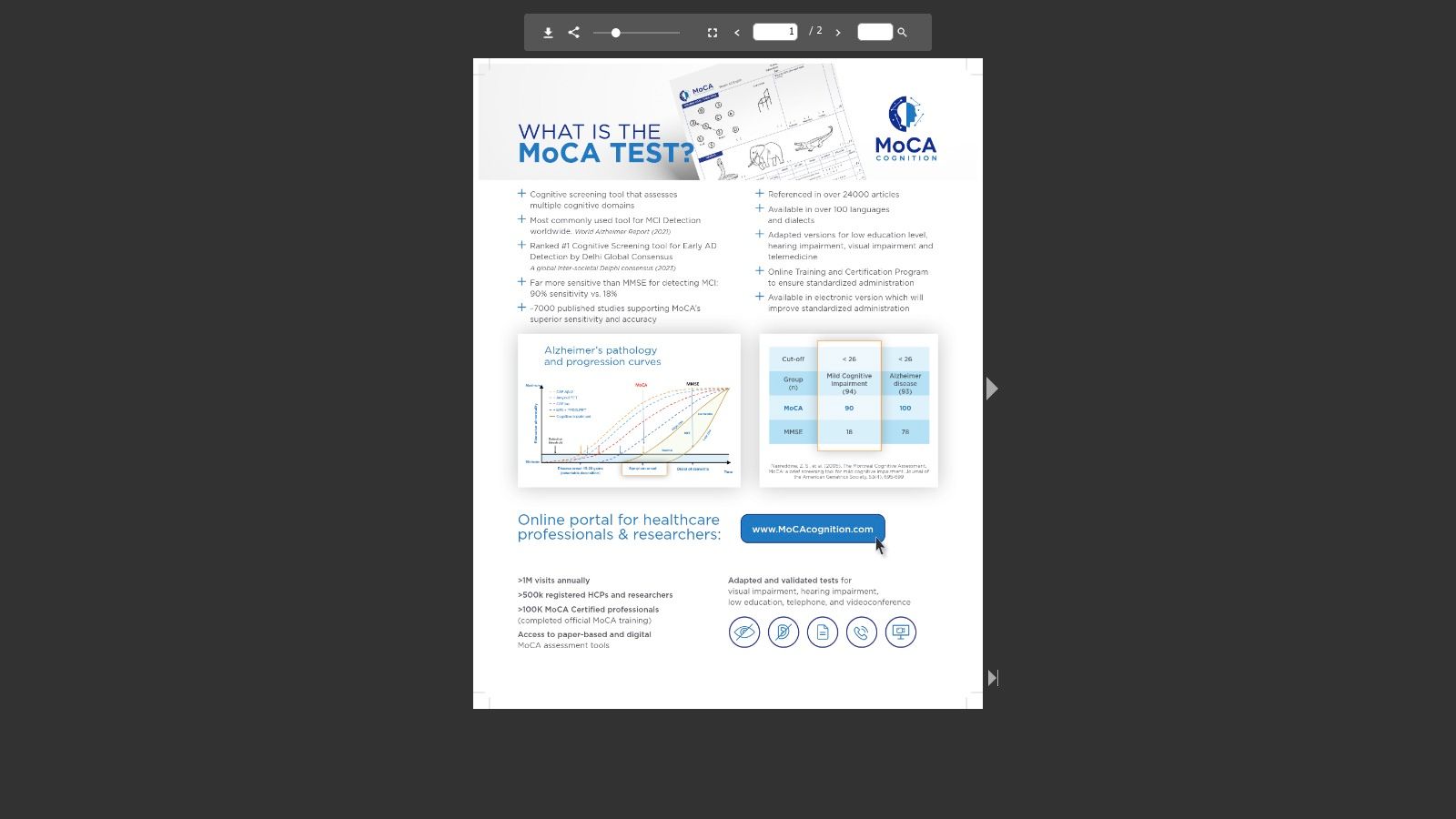
The primary benefit of this fact sheet is its official branding and up-to-date messaging. Instead of creating your own summary or explaining the test repeatedly, you can simply use this document. Unlike a search for a "moca testing pdf" that yields the test itself, this is purely for informational context.
Actionable Insights
Accessing the MoCA Fact Sheet is straightforward and free, requiring no registration or login.
Practical Example: A memory clinic can include this PDF in its new patient welcome packet or email it to families before an initial consultation. This helps manage expectations and answers basic questions upfront, allowing for a more focused clinical discussion.
Actionable Tip: Use this PDF to standardize communication. Ensure all staff, from receptionists to nurses, provide the same consistent, accurate information about the MoCA test to patients.
Website: https://mocacognition.com/moca-fact-sheet?utm_source=openai
8. MoCA Cognition — Training & Certification
For any professional planning to use the MoCA test, the official Training and Certification portal is a non-negotiable starting point. This platform provides the mandatory one-hour online training required to access and administer the official MoCA testing PDF. Its primary function is to standardise administration and scoring, ensuring that results are reliable and comparable across different clinicians and research sites.
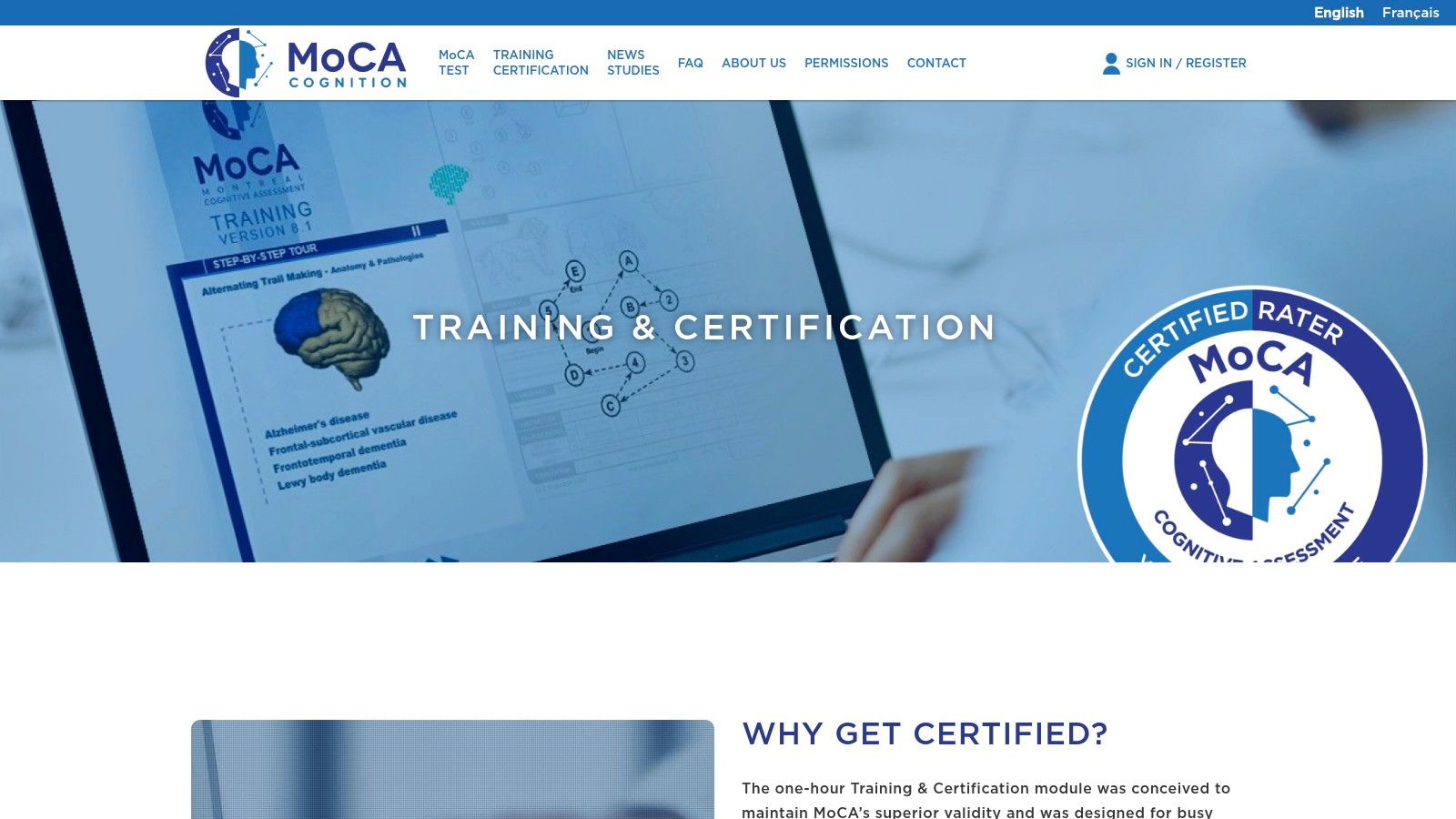
The key benefit is the significant improvement in inter-rater reliability. By ensuring everyone follows the exact same protocol, the training minimises variations in how the test is administered and scored. The one-hour format makes it accessible for busy professionals, and its structure clearly reflects strong instructional design principles for clarity and retention.
Actionable Insights
While the training is mandatory, it is not free for everyone. A fee applies to most users.
Practical Example: A research coordinator preparing for a multi-site clinical trial must ensure all raters are certified. This training is the most efficient way to standardize administration across all locations, ensuring data integrity.
Actionable Tip: Do not skip the certification. Attempting to use the MoCA without proper training is a breach of the user agreement and can lead to inaccurate scoring, potentially harming patient care. Build the cost and time for certification into your professional development plan.
Website: https://mocacognition.com/training-certification/
9. University of Toronto — MoCA Administration & Scoring Instructions (PDF)
For trainees or clinicians looking for a quick, reputable reference on MoCA administration, the University of Toronto offers a direct-access PDF detailing the instructions. This document, hosted on the university's academic web server, provides clear, step-by-step guidance on how to properly administer and score the assessment. It is a valuable supplement to official training.
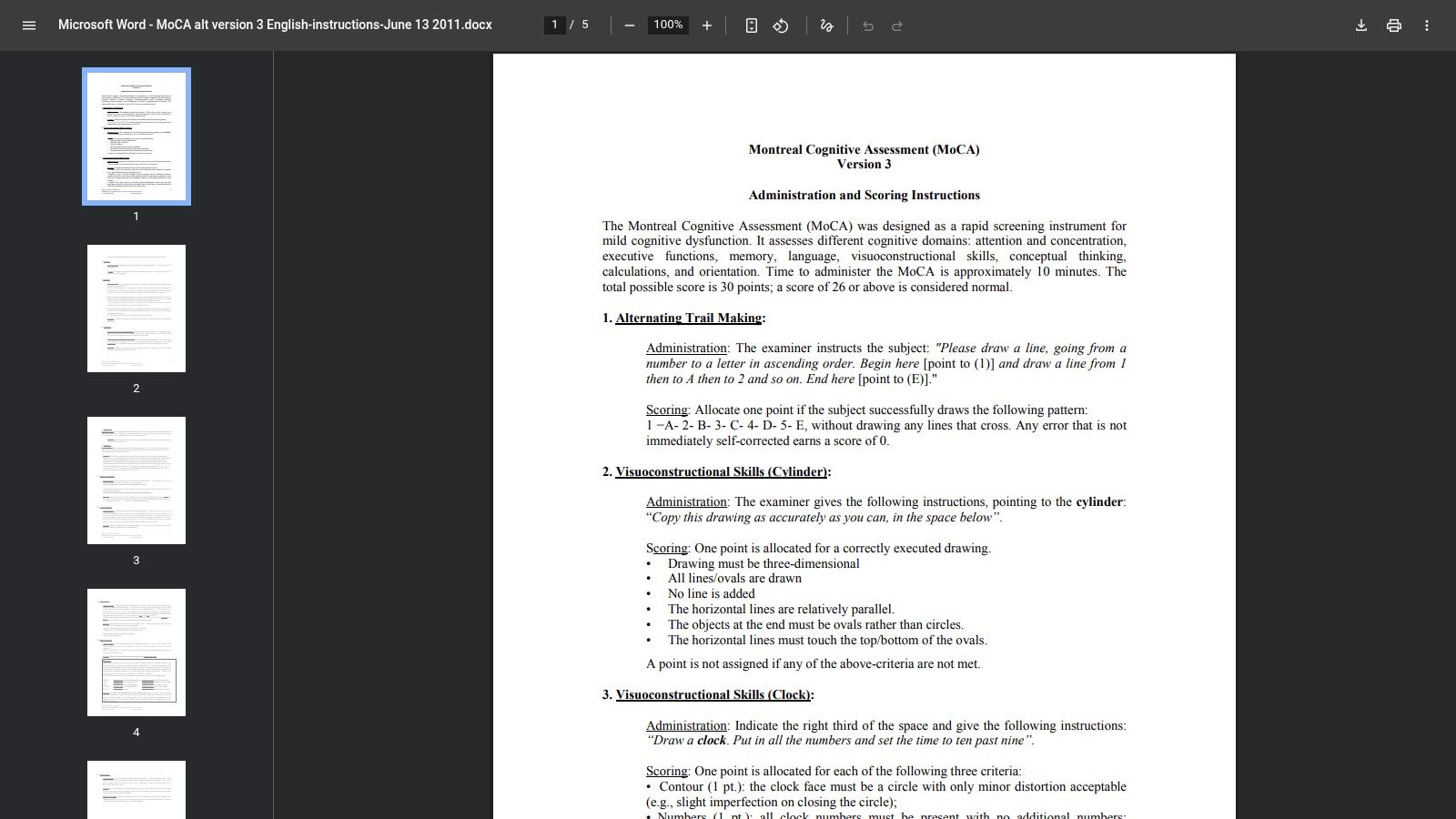
The key strength of this resource is its simplicity and academic credibility. Unlike searching through unverified sites for a MoCA testing pdf, this link provides a trustworthy source for the instructions. Its direct download format makes it ideal for quickly confirming a scoring rule. For a more detailed breakdown, you can find further information on the proper instructions for administering the MoCA.
Actionable Insights
While convenient, this document is a supplemental guide and not the official MoCA test form.
Practical Example: A resident physician could print this guide and keep it on their clipboard during their first few supervised assessments. It serves as a handy field guide to ensure they don't miss a step in the sequence.
Actionable Tip: Always cross-reference this guide with the most current instructions from MoCA Cognition. Since this is a static PDF from an external site, it may not reflect recent updates to the scoring protocol. Use it as a refresher, not the definitive source.
Website: https://thehub.utoronto.ca/family/wp-content/uploads/2016/12/MoCA-Instructions-English.pdf
10. NIA Aging Research Biobank (U.S. NIH) — MOST Manual Appendix: MoCA 5‑Minute Protocol (PDF)
For researchers and institutions requiring protocol documentation, the National Institute on Aging (NIA) Biobank offers a unique and authoritative resource. Hosted by the U.S. National Institutes of Health (NIH), this repository contains the operations manual for a large-scale study, which includes the MoCA 5-Minute Protocol as an appendix. This isn't a patient-facing test form, but rather an official procedural document perfect for IRB submissions.
The key strength of this source is its stability and citability. As a federal repository, the link provides a durable reference for scientific papers, grant proposals, and Standard Operating Procedures (SOPs). Instead of a standalone moca testing pdf, the protocol is presented within the context of a large-scale research study's operations, offering a practical example for researchers.
Actionable Insights
Accessing this document is straightforward and requires no registration. However, the MoCA protocol is embedded within a large PDF manual.
Practical Example: A researcher writing a grant proposal can cite this NIH document and include the relevant pages in their appendix to demonstrate they are using a standardized, recognized protocol for remote cognitive screening.
Actionable Tip: Use your PDF viewer's search function (Ctrl+F or Cmd+F) and type "MoCA" to quickly navigate to the relevant section. This source is for documentation, not direct clinical administration.
11. CRIC (Collaboration for Research in Intensive Care) — MoCA 5‑Minute Protocol (English) PDF
For clinical settings where time is critically limited, such as in intensive care units or during telephone triage, the Collaboration for Research in Intensive Care (CRIC) provides a direct-download link to the MoCA 5-Minute Protocol. This condensed "Mini-MoCA" offers a practical solution for rapid cognitive screening. It is particularly useful for follow-up assessments post-stroke or after an ICU stay.
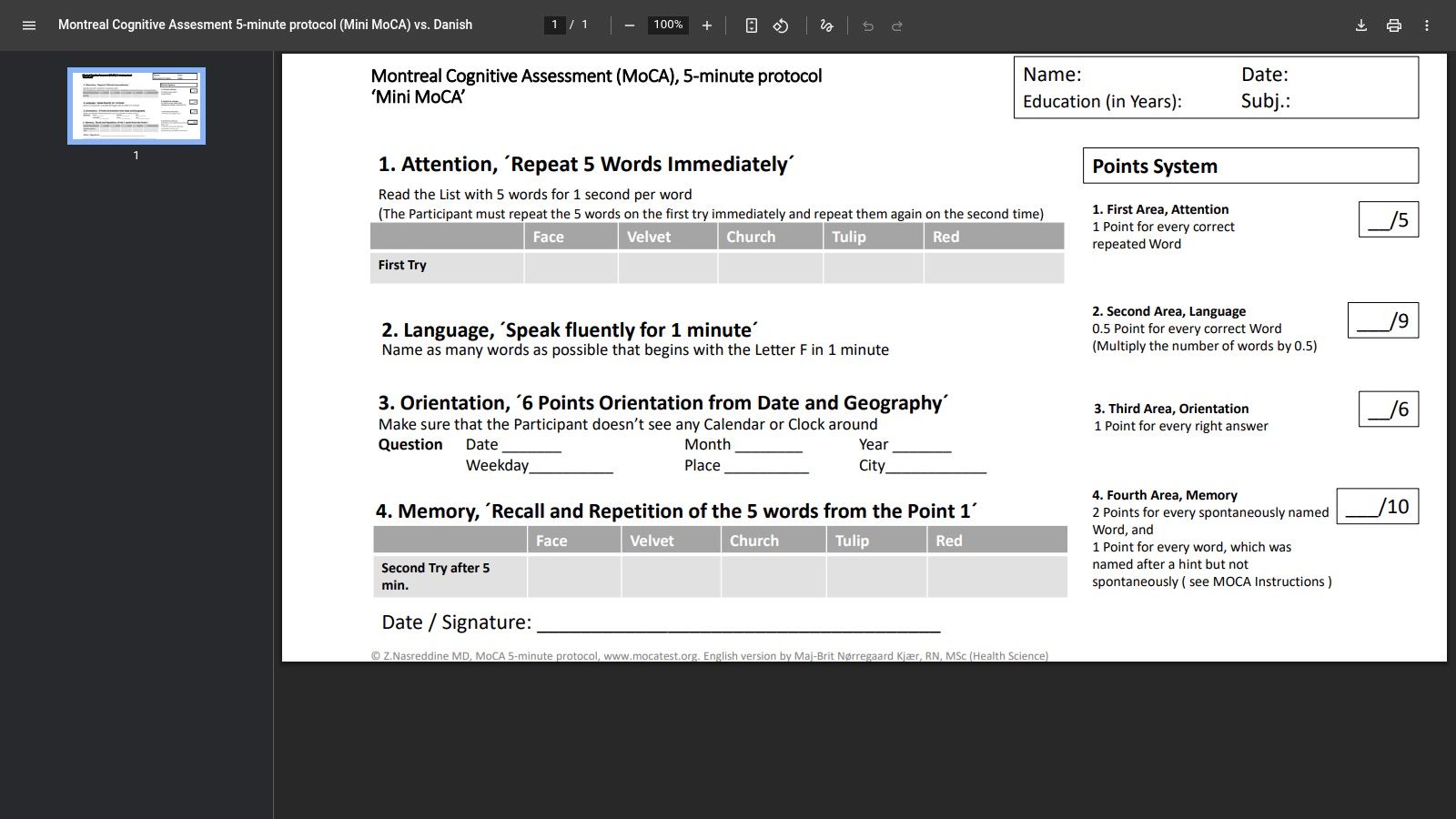
The primary advantage of this resource is its immediacy. Unlike official channels that require registration, this PDF is available for instant download. The two-page document includes the test itself and concise administration instructions, making it an efficient tool for experienced clinicians.
Actionable Insights
The direct download is a double-edged sword.
Practical Example: An ICU nurse can use this form to perform a quick daily cognitive check on a patient recovering from delirium. The result can be trended over time to track recovery or identify a decline that requires a neurology consult.
Actionable Tip: Check your institution's policy before using this. While convenient, it bypasses the official MoCA licensing channels. Ensure its use is permitted and remember it's a screening tool, not a substitute for the comprehensive MoCA.
12. MoCA Cognition — Remote MoCA Testing (Guidance & FAQ)
For clinicians integrating cognitive assessments into their telehealth practice, this official guidance page from MoCA Cognition is an essential bookmark. It provides the authoritative framework for administering the MoCA remotely, ensuring that telehealth-based assessments align with validated protocols. This page is the starting point for developing standard operating procedures (SOPs) for remote testing.
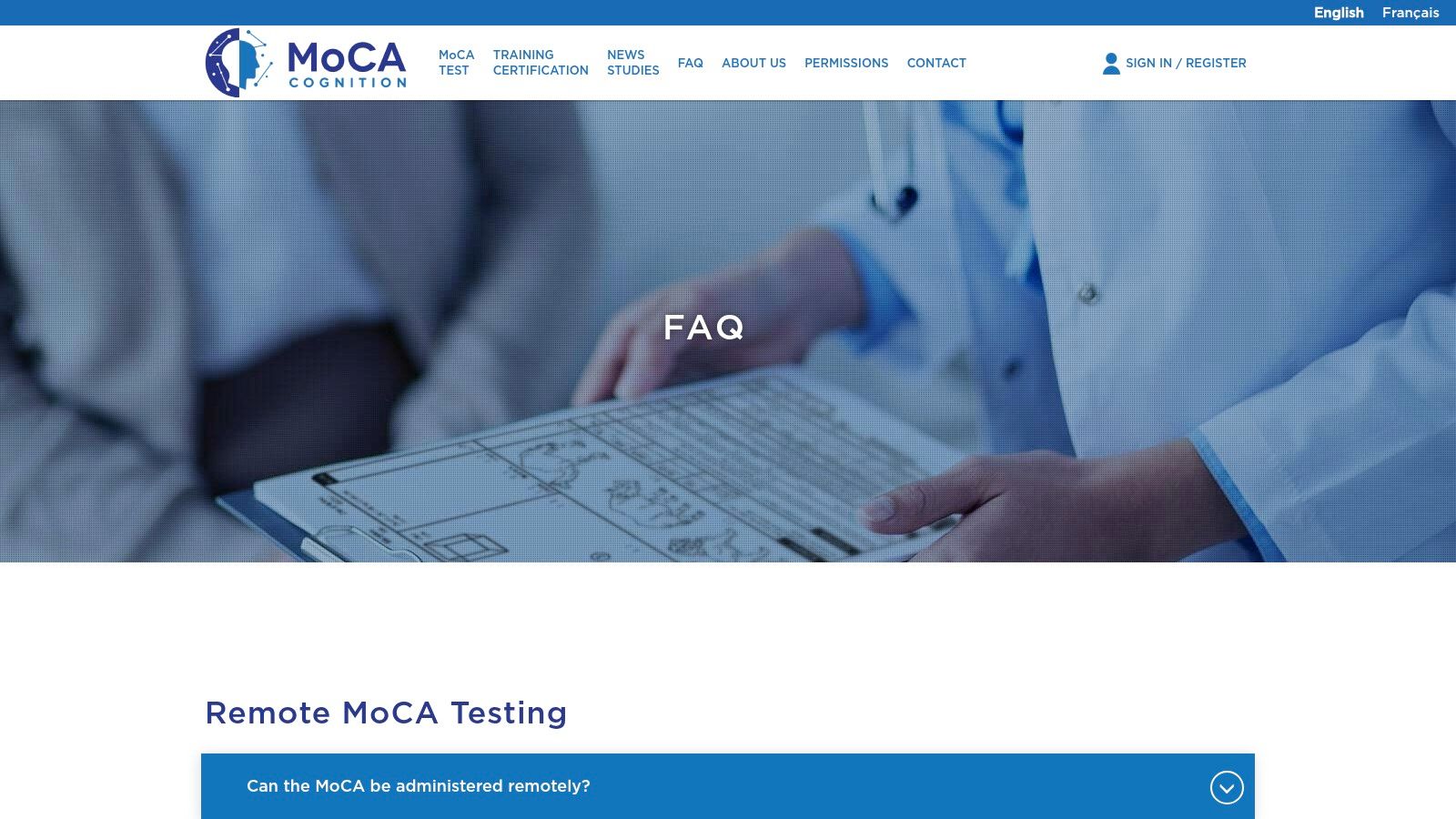
The key value of this resource lies in its clear direction on validated remote options, such as the MoCA-Blind for telephone administration and the shorter 5-minute MoCA. It cites the relevant validation studies, giving clinicians the evidence needed to support their choice of tool. While the page itself is a guide, it directs certified users to log in to their accounts to download the specific MoCA testing PDF for each version.
Actionable Insights
This FAQ page is not a direct download portal; it serves as a policy and guidance document.
Practical Example: A private practice psychologist planning to launch a telehealth service should use this page to write their remote assessment SOP. It provides the official "dos and don'ts" for remote MoCA administration, ensuring compliance and validity.
Actionable Tip: Before a remote session, review this page to confirm your chosen technique is correct. For example, check the specific caveats for a video-conferenced MoCA 5-minute assessment to ensure you follow the sanctioned protocol.
Website: https://mocacognition.com/faq/
MoCA Testing PDFs — 12-Resource Comparison
Item | Core features | Target audience / Use case | Key benefits | Access / Requirements |
|---|---|---|---|---|
MoCA Cognition — Paper: MoCA Full (v8.1, 8.2, 8.3) | Full 30‑pt MoCA; MIS; 100+ language/country variants | Clinics, research, multinational assessments needing full cognitive profile | Authoritative, validated, broad translation coverage; alternate forms to reduce practice effects | License‑compliant PDFs; account registration + certification typically required |
MoCA Cognition — Paper: MoCA Basic | 30‑pt adapted for low‑education/low‑literacy; ~15 min | Settings with low formal education or literacy concerns (community clinics, LMICs) | Reduces educational bias; clear admin instructions | Smaller language catalog; login/certification required |
MoCA Cognition — Paper: MoCA Blind/Telephone | 22‑pt (no visuospatial items); telephone guidance | Remote screening and visually impaired patients | Validated remote option; practical for phone assessments | Fewer translations; score conversion to 30‑pt not validated; gated access |
MoCA Cognition — Paper: MoCA 5‑Minute/Telephone (Mini‑MoCA) | Abbreviated ~5‑min, 15‑pt telephone protocol | Rapid triage, intake, high‑throughput or remote workflows | Fast, validated screening for quick decision making | Not a substitute for full MoCA; login/certification restricts access |
MoCA Cognition — Paper: MoCA Audiovisual (Telemedicine) | Telemedicine‑optimized stimuli & instructions | Videoconference clinics and hybrid workflows | Standardized materials for video administration; supports telehealth SOPs | Must follow telemed instructions; PDFs gated behind login/certification |
MoCA Cognition — Paper: MoCA Hearing Impairment (MoCA‑HI) | Full 30‑pt adapted with visual flashcards | Audiology, ENT, geriatric clinics with hearing‑impaired patients | Minimizes hearing bias; purpose‑built for severe hearing loss | Requires extra materials/setup (flashcards); certification likely required |
MoCA Cognition — MoCA Fact Sheet (PDF) | Concise official summary of test purpose & uses | Clinician packets, stakeholder education, program overviews | Quick reference for teams and families; official messaging | Informational only; does not replace test forms or training |
MoCA Cognition — Training & Certification | 1‑hour online training; issues MoCA ID | Clinicians/researchers needing compliant administration | Standardizes scoring/admin; improves reliability; provides MoCA ID | Fee for many users (some free exceptions); required for PDF access |
University of Toronto — MoCA Admin & Scoring Instructions (PDF) | Step‑by‑step admin & scoring quick‑reference | Clinician training packets and quick clinic reference | Stable academic host; practical for training | Supplemental only; may be older—verify vs current MoCA version |
NIA Aging Research Biobank (NIH) — MOST Manual Appendix: MoCA 5‑Minute Protocol | NIH‑hosted manual with embedded Mini‑MoCA | Researchers needing citable protocol in study manuals/IRB | Stable, citable source for research reproducibility | Embedded in larger manual; extract as needed; not standalone official form |
CRIC — MoCA 5‑Minute Protocol (English) PDF | Concise Mini‑MoCA test + instructions | ICU follow‑up, stroke clinics, telephone triage, research | Fast deployment; clinically oriented layout for follow‑up | Limited scope vs full MoCA; check institutional licensing/policy |
MoCA Cognition — Remote MoCA Testing (Guidance & FAQ) | Summary of validated remote options & citations | Telehealth program builders and SOP writers | Authoritative guidance to align telehealth with validation evidence | Guidance only; actual PDFs require MoCA account/certification |
Beyond the PDF: The Future of Cognitive Assessment
Throughout this guide, we've explored the essential resources that make the Montreal Cognitive Assessment a foundational tool in clinical practice. From the various official MoCA testing PDF versions tailored for specific patient needs, like the MoCA-Basic and MoCA-Blind, to detailed administration guides, the value of these paper-based instruments is clear. They provide a standardized, accessible, and well-researched method for screening for mild cognitive impairment.
The resources we have detailed underscore the adaptability of the MoCA. Having the correct PDF, whether it's the full version 8.1 or a specialized 5-Minute Protocol, ensures that assessments are administered correctly and consistently, which is fundamental to reliable clinical judgment. Mastering these tools is the first step toward effective cognitive evaluation.
Key Takeaways and Actionable Next Steps
To make the most of the information presented, consider the following actions:
Bookmark Official Sources: Always download your MoCA testing PDF files directly from the MoCA Cognition website. This ensures you are using the most current, authorized versions and are compliant with training requirements.
Match the Tool to the Patient: Do not use a one-size-fits-all approach. A patient with severe hearing loss requires the MoCA-HI, while a remote consultation may be best served by the Telemedicine package. Selecting the appropriate version is critical for accuracy.
Standardize Your Administration: Consistently refer to the official administration and scoring instructions. Small deviations, such as rephrasing a question, can invalidate the results. The guides from the University of Toronto and the NIH are excellent for reinforcing proper technique.
Implementing MoCA PDFs in Your Workflow
When integrating these resources, the goal is efficiency and accuracy.
Practical Example for Clinics: Create a centralized digital folder on a secure server with all necessary PDFs, clearly labelled by version (e.g., 'MoCA_Full_v8.1.pdf', 'MoCA_Basic_Scoring_Sheet.pdf'). This simple organizational step saves time and reduces the risk of using an outdated form.
Practical Example for Therapists: A therapist in a rehabilitation centre can print specific sections of the administration guide to keep with their assessment kits as a quick reference. The practical challenge is often not just having the PDF, but ensuring it is used correctly under pressure.
The Limitations of Paper and the Shift to Digital
While indispensable, the reliance on paper-based MoCA testing PDF documents presents inherent challenges. Manual scoring is subject to human error, paper records are cumbersome to manage, and the static nature of a PDF cannot adapt to a patient’s performance in real-time. The process of printing, administering, scoring, and then manually entering data into an electronic health record is time-consuming.
This is where the field of cognitive assessment is moving forward. Digital platforms are emerging that automate administration and scoring, offer dynamic interactions, and provide immediate data analysis. Consider a scenario where, instead of a single score, you receive a detailed cognitive profile that breaks down performance across multiple domains, benchmarks it against normative data, and even suggests potential areas for therapeutic intervention, all within minutes of the assessment's completion. This is the power of digital neuropsychiatry.
The journey from a simple paper test to a comprehensive digital cognitive profile marks a significant progression in our ability to understand and support brain health. By embracing these advancements, we can provide faster, more precise, and more personalized care.
Ready to move beyond the limitations of static PDFs and paper-based scoring? Orange Neurosciences offers a suite of digital, game-based cognitive assessment and therapy tools that provide rapid, objective insights into brain health. Discover how our platform can complement your existing workflows, reduce administrative delays, and deliver detailed cognitive profiles to support your clinical decisions.
Visit our website or email our team today to learn how you can enhance your practice. Explore our solutions at Orange Neurosciences.

Orange Neurosciences' Cognitive Skills Assessments (CSA) are intended as an aid for assessing the cognitive well-being of an individual. In a clinical setting, the CSA results (when interpreted by a qualified healthcare provider) may be used as an aid in determining whether further cognitive evaluation is needed. Orange Neurosciences' brain training programs are designed to promote and encourage overall cognitive health. Orange Neurosciences does not offer any medical diagnosis or treatment of any medical disease or condition. Orange Neurosciences products may also be used for research purposes for any range of cognition-related assessments. If used for research purposes, all use of the product must comply with the appropriate human subjects' procedures as they exist within the researcher's institution and will be the researcher's responsibility. All such human subject protections shall be under the provisions of all applicable sections of the Code of Federal Regulations.


© 2026 by Orange Neurosciences Corporation