Top 10 Memory Games for Seniors: Engaging Activities for 2025
Dec 17, 2025
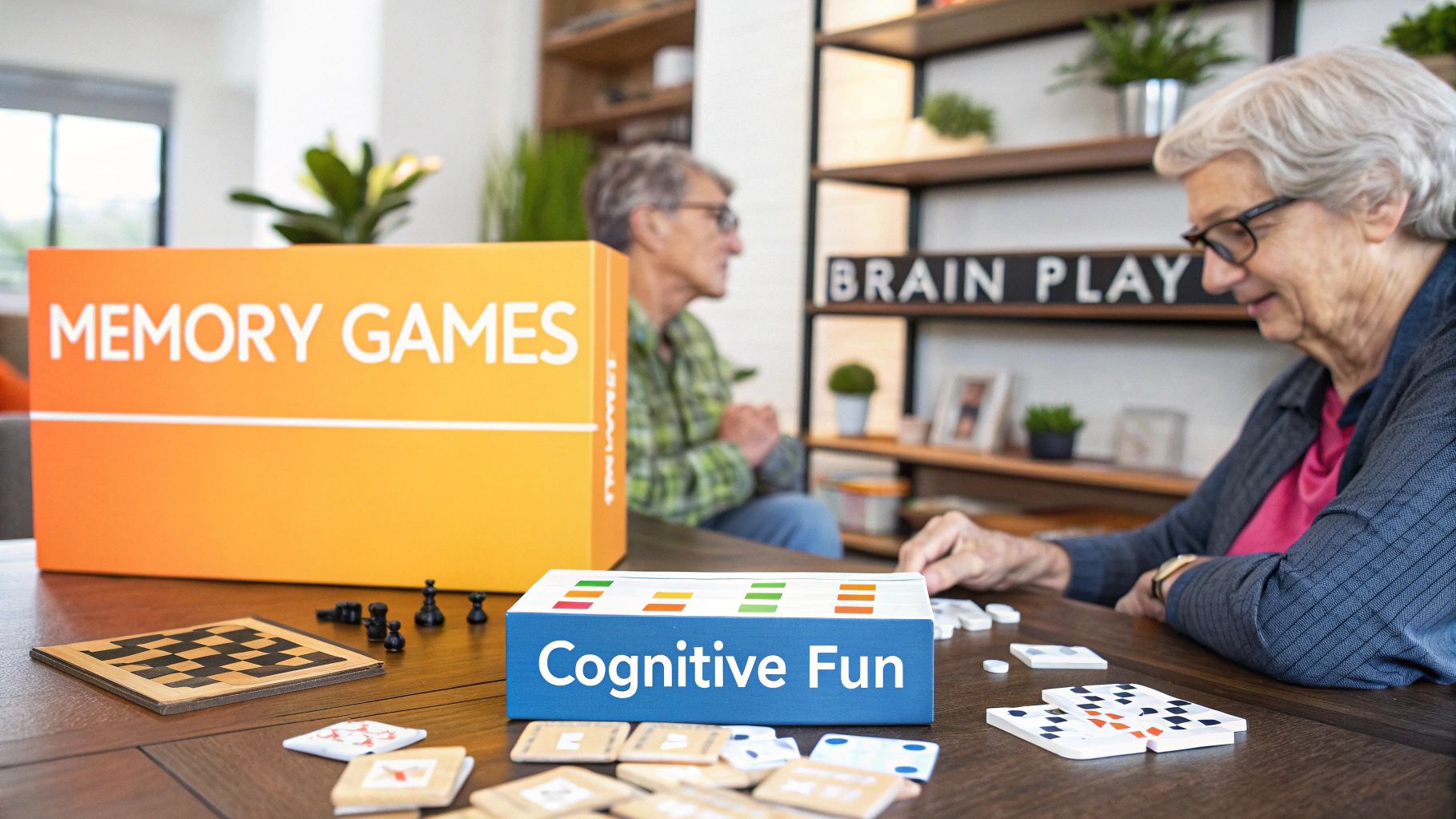
Keeping the mind sharp is a cornerstone of healthy aging. While physical exercise is widely understood, the importance of targeted cognitive engagement often gets overlooked. This article moves beyond generic advice to provide a comprehensive roundup of the 10 most effective and engaging memory games for seniors. These activities are more than just pastimes; they are powerful tools for maintaining cognitive function, fostering social connection, and enhancing overall quality of life.
This guide is designed for caregivers, healthcare providers, and individuals seeking practical, evidence-based strategies to support brain health. We will detail specific activities that target key cognitive domains, from working memory and attention to executive function and information processing. For those facing specific cognitive challenges, exploring dedicated resources on engaging games for seniors with dementia can also offer tailored approaches to cognitive stimulation and meaningful interaction.
For each of the ten games on our list, you will find:
Practical Examples: Concrete ideas you can use immediately.
Actionable Insights: How to adapt games for different ability levels.
Step-by-Step Guidance: Easy implementation for home or care settings.
Tips for Measuring Progress: How to track improvements effectively.
We will also show how pairing these games with objective assessment tools, such as those from Orange Neurosciences, allows for precise tracking of improvements. This article provides the actionable framework you need to implement purposeful, fun, and effective memory-enhancing activities. Get ready to discover practical ways to support brain health for yourself, a loved one, or your clients.
1. Classic Matching Card Games
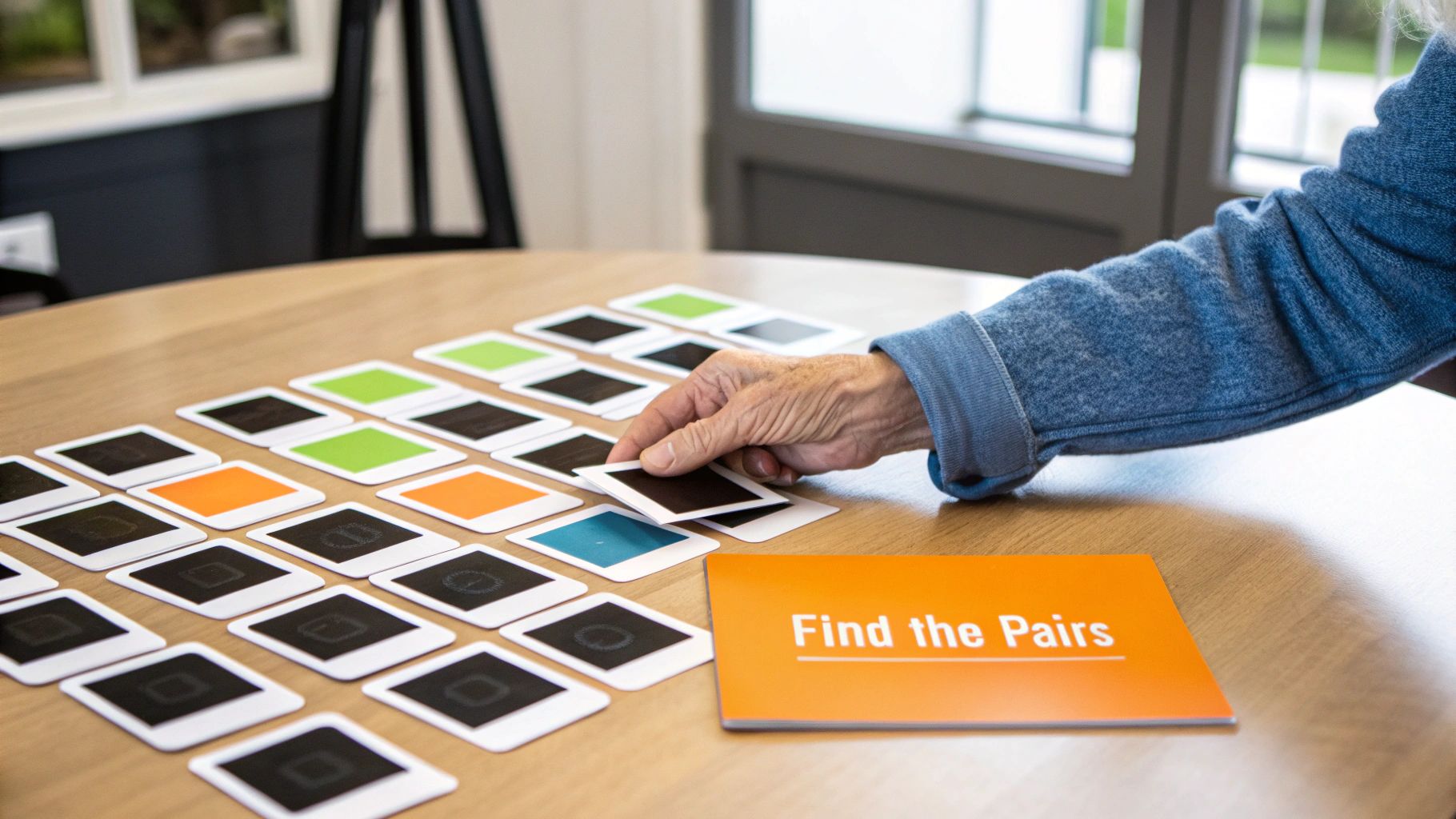
A foundational and highly effective tool, the classic matching card game remains one of the most accessible memory games for seniors. The premise is simple yet powerful: cards are laid face-down in a grid, and players take turns flipping two cards at a time, trying to find a matching pair. This activity directly engages visual-spatial memory and working memory as participants must recall the location and identity of previously seen cards.
This game’s enduring popularity in cognitive therapy and senior care settings is a testament to its efficacy. Its straightforward rules reduce cognitive load related to understanding gameplay, allowing the user to focus entirely on the memory task itself. The tactile nature of flipping physical cards also provides valuable sensory input.
Actionable Insights: How to Get Started
Setting up a game is straightforward, but tailoring it to the individual is key for engagement and success.
Start Small: Begin with a 3x4 grid (6 pairs). As confidence grows, expand to a 4x4 or 5x6 grid. The goal is to challenge, not frustrate.
Use High-Contrast Cards: Ensure cards are large with clear, simple images. Practical Example: Use a deck featuring bold images of fruits or common household objects.
Personalize It: Create a custom deck using family photos. This transforms the game into a reminiscence activity, prompting stories and conversation.
Create a Calm Space: Play in a well-lit area free from distractions like a television or radio to help improve focus.
Track Progress for Better Results
While playing is beneficial, tracking progress provides measurable insights. Before starting, a baseline assessment using Orange Neurosciences’ platform can establish the user's current working memory capacity.
After a few weeks of regular play (e.g., 15-minute sessions, 3 times per week), you can track progress by noting the time taken to complete a grid or the number of errors made. A follow-up assessment can then provide objective data on improvements in specific cognitive domains, helping to refine the cognitive care plan.
2. Photo Memory Games with Personal Images
Personalizing a classic matching game with familiar photographs transforms it from a simple cognitive exercise into a powerful tool for reminiscence therapy. This variation uses photos from a senior’s own life, such as family members, cherished pets, past homes, or memorable holidays, laid out face-down like a standard matching game. This approach is one of the most emotionally resonant memory games for seniors, as it connects cognitive stimulation with personal identity and life history.
This method’s strength lies in its ability to tap into long-term autobiographical memory, which often remains more intact than short-term memory in individuals with cognitive decline. The emotional connection to the images can increase motivation and engagement, making the task feel less like a clinical exercise and more like a pleasant journey through personal history. The act of sharing stories prompted by the photos adds a rich, therapeutic social layer.
Actionable Insights: How to Get Started
Creating a personal photo game is simple, and its impact can be profound when tailored to the individual.
Select Meaningful Photos: Involve the senior in choosing photos from different life stages—childhood, weddings, career milestones. Practical Example: Create a deck with photos of their children, their first car, and a favourite vacation spot.
Start with Fewer Pairs: Begin with a small set of 8-12 photo pairs (a 4x4 or 4x6 grid) to ensure the activity is enjoyable and not overwhelming.
Add Simple Cues: Write a name or a short caption below each photo to help prompt discussion and aid recall.
Encourage Storytelling: Play in a comfortable space where sharing memories feels natural. Ask open-ended questions like, "What do you remember about this day?"
Track Progress for Better Results
This emotionally engaging activity can be paired with objective cognitive measurement to monitor progress. Before introducing the photo game, a baseline assessment using a platform like Orange Neurosciences can quantify the user's current working memory and visual processing skills. This provides a clear starting point.
After regular sessions with the photo game (e.g., 20 minutes, twice a week), you can track engagement levels and the richness of verbal expression during play. A follow-up cognitive assessment can then provide concrete data on whether this personalized approach has led to measurable improvements in targeted cognitive domains, helping to validate the care plan and guide future activities.
3. Digital Memory Game Apps and Software
Harnessing modern technology, digital applications offer a dynamic and engaging approach to cognitive training. Available on tablets, smartphones, and computers, these specialized memory games for seniors provide adaptive challenges that often adjust their difficulty based on the user's performance. Platforms like CogniFit, Lumosity, and Peak offer a vast library of games specifically designed to target and strengthen various cognitive functions.
The key advantage of these digital tools lies in their ability to provide immediate feedback and track progress over time with detailed analytics. This data-driven approach allows caregivers and clinicians to monitor cognitive trends with precision. The multisensory experience, combining visuals, sounds, and touch, can also enhance engagement and learning for older adults.
Actionable Insights: How to Get Started
Successfully integrating digital games into a senior’s routine requires a thoughtful approach to ensure comfort and consistent use.
Set Up for Success: Use a tablet with a large screen and increase the text size for readability. A tablet stand can improve comfort and reduce neck strain.
Guide the First Sessions: Sit with the senior and walk them through the app's tutorial. Practical Example: Play the first few levels of a game together to build their confidence.
Keep Sessions Short: Start with 10-15 minute sessions daily to prevent digital fatigue. Consistency is more important than duration.
Find the Right Fit: Use free trials to find an app that the senior genuinely enjoys. Look for programs like CogniFit that offer clinically validated exercises.
Track Progress for Better Results
Digital platforms offer the most seamless integration with formal cognitive tracking. Many apps have built-in analytics, but pairing them with a clinical-grade tool provides deeper insights. For instance, an initial assessment on the Orange Neurosciences platform can establish a detailed cognitive baseline across multiple domains.
After a month of consistent use of a chosen app (e.g., 15 minutes daily), the data from the app (such as scores or levels achieved) can be reviewed alongside a follow-up Orange Neurosciences assessment. This allows for a direct comparison, providing objective, measurable evidence of progress in targeted areas like attention or processing speed and helping to validate the effectiveness of the chosen digital intervention.
4. Board Game Memory Variations
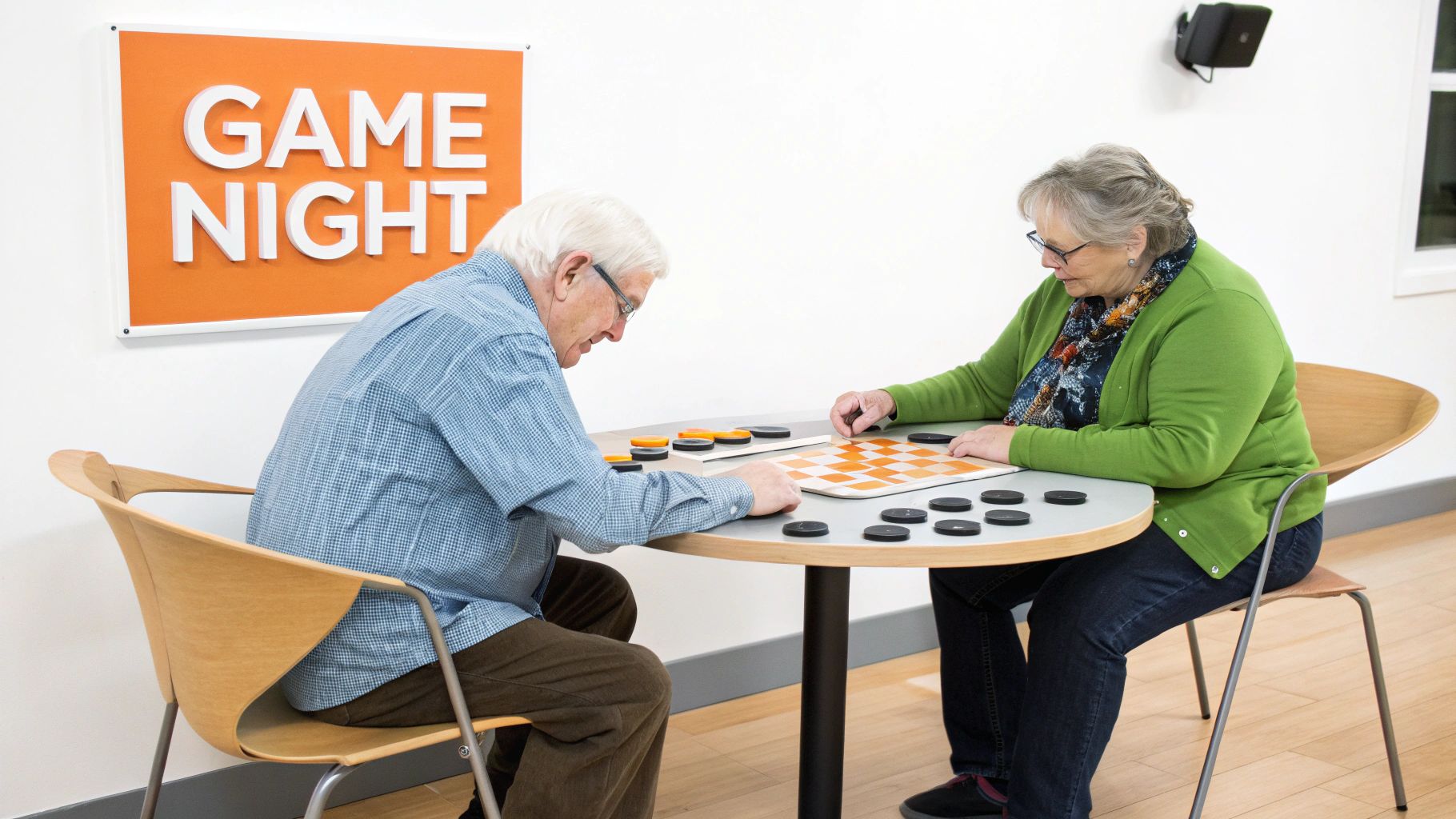
Beyond simple card matching, dedicated board games offer structured and engaging memory games for seniors that combine tactile elements with social interaction. Classic games like Ravensburger's "Memory" or adaptations of "Kim's Game" use physical components like tiles or cards on a board, providing a more robust and organized play experience. These games are designed to challenge memory recall, pattern recognition, and strategic thinking within a familiar and enjoyable framework.
The act of physically handling game pieces and interacting with a shared game board provides significant sensory and motor skill engagement. This multi-modal approach can enhance cognitive processing and make the memory exercise feel less like a clinical task and more like a recreational activity, which is crucial for sustained participation in senior living communities and adult day programs.
Actionable Insights: How to Get Started
The key to success with board games is selecting the right game and adapting it to the players' needs.
Choose Wisely: Select games with large, high-contrast tiles and clear images. Avoid games with complex rules. Practical Example: Ravensburger’s "Memory" game is a classic choice with various themes suitable for seniors.
Improve Accessibility: For those with arthritis, use tile holders to make pieces easier to see and handle. Ensure the playing surface is stable and well-lit.
Keep Groups Small: Play with 2-4 players to keep everyone engaged. This fosters a more intimate and supportive social environment, perfect for a weekly game night.
Track Progress for Better Results
Board games provide a tangible way to observe cognitive performance. To formalize this, a baseline assessment of visual memory and processing speed can be established using a platform like Orange Neurosciences. Progress can then be monitored by tracking how quickly a senior can find matches or the number of incorrect turns over several sessions.
After a period of regular play (e.g., weekly game nights for a month), a follow-up assessment can quantify any improvements. This objective data helps validate the effectiveness of the activity and informs adjustments to the individual's cognitive care plan, demonstrating measurable gains in specific domains.
5. Concentration Games with Word Pairs
Moving beyond visual cues, concentration games using word pairs offer a fantastic way to stimulate verbal and semantic memory. These memory games for seniors are based on creating logical connections between words, such as matching countries to their capitals, finding rhyming pairs, or linking synonyms. The game involves laying cards with single words face-down and trying to find the associated pair.
This type of game taps into a different cognitive pathway than image-matching, focusing on linguistic skills and accumulated knowledge. It leverages semantic memory, which is the network of facts and concepts we build over a lifetime. For many older adults, this long-term memory store remains relatively strong, making word-pair games both an engaging and confidence-boosting activity. These activities can also be a valuable tool for improving executive function skills.
Actionable Insights: How to Get Started
The flexibility of word-pair games makes them easy to adapt for different interests and cognitive levels.
Adjust Difficulty: Start with simple, concrete pairs. Practical Example: Use pairs like "salt & pepper" or "cat & mouse." As skills improve, move to more abstract pairs like "Paris & France" or "doctor & patient."
Use Large Print: Ensure all cards have large, high-contrast text for easy reading.
Theme the Game: Personalize the experience by creating themed decks based on a senior’s interests, such as classic movies, historical figures, or gardening terms.
Track Progress for Better Results
This game provides an excellent opportunity to measure improvements in verbal and associative memory. Before starting, a baseline assessment with a tool like Orange Neurosciences can establish the individual's current semantic memory and processing speed.
Progress can be tracked by timing how long it takes to complete a set of pairs or by noting the number of attempts needed. After several weeks of consistent play (e.g., 20-minute sessions twice a week), a follow-up assessment can provide objective data showing gains in specific cognitive areas. This data allows care providers to adjust the difficulty and themes of the games to continue providing an optimal level of cognitive challenge.
6. Auditory Memory Games and Sound Matching
Moving beyond visual cues, auditory games offer a rich, multi-sensory way to stimulate recall. These unique memory games for seniors are based on identifying and matching sounds, ranging from musical instrument notes and bird calls to the voices of famous historical figures. The core mechanic involves listening to a sound and either identifying its source or matching it to an identical sound played later.
This approach is exceptionally valuable for engaging individuals with visual impairments, allowing them to participate fully in cognitive activities. It taps into different neural pathways than visually dominant games, providing a comprehensive brain workout. The act of listening intently, processing auditory information, and holding it in memory is a powerful cognitive exercise.
Actionable Insights: How to Get Started
The key to a successful auditory game is the quality of the sound and the environment.
Start with Distinct Sounds: Begin with a small set of clearly different sounds. Practical Example: Use recordings of a dog barking, a phone ringing, and a train whistle. As skills improve, introduce more subtle sounds, like distinguishing between a violin and a viola.
Personalize the Content: Tailor the sounds to the senior’s interests. For a nature lover, use bird calls; for a movie buff, use classic film theme songs.
Ensure a Quiet Space: A distraction-free room is essential. Use high-quality speakers or headphones to help the individual focus entirely on the auditory task.
Track Progress for Better Results
Auditory memory skills are a crucial component of overall cognitive health. You can establish a clear baseline by using an assessment on the Orange Neurosciences platform that specifically measures auditory processing and working memory. This provides objective data on the user’s starting point.
Progress can be tracked by recording the number of correctly identified sounds per session or the complexity of sounds the senior can differentiate. After a period of consistent play, a follow-up assessment can quantify improvements in auditory memory and attention. This data-driven approach demonstrates the efficacy of the intervention and helps caregivers refine their cognitive support strategies, ensuring the activities remain both enjoyable and beneficial.
7. Sequence Memory and Pattern Recognition Games
Games that challenge a senior to recall and replicate a sequence of items, colours, or sounds are powerful tools for cognitive stimulation. These memory games for seniors directly target the brain's ability to hold and manipulate information in a specific order, a critical skill for daily tasks like following recipes or remembering phone numbers. Classic electronic games like Simon or modern pattern-completion puzzles on a tablet engage this skill in a fun, interactive way.
The core principle involves observing a pattern and then recreating it from memory. This process strengthens neural pathways associated with sequential processing and attention. The immediate feedback loop, where success is instantly recognized, provides positive reinforcement and boosts motivation, making it a highly effective activity in senior care centres and occupational therapy programs. For those looking to delve deeper, you can explore detailed strategies on how to improve working memory.
Actionable Insights: How to Get Started
The key to success with sequence games is gradual progression and sensory engagement.
Begin with Short Sequences: Start with a simple sequence of 3 or 4 items. Practical Example: In a game like Simon, begin with a three-colour pattern. As the senior succeeds, add one more item to the sequence.
Use Multiple Senses: Choose games that pair a visual cue (like a flashing light) with an auditory one (a corresponding sound). This multi-sensory approach can improve memory encoding.
Create a Low-Pressure Environment: Play in a quiet space and offer plenty of encouragement. Celebrate each successful attempt to build confidence.
Track Progress for Better Results
Sequence games provide a clear metric for progress: the length of the sequence successfully recalled. This makes them ideal for pairing with a structured cognitive assessment. Before introducing these games, an Orange Neurosciences assessment can establish a baseline for working memory and attention.
By tracking the maximum sequence length achieved over several weeks of regular play (e.g., 10-minute sessions, 4 times per week), you can gather concrete data on improvement. A follow-up assessment can then objectively validate these gains, showing measurable progress in the specific cognitive domains targeted by the game and helping to refine the ongoing care strategy.
8. Bingo-Based Memory Games
Adapting a familiar and socially engaging activity, bingo-based variations are excellent memory games for seniors. Instead of simply matching a called number, these versions introduce a memory challenge. For instance, players might need to recall a series of three numbers before marking their cards, or match themed images (like historical figures or types of flowers) to descriptions called out by the leader. This small twist transforms a game of chance into a powerful cognitive exercise.
The social structure of bingo makes it particularly effective in senior living communities and adult day programs. It leverages the comfort of a well-known game to reduce anxiety, making participants more receptive to the cognitive challenge. The group setting also encourages social interaction and a sense of shared enjoyment, which are crucial for sustained engagement.
Actionable Insights: How to Get Started
The key to success is tailoring the game to the cognitive abilities of the participants.
Start Simple: Begin with traditional bingo to re-familiarize players with the format. Then, add a memory challenge. Practical Example: Call out two numbers at a time and have players recall both before marking their cards.
Use Themed Cards: Create bingo cards with images instead of numbers. For a "Famous Faces" theme, the caller would describe a person (e.g., "The first man on the moon"), and players would find Neil Armstrong's picture.
Ensure Clarity: The caller should speak slowly and clearly. Use large-print cards and provide large, easy-to-handle daubers instead of small chips.
Track Progress for Better Results
Bingo-based games offer a clear way to observe cognitive function in a real-world setting. You can track a senior's ability to recall an increasing sequence of numbers or their speed and accuracy in matching themed items. To formalise this, a baseline assessment of auditory memory and processing speed using a platform like Orange Neurosciences can be conducted.
After regular participation in memory bingo sessions, a follow-up assessment can quantify improvements. This data helps care providers in senior communities and care homes adjust the game's difficulty and demonstrate the tangible benefits of the activity, reinforcing its value within a comprehensive cognitive care plan.
9. Memory Jogger Exercises and Reminiscence Therapy
Unlike competitive games, reminiscence therapy is a structured, person-centred approach that uses prompts to stimulate long-term memory and personal storytelling. These memory games for seniors are conversation-based, with facilitators using photographs, music, scents, or tactile objects to evoke powerful memories from an individual's past. The focus is not on winning but on fostering connection, validating life experiences, and promoting cognitive engagement through shared dialogue.
This therapeutic method is highly effective because it taps into well-preserved long-term memories, which are often more accessible than short-term ones for individuals with cognitive decline. Engaging with personal history can improve mood, reduce agitation, and reinforce a sense of identity and self-worth. It transforms memory recall into a meaningful and emotionally resonant activity. To discover how reminiscence fits into broader care plans, learn more about cognitive therapies and their application.
Actionable Insights: How to Get Started
Creating a successful reminiscence session hinges on personalization and creating a safe, supportive atmosphere.
Use Multi-Sensory Prompts: Create a "memory box" with items from the senior's past. Practical Example: For a former teacher, include chalk, a report card, and an old textbook. For a home baker, include the scent of cinnamon or a favourite recipe card.
Ask Open-Ended Questions: Instead of "Do you remember this?", try "Tell me about the day this photo was taken." This encourages detailed storytelling rather than a simple yes/no answer.
Incorporate Music: Play popular songs from their teenage or young adult years to evoke powerful emotional memories.
Tangible Keepsakes: Incorporating tangible objects such as memorial photo necklaces can be a touching way to prompt reflection by keeping loved ones close.
Track Progress for Better Results
While the qualitative benefits of reminiscence are immense, tracking its impact on cognitive function provides valuable data for care planning. Before beginning a series of reminiscence sessions, an assessment with the Orange Neurosciences platform can establish a baseline for verbal fluency, attention, and processing speed.
After several weeks of regular sessions, monitor for changes in engagement, mood, and communicative abilities. A follow-up cognitive assessment can then offer objective data on whether the stimulation from these sessions is translating into measurable improvements in related cognitive domains. This data helps caregivers and therapists refine their approach and understand the full impact of these powerful therapeutic tools.
10. Puzzle-Based Memory Games and Jigsaw Activities
Jigsaw puzzles are more than a pastime; they are a powerful, multifaceted tool among memory games for seniors. The activity requires recalling the overall image while simultaneously focusing on individual piece shapes, colours, and patterns. This process directly challenges visual-spatial reasoning and working memory as the senior must hold the location of potential pieces in their mind while searching for others.
The tactile nature of handling pieces and the satisfaction of a successful fit provide both sensory engagement and a rewarding sense of accomplishment. This makes puzzles a calming yet cognitively stimulating activity, ideal for sustained, low-stress engagement. Senior living communities often feature dedicated puzzle tables, recognizing their therapeutic value. The fine motor skills required also overlap with other therapeutic goals, aligning well with those measured in eye-hand coordination exercises.
Actionable Insights: How to Get Started
Proper setup and selection are crucial for making puzzles an enjoyable and effective memory exercise.
Choose the Right Puzzle: Start with puzzles featuring fewer, larger pieces (100-300 pieces). Practical Example: Select a puzzle with a vibrant, high-contrast image, like a colourful garden or a vintage car, rather than one with large areas of a single colour like a blue sky.
Create a Dedicated Space: Use a well-lit table or a portable puzzle mat that allows the activity to be paused without losing progress.
Organize the Pieces: Use sorting trays to organize pieces by colour or edge. This simple step can reduce frustration and make the process more enjoyable.
Make It Social: Work on a puzzle with a family member or friend. This adds a social dimension, encouraging conversation and teamwork.
Track Progress for Better Results
Puzzles offer clear, observable metrics for progress. You can establish a baseline by timing how long it takes to complete a 200-piece puzzle. Regular sessions, perhaps 30 minutes a few times per week, can lead to noticeable improvements in completion time and strategy. To get a comprehensive view, pair this activity with digital assessments from a platform like Orange Neurosciences to objectively measure gains in visual-spatial reasoning and problem-solving skills over time.
Memory Games for Seniors — 10-Item Comparison
Activity | Implementation Complexity 🔄 | Resource Requirements ⚡ | Expected Outcomes ⭐ | Ideal Use Cases 📊 | Key Advantages & Tips 💡 |
|---|---|---|---|---|---|
Classic Matching Card Games | 🔄 Low — simple rules, turn-based | ⚡ Minimal — printed cards or household items, good lighting | ⭐⭐⭐ — proven memory benefits, short-term recall | Solo practice; small group therapy; quick sessions | Easy to learn; start 4x4, use high-contrast images; 15–20 min sessions |
Photo Memory Games with Personal Images | 🔄 Moderate — prep required to collect/format photos | ⚡ Moderate — photos/scanner/printer or simple app | ⭐⭐⭐⭐ — high engagement + reminiscence benefits | Reminiscence therapy; family visits; mild–moderate impairment | Strong emotional engagement; use 8–12 pairs, add captions, involve family |
Digital Memory Game Apps & Software | 🔄 Moderate–High — device + app setup, learning curve | ⚡ Moderate — tablet/phone, possible subscription, connectivity | ⭐⭐⭐ — adaptive training, trackable progress | Home-based training; personalized adaptive programs | Adaptive difficulty and analytics; enable tutorials, limit 10–15 min/day |
Board Game Memory Variations | 🔄 Low — familiar turn-based mechanics | ⚡ Low — physical board or oversized cards | ⭐⭐⭐ — social engagement + tactile stimulation | Group play, intergenerational activities, community events | Encourages social interaction; choose large images, laminate cards |
Concentration Games with Word Pairs | 🔄 Moderate — requires content design (word choice) | ⚡ Minimal — paper/voice; themed decks | ⭐⭐⭐ — preserves language and semantic memory | Educated seniors; language-focused groups; clubs | Leverages crystallized intelligence; use large print and era-relevant words |
Auditory Memory & Sound Matching | 🔄 Moderate — needs curated audio and playback setup | ⚡ Moderate — speakers/headphones, quality recordings | ⭐⭐⭐ — strengthens auditory processing; accessible for low vision | Vision-impaired seniors; music and nature enthusiasts | Use clear recordings, quiet environment, start with distinct sounds |
Sequence Memory & Pattern Recognition | 🔄 Moderate — adjustable speed/complexity | ⚡ Low–Moderate — simple electronic or card-based tools | ⭐⭐⭐ — improves working memory and processing speed | Solo training; occupational therapy; speed-focused exercises | Begin with 3–4 item sequences; increase gradually; include breaks |
Bingo-Based Memory Games | 🔄 Low — familiar format with minor rule tweaks | ⚡ Low — large-print cards, caller, daubers | ⭐⭐⭐ — high social impact and routine engagement | Large-group activities; senior centers; memory-care programs | Use one-card-per-person, large type, slow calls; seasonal themes boost interest |
Memory Jogger Exercises & Reminiscence Therapy | 🔄 High — facilitator skill and sensitivity required | ⚡ Moderate — prompts, sensory items, trained staff | ⭐⭐⭐⭐ — strong emotional, social, and cognitive benefits | Therapeutic groups; moderate cognitive decline; identity work | Multi-sensory prompts; ask open-ended questions; document stories with permission |
Puzzle-Based Memory & Jigsaw Activities | 🔄 Low–Moderate — self-paced, varying difficulty | ⚡ Moderate — puzzles, table space, good lighting | ⭐⭐⭐ — improves visual-spatial memory and sustained attention | Solo or collaborative, meditative sessions; occupational therapy | Choose large-piece puzzles (200–500), use boards, work collaboratively when possible |
Turn Fun into Function: Your Next Step in Cognitive Care
Throughout this guide, we have explored a diverse collection of ten powerful memory games for seniors, each designed to stimulate different facets of cognitive function in an engaging and accessible way. From the tactile satisfaction of Classic Matching Card Games and Jigsaw Puzzles to the deeply personal connection of Photo Memory Games, the objective remains the same: to turn enjoyable activities into meaningful cognitive exercise. We've seen how auditory games enhance listening skills, how sequence challenges bolster pattern recognition, and how digital apps offer modern, adaptive training.
The central takeaway is that a one-size-fits-all approach to cognitive health is ineffective. The most successful strategies are those that are personalized, varied, and consistently applied. The true value lies not in mastering a single game but in creating a rich, multi-faceted routine that keeps the brain active, challenged, and engaged. By adapting difficulty levels, incorporating personal interests, and focusing on the process rather than just the outcome, you can transform simple pastimes into a cornerstone of a proactive brain health plan.
From Play to Progress: The Importance of a Structured Approach
While the benefits of these memory games are clear, their real power is unlocked when they are integrated into a structured and measurable cognitive care strategy. Simply playing games is a positive step, but understanding their specific impact on domains like working memory, executive function, or processing speed is what allows for truly targeted and effective intervention. This is where casual fun evolves into clinical function.
To make this leap, consider these actionable steps:
Establish a Baseline: Before starting a new routine of memory games, use a digital assessment tool to understand the individual's current cognitive strengths and weaknesses. This provides a clear starting point to measure progress against.
Target Specific Goals: Use the insights from this guide to choose games that align with specific needs. Practical Example: If the goal is to improve attention, focus on Auditory Memory games. If the goal is to enhance visual-spatial skills, prioritize Puzzle-Based Activities.
Track Performance Systematically: Move beyond just "having fun." Document tangible metrics. For a matching game, record the time to completion. For a sequence game, note the longest pattern successfully recalled. This data provides objective proof of improvement.
Integrate with Professional Assessment: Combine engaging activities with clinical-grade assessments for the most robust cognitive care plan. This creates a powerful feedback loop: assess, intervene with targeted games, and re-assess to measure the impact.
Bridging the Gap Between Activity and Analytics
The ultimate goal is to create a seamless synergy between enjoyable cognitive stimulation and data-driven insights. The memory games for seniors detailed in this article provide the "what" and the "how," but a platform that offers precise cognitive measurement provides the "why." It helps answer critical questions: Is this working? Which cognitive areas are improving? Where should we focus our efforts next?
By adopting this integrated model, caregivers, therapists, and healthcare providers can move from hoping for a positive outcome to actively engineering one. This transforms brain health from a passive concern into an active, manageable, and empowering part of an individual's overall wellness journey. The fun of a game becomes the foundation for functional cognitive improvement, ensuring that every moment of play is also a step toward sustained mental vitality and an enhanced quality of life.
Ready to move beyond guesswork and build a data-driven cognitive care program? Orange Neurosciences provides rapid, precise digital assessments that pinpoint cognitive strengths and weaknesses, allowing you to pair the right memory games for seniors with targeted needs. Visit our website to see how our platform can help you measure what matters and create a truly personalized and effective brain health strategy. Explore the solutions at Orange Neurosciences today.

Orange Neurosciences' Cognitive Skills Assessments (CSA) are intended as an aid for assessing the cognitive well-being of an individual. In a clinical setting, the CSA results (when interpreted by a qualified healthcare provider) may be used as an aid in determining whether further cognitive evaluation is needed. Orange Neurosciences' brain training programs are designed to promote and encourage overall cognitive health. Orange Neurosciences does not offer any medical diagnosis or treatment of any medical disease or condition. Orange Neurosciences products may also be used for research purposes for any range of cognition-related assessments. If used for research purposes, all use of the product must comply with the appropriate human subjects' procedures as they exist within the researcher's institution and will be the researcher's responsibility. All such human subject protections shall be under the provisions of all applicable sections of the Code of Federal Regulations.


© 2026 by Orange Neurosciences Corporation