How to Improve Cognitive Function For A Sharper Mind
Nov 24, 2025
If you're looking for the quickest way to sharpen your mind, it's not about finding a single "brain game" or magic supplement. Real, lasting cognitive enhancement comes from consistently weaving four key habits into your life: targeted physical activity, a brain-supportive diet, continuous mental challenges, and strong social connections. This simple framework is your toolkit for building mental acuity that sticks.
A Practical Framework For Better Brain Health
Feeling a bit foggy or less sharp than you used to? It’s a common feeling, but it’s definitely not something you just have to live with. Improving your cognitive function doesn’t mean you need to completely upend your life. It's more about making small, strategic adjustments to your daily routines.
Think of your brain's health not as something fixed, but as a dynamic system that responds directly to how you treat it.
A great place to begin is by understanding your personal baseline. Before jumping into a new routine, it’s incredibly helpful to know where you stand. Professional cognitive assessments can give you an objective snapshot of your mental strengths and weaknesses, offering a clear starting point. This first step helps you focus your energy where it will make the biggest difference.
The Four Pillars Of Cognitive Enhancement
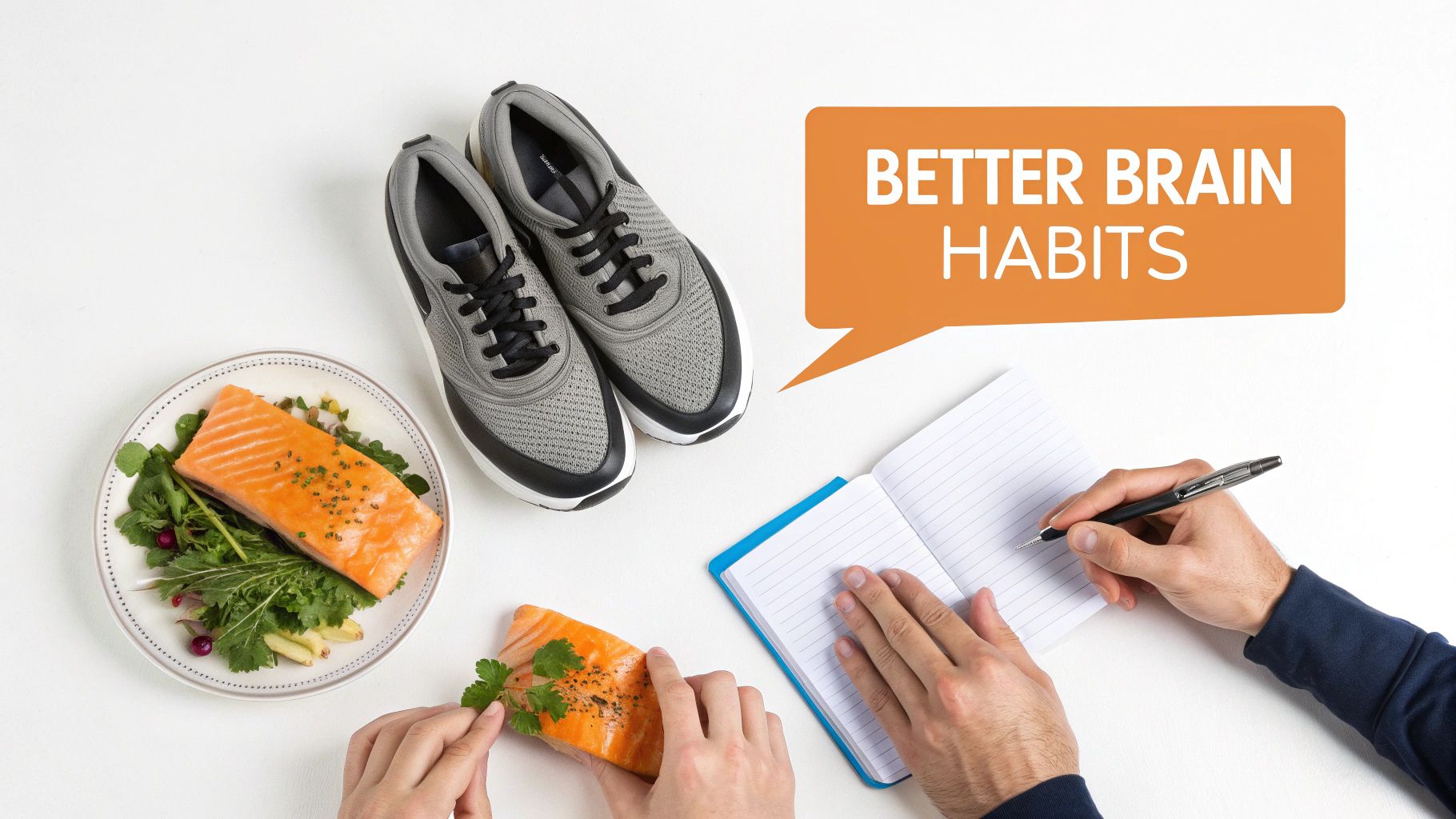
To make things more manageable, the most effective strategies for boosting brain health can be grouped into four core pillars. By focusing on these interconnected areas, you create a powerful synergy that supports your overall cognitive vitality.
This table gives a quick summary of these pillars and some simple first steps to get you started.
Pillar | Core Principle | Actionable First Step |
|---|---|---|
Physical Activity | Movement increases blood flow, delivering essential oxygen and nutrients to the brain. | Go for a brisk 20-minute walk during your lunch break three times this week. |
Brain-Supportive Diet | The food you eat directly fuels your brain's performance and protection. | Add a handful of walnuts to your morning yogurt or salad for an omega-3 boost. |
Mental Stimulation | Challenging your brain builds new neural pathways and strengthens cognitive reserve. | Download a language app like Duolingo and spend 10 minutes practicing each night before bed. |
Social Connection | Meaningful engagement reduces stress and exercises complex brain functions. | Text a friend you haven't seen in a while and set a specific date to catch up over coffee. |
By tackling these four areas together, you build a robust foundation for long-term brain health.
This concern is more common than many people think. A 2021 report, for instance, found that about 11.4% of adults aged 50 and over felt they had some form of cognitive impairment. The encouraging part? Of those who talked to a healthcare professional, 44% received advice or an intervention, showing that more people are taking a proactive approach to their brain health.
Building a sharper mind is less about finding a single magic bullet and more about consistently practicing the right combination of habits. The synergy between physical, nutritional, mental, and social wellness is where real, sustainable improvement happens.
For a deeper dive into more strategies, this article on 8 ways to boost brain function for greater focus and productivity is a great resource.
In the sections that follow, we'll explore each of these pillars in more detail, giving you evidence-based, actionable steps to build your own personalized plan for better brain health.
The Undeniable Link Between Movement and Mind
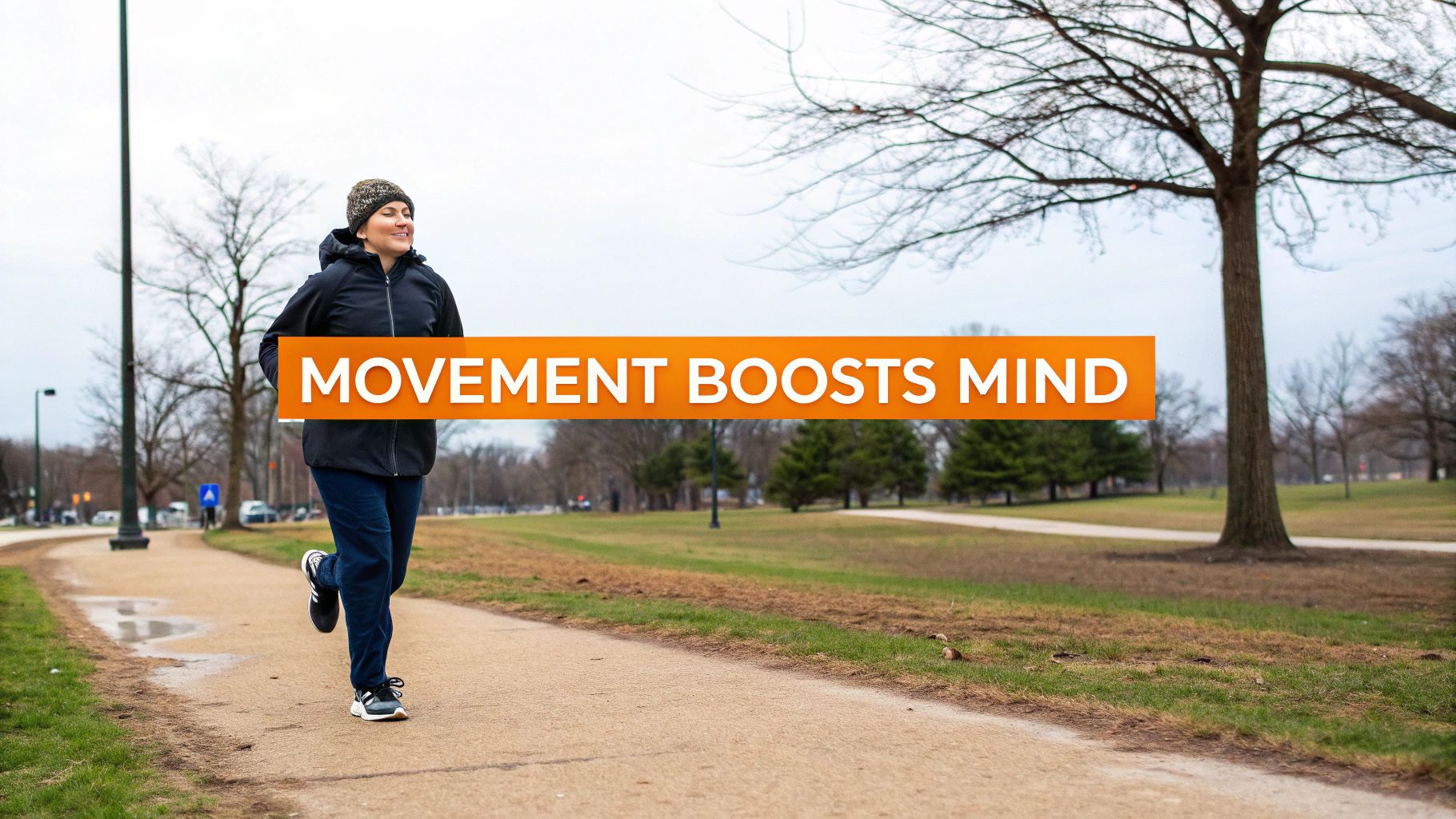
We tend to think of exercise as something we do for our bodies—building muscle, improving heart health, or managing weight. But some of its most profound impacts happen in your brain. When you start to see physical activity as a powerful tool for cognitive enhancement, you unlock its full potential.
Movement isn't just beneficial for your mind; it's essential. Every single time you get active, you're directly influencing your brain's structure and function in several critical ways. And this isn’t just about long-term benefits—the positive effects can be felt almost immediately.
How Movement Remodels Your Brain
Getting your heart rate up increases blood flow everywhere, including straight to your brain. This surge delivers a fresh supply of oxygen and essential nutrients that brain cells need to thrive. Think of it as putting premium fuel in a high-performance engine.
This increased circulation also helps clear out waste products and tamp down inflammation, which is a known culprit in cognitive decline.
On top of that, exercise stimulates the release of key proteins, especially brain-derived neurotrophic factor (BDNF). Often called "Miracle-Gro for the brain," BDNF is crucial for neurogenesis—the growth of new neurons—and strengthening the connections between existing ones. This whole process is fundamental to learning, memory, and keeping your mind sharp.
Finding The Right Movement For You
The best part? You don't need to become a marathon runner to get these rewards. The real keys are consistency and finding activities you genuinely enjoy. That's what makes it a habit you'll actually stick with.
Here are a few types of exercise and their specific brain benefits:
Aerobic Exercise: Things like brisk walking, cycling, swimming, or dancing are fantastic for boosting blood flow and BDNF. Practical Example: Schedule a 30-minute bike ride three mornings a week before work. You’ll likely notice improved focus and mental clarity for hours afterward.
Strength Training: Lifting weights or doing bodyweight exercises twice a week does more than build muscle. Research has linked it to big improvements in long-term memory and executive function. Practical Example: Find a 20-minute bodyweight routine on YouTube and do it in your living room every Tuesday and Thursday.
Mind-Body Practices: Yoga, Tai Chi, and even mindful walking combine physical movement with focused attention. These practices are brilliant for cutting down stress and improving concentration. They also involve complex movements that challenge your brain's coordination centres. To take this a step further, you can explore specific eye-hand coordination exercises that build on these same principles.
The goal isn’t to exhaust yourself with gruelling workouts. Instead, aim for sustainable habits. A consistent 20-minute walk each day is far more beneficial for your brain than a punishing two-hour gym session once a month.
Making Movement A Sustainable Habit
Trying to fit physical activity into a busy schedule can feel like a huge challenge, but small changes really do make a big difference. Try "exercise snacking"—breaking up your activity into smaller, 10-minute chunks throughout the day. A quick walk on your lunch break, a few sets of squats while your coffee brews, or dancing to a couple of songs all add up.
The connection between physical activity and cognitive health becomes especially strong as we age. Study after study shows that staying active is one of the best ways to protect your brain. One piece of research found that regular physical activity in older adults was directly associated with better global cognitive function, memory, and executive function. The participants who were more active consistently scored higher on cognitive tests.
Ultimately, the most effective exercise for your brain is the one you'll actually do. Experiment with different activities, find what feels good for your body, and pay close attention to how you feel mentally afterward. When you treat movement as a non-negotiable part of your brain care routine, you’re making one of the most powerful investments in your long-term cognitive vitality.
Fueling Your Brain With A Cognitive-Supportive Diet
The link between what you eat and how clearly you think is far more direct than most people imagine. The food on your plate quite literally provides the building blocks your brain needs for memory, focus, and overall vitality. Because of this, shifting your diet is one of the most powerful and practical ways to improve cognitive function.
This isn't about jumping on a restrictive eating trend or mastering complicated recipes. It’s about consistently weaving specific, nutrient-dense foods into your life that protect and nourish your brain cells. Think of it as a long-term investment in your mental clarity and resilience.
Key Principles Of A Brain-Healthy Diet
Two of the most well-researched eating patterns for cognitive health are the Mediterranean diet and the MIND diet. While they have their differences, they share a core philosophy that’s easy to adopt. Both place a heavy emphasis on whole, unprocessed foods and are packed with compounds that fight inflammation and oxidative stress—two of the main culprits behind cognitive decline.
These diets are built around a few nutrient powerhouses:
Omega-3 Fatty Acids: Absolutely critical for building and maintaining brain cell membranes. A shortfall here can directly impact learning and memory.
Antioxidants: Compounds like flavonoids and polyphenols act as your brain's security detail, protecting it from damage caused by unstable molecules called free radicals.
B Vitamins: Vitamins B6, B12, and B9 (folate) are vital players in brain health, helping to regulate everything from mood to long-term cognitive integrity.
Healthy Fats: Monounsaturated fats, the kind you find in avocados and olive oil, are essential for supporting brain structure and function.
By focusing your meals around these nutrients, you create an internal environment where your brain can truly operate at its peak.
Your Cognitive-Supportive Shopping List
Translating these ideas into daily meals is much simpler than it sounds. The goal is to gradually add more brain-boosting foods into your regular routine, not to overhaul everything overnight. A great way to start is by building your meals around these key items.
Top Brain Foods to Incorporate:
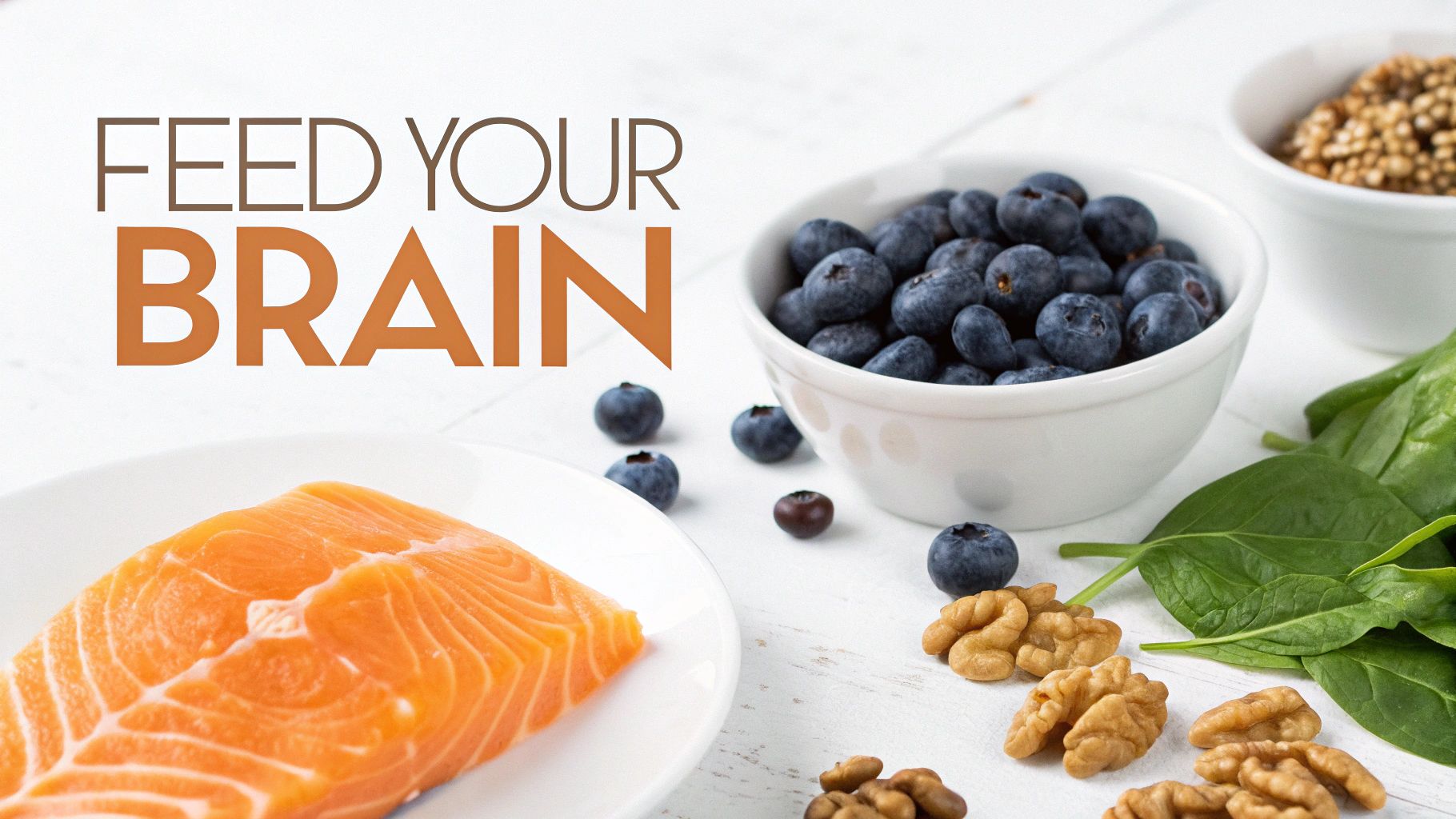
Fatty Fish: Salmon, mackerel, and sardines are swimming in omega-3s. Actionable Step: Plan to have baked salmon for dinner one night and a tuna salad sandwich for lunch another day this week.
Leafy Greens: Spinach, kale, and collard greens deliver a potent mix of brain-protective nutrients. Actionable Step: Add a large handful of spinach to your morning smoothie or eggs.
Berries: Blueberries, strawberries, and blackberries are bursting with antioxidants. Actionable Step: Keep a bag of frozen mixed berries in the freezer to add to yogurt or oatmeal.
Nuts and Seeds: Walnuts and flaxseeds are fantastic plant-based sources of omega-3s. Actionable Step: Create a "brain mix" of walnuts, almonds, and sunflower seeds to keep at your desk for an afternoon snack.
Whole Grains: Things like brown rice, quinoa, and oats give your brain a steady supply of glucose. Actionable Step: Swap white rice for quinoa with your next stir-fry.
Making these foods a regular part of your diet provides the consistent stream of nutrients your brain needs to thrive.
A simple rule of thumb for brain-healthy eating is to "eat the rainbow." Those vibrant colours in fruits and vegetables often signal the presence of powerful antioxidants and phytonutrients that support cognitive function.
Foods That Can Hinder Cognitive Function
Just as important as what you add to your diet is what you limit. Certain foods can actively contribute to inflammation and impair brain function, especially when they become a regular habit. Being mindful of these can make a noticeable difference in your mental clarity.
Be cautious with:
Sugary Drinks and Refined Carbs: Sodas, pastries, and white bread cause rapid blood sugar spikes, which can lead to inflammation and oxidative stress in the brain.
Trans Fats: Often found lurking in packaged baked goods and fried foods, these artificial fats have been linked to poorer memory and an increased risk of cognitive decline.
Highly Processed Foods: These items often contain a nasty combination of unhealthy fats, excess sugar, and sodium, offering little nutritional value while contributing to brain fog and fatigue.
You don't have to eliminate these foods entirely, but cutting back can have a surprisingly quick impact on how sharp you feel. Making conscious swaps—like choosing a piece of fruit over a sugary snack or cooking at home instead of grabbing takeout—is an actionable way to support your long-term cognitive health.
For more hands-on guidance and personalised plans that integrate diet with other cognitive strategies, we invite you to explore our services at Orange Neurosciences.
Building a Resilient Mind With Targeted Training
While a daily crossword puzzle is a great habit, if you're serious about improving your cognitive function, you'll need a more structured and challenging approach. Your brain isn't a muscle, but in some ways, it acts like one—it adapts, grows, and gets stronger when you push it beyond its current limits.
This incredible ability is what we call neuroplasticity. Think of it as your brain’s built-in capacity to physically rewire itself as it learns and experiences new things. When you pick up a new skill, your brain isn’t just storing data; it’s actively creating and reinforcing new neural pathways, making itself more efficient and resilient.
Beyond the Comfort Zone
The real key to unlocking neuroplasticity is stepping outside your cognitive comfort zone. Doing the same kind of puzzle every day is like walking the same path over and over. It's easy, sure, but it doesn't build any new roads. To truly challenge your brain, you need to dive into activities that are complex, new to you, and demand real effort.
Learning a musical instrument is a fantastic example of a solid cognitive workout. It forces your brain to process sound, coordinate fine motor skills, read music, and understand rhythm all at once. This kind of multi-layered task creates far stronger and more widespread neural connections than a simple, repetitive one.
Other powerful options include:
Learning a new language: Actionable Step: Use an app like Babbel for 15 minutes during your commute to learn basic conversational phrases.
Mastering a complex game: Actionable Step: Watch a beginner's tutorial on chess strategy and play one online game per day.
Picking up a skill with fine motor control: Actionable Step: Buy a beginner's knitting kit and set a goal to make a simple scarf. This requires intense focus and dexterity, strengthening the mind-body connection.
The goal isn't just to stay busy, but to be actively engaged in learning something new and genuinely difficult. That deliberate effort is the signal your brain needs to adapt and grow, building a stronger, more flexible cognitive architecture.
Designing Your Cognitive Workout
Just like you'd plan a physical fitness routine, you can create a 'cognitive workout' plan that targets different mental skills. A balanced approach ensures you're not just strengthening one area while neglecting others. The plan should be designed to intentionally push your boundaries and keep your brain sharp. For anyone looking to specifically sharpen their mental edge, it’s worth exploring effective strategies to improve focus and concentration.
A well-rounded cognitive training plan usually focuses on several core areas.
Cognitive Domain | Training Example | Real-World Scenario |
|---|---|---|
Working Memory | Playing a memory game where you have to recall a growing sequence of numbers or objects. | Mentally calculating a 15% tip on a restaurant bill without pulling out your phone. |
Processing Speed | Using a brain-training app that challenges you to quickly spot matching shapes or patterns. | Rapidly scanning a crowded airport departures board to find your flight under pressure. |
Executive Function | Planning a multi-step project from start to finish, breaking it down into smaller, manageable tasks. | Organizing a family holiday—coordinating travel, lodging, and activities for everyone. |
Building a strong working memory is especially important, as it's the foundation for so many other cognitive processes. If you want to dive deeper into this specific skill, our comprehensive guide offers practical tips on how to improve working memory.
Consistency is everything. Try to dedicate 15-20 minutes each day to your chosen activity. When a skill starts to feel easy, that's a good sign—it means your brain has adapted. It’s also your cue to ramp up the difficulty or move on to a new challenge to keep that neuroplasticity engine humming. By actively seeking out and mastering new, complex skills, you're not just passing the time; you are consciously building a more resilient and powerful mind.
Creating Your Personalised Cognitive Improvement Plan
Knowing the building blocks of brain health is one thing. Actually weaving them into a sustainable, real-world routine is where the magic happens. A scattered approach—a bit of exercise here, a few brain-healthy meals there—will only get you scattered results. To really move the needle on your cognitive function, you need a cohesive plan built around your unique lifestyle, habits, and goals.
This isn’t about locking yourself into a rigid, unforgiving schedule. It's about designing a flexible framework that integrates physical activity, targeted nutrition, and mental challenges into your week in a way that feels both natural and achievable. Think of it as building a holistic lifestyle, not just looking for a temporary fix.
Assessing Your Starting Point
Before you can build your plan, you need an honest picture of where you stand right now. A quick self-audit is all it takes to see where your biggest opportunities are. Take a moment to think about your typical week and answer a few questions.
Physical Activity: How many days do you get at least 30 minutes of moderate activity? What’s standing in your way of doing more?
Nutrition: How often are you eating brain-boosting foods like leafy greens, berries, and fatty fish? How many of your meals are highly processed or loaded with sugar?
Cognitive Training: When was the last time you learned a completely new, complex skill? What does your daily mental stimulation really look like?
Your answers will shine a light on the areas that need the most attention, helping you set goals that are both realistic and impactful. For example, if you realise you’re only active once a week, your first goal might be adding two 20-minute walks, not trying to run a marathon overnight.
Weaving the Pillars Into a Cohesive Schedule
Once you've spotted your opportunities, it's time to start slotting these cognitive-boosting activities into your weekly schedule. The key here is to start small and build momentum. Trying to overhaul everything at once is a classic recipe for burnout.
A structured approach has been proven to work. The U.S. POINTER Study showed that older adults in a two-year structured program—which included regular exercise, a specific diet, and cognitive challenges—had significantly better cognitive outcomes than a self-guided group. Having a plan truly makes all the difference.
This process is all about building a more resilient mind by intentionally moving from your comfort zone, through a challenge, and into the "rewire" phase where real growth happens.
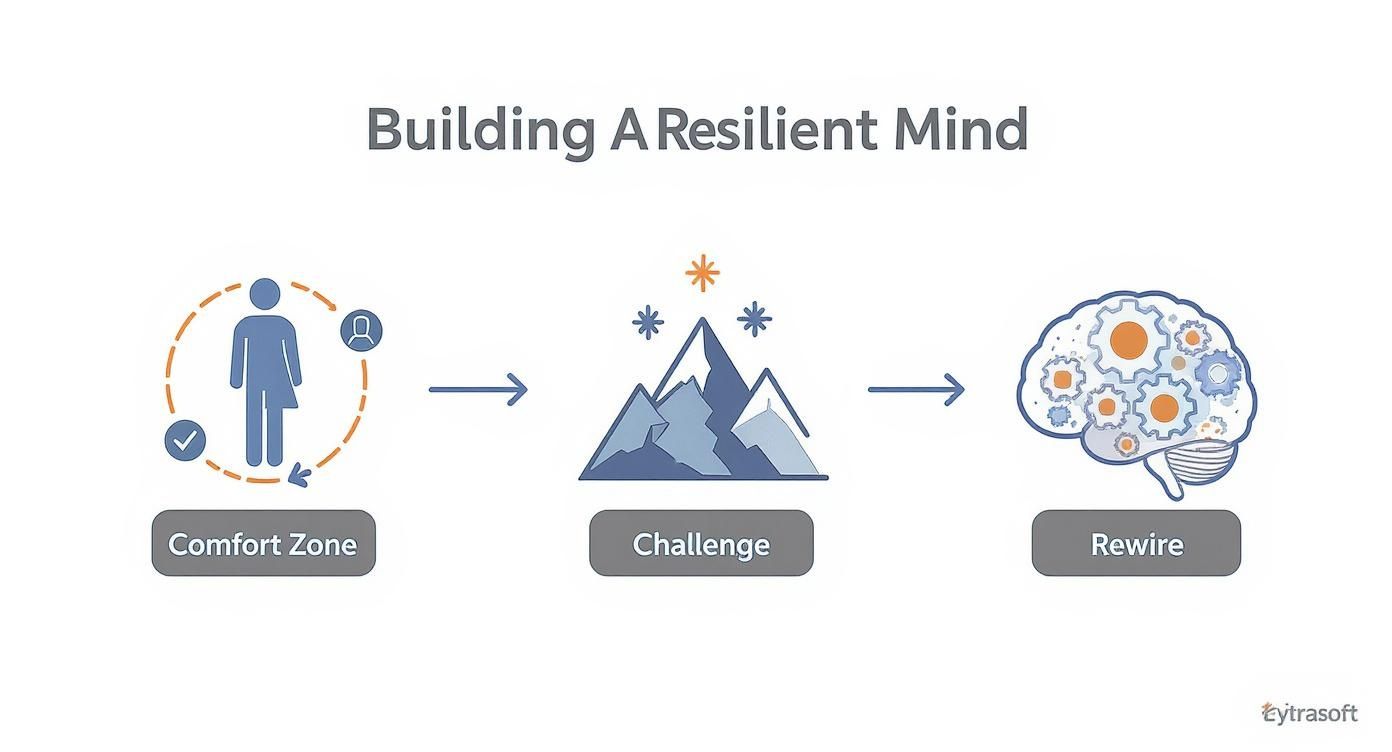
This visual shows that genuine cognitive improvement isn't about sticking to what's easy. It's about embracing challenges that stimulate neuroplasticity and forge new neural pathways.
Your personalised plan is a living document, not a static rulebook. The goal is consistency, not perfection. If you miss a day, just get back on track the next. It’s the long-term commitment that builds a stronger, sharper mind.
A well-rounded plan should also hit specific cognitive domains. For instance, planning a multi-step project or organising a family trip are fantastic real-world exercises for your brain. For a deeper dive into this area, check out our guide on how to improve executive function.
A Sample Plan to Get You Started
To give you a clearer idea, here's what a balanced weekly schedule could look like. Think of this as a template—feel free to swap activities based on what you enjoy and what your goals are.
Sample Weekly Cognitive Enhancement Schedule
Day | Physical Activity (30-45 mins) | Cognitive Training (15-20 mins) | Nutrition Focus |
|---|---|---|---|
Monday | Brisk Walk | Language Learning App (e.g., Duolingo) | Leafy green salad with salmon for lunch. |
Tuesday | Strength Training | Sudoku or a Logic Puzzle | Handful of walnuts and berries for a snack. |
Wednesday | Cycling or Swimming | Watch an educational documentary. | Add flaxseeds to your morning oatmeal. |
Thursday | Strength Training | Practice a musical instrument. | Tofu and vegetable stir-fry for dinner. |
Friday | Yoga or Tai Chi | Plan your weekend meals and activities. | Enjoy dark chocolate (70% cocoa) for dessert. |
Saturday | Long Hike or Walk | Play a strategy board game with family. | Try a new recipe with brain-healthy ingredients. |
Sunday | Rest or Light Walk | Read a chapter of a non-fiction book. | Meal prep snacks like cut veggies for the week. |
This schedule mixes different types of activities to keep things engaging and ensures you're working various cognitive muscles throughout the week.
Answering Your Questions About Cognitive Function
When you start digging into how to improve your cognitive function, a lot of questions pop up. It's a field filled with nuance. To help you feel more confident, we've gathered some of the most common questions we hear and provided clear, experience-based answers.
How Quickly Can I Expect To See Results?
This is the big one, and the honest answer is: it depends. It really hinges on how consistent you are and where you're starting from.
You might notice small, immediate benefits. Things like feeling a bit sharper after a brisk walk or swapping a heavy, sugary lunch for a salmon salad. But the significant, lasting improvements in memory or processing speed? That’s a long game, the result of cumulative effort. Lasting change comes from building sustainable habits, not chasing a quick fix.
Are Brain-Training Games Actually Effective?
It's a mixed bag. While a lot of apps claim they’ll boost your IQ, the science shows their benefits are usually pretty narrow. You can get incredibly good at a specific memory game, but that skill often doesn’t translate to remembering your grocery list or the name of a person you just met. This is what researchers call a lack of far transfer.
A far better approach is to pick up a complex, real-world skill.
Try This Instead: Rather than spending 20 minutes on a pattern-matching app, use that time to learn a few chords on a guitar or practise a new language. Activities like these engage multiple parts of your brain at once—memory, motor skills, auditory processing—and build much more robust and useful neural pathways.
What Role Do Supplements Play in Cognitive Health?
The supplement industry is massive, but it pays to be skeptical. Yes, certain nutrients are absolutely vital for brain health—think Omega-3s, B vitamins, and Vitamin D. But the best way to get them is through a balanced diet. A "food first" approach gives you a complex array of nutrients that work together, something a pill can't replicate.
Before you start any supplement, it's critical to talk to your healthcare provider. They can run blood tests to see if you have any real deficiencies. Taking supplements you don't need is often just a waste of money, and in some cases, can even be harmful.
Improving cognitive function is rarely about finding a single magic pill. It's about creating a lifestyle that consistently fuels and stimulates your brain.
How Does Stress Impact Cognitive Function?
Chronic stress is a major roadblock to a sharp mind. When you're constantly stressed out, your body is swimming in the hormone cortisol. In short bursts, it’s helpful. But prolonged exposure to high cortisol levels can actually damage and kill cells in the hippocampus—a part of the brain that’s absolutely critical for learning and memory.
This is why stress management has to be a core part of any plan to boost cognitive performance.
Actionable Tip: Weave a simple mindfulness practice into your day. Just set a timer for three minutes and focus only on your breath. It sounds simple, but this act alone can help lower cortisol and improve your ability to concentrate. Over time, it builds resilience. For a deeper look, our guide offers practical ways on how to improve focus and concentration.
Is It Possible To Improve Cognition At Any Age?
Yes. Emphatically, yes. One of the most incredible discoveries in neuroscience is neuroplasticity—the brain's ability to change and adapt throughout our entire lives. While learning might come a bit easier when you're young, your brain never loses its capacity for growth.
Think about an older adult learning to use a tablet to video call their grandkids, or someone taking up painting for the first time in their 70s. They are actively forging new neural connections. The core principles of good nutrition, regular exercise, and mental stimulation apply at every age. It is never too late to start investing in your brain.
At Orange Neurosciences, we're passionate about giving you the tools and insights to take charge of your cognitive health. Our evidence-based platform offers precise assessments and personalized training to help you build a stronger, more resilient mind. Find out how our approach can support your journey by visiting us at https://orangeneurosciences.ca or by signing up for our newsletter for actionable brain health tips delivered directly to your inbox.
Orange Neurosciences' Cognitive Skills Assessments (CSA) are intended as an aid for assessing the cognitive well-being of an individual. In a clinical setting, the CSA results (when interpreted by a qualified healthcare provider) may be used as an aid in determining whether further cognitive evaluation is needed. Orange Neurosciences' brain training programs are designed to promote and encourage overall cognitive health. Orange Neurosciences does not offer any medical diagnosis or treatment of any medical disease or condition. Orange Neurosciences products may also be used for research purposes for any range of cognition-related assessments. If used for research purposes, all use of the product must comply with the appropriate human subjects' procedures as they exist within the researcher's institution and will be the researcher's responsibility. All such human subject protections shall be under the provisions of all applicable sections of the Code of Federal Regulations.


© 2026 by Orange Neurosciences Corporation