A Clinician's Guide to Cognitive Processing Therapy Training
Jan 11, 2026
Diving into cognitive processing therapy training isn't just about reading a manual. It's a hands-on journey where you master a powerful, evidence-based treatment for PTSD. The path starts with an accredited workshop and then moves into supervised clinical consultation. This ensures you can apply the therapy confidently, helping clients reframe their traumatic experiences. For example, you'll learn not just the theory of "stuck points," but how to practically identify one in a client's narrative, such as a veteran who repeatedly states, "It was my fault my team got ambushed."
Your Path to Mastering CPT
Deepening your skills in treating Post-Traumatic Stress Disorder (PTSD) takes more than just understanding the theory—it demands a real-world roadmap. For busy mental health professionals, mastering Cognitive Processing Therapy (CPT) means following a clear path that builds genuine clinical competence from the ground up.
This guide isn't just an academic overview; it's a concrete, actionable plan. We'll walk through how to find officially accredited training, weigh the pros and cons of intensive workshops versus flexible online courses, and successfully navigate the all-important post-training consultation phase. This journey is designed to build your confidence and sharpen your therapeutic skills.
The Core Components of CPT Training
Becoming a skilled CPT provider is a process, not a one-off event. Each step builds on the last, ensuring you can translate what you learn in a workshop into effective clinical practice. The initial training lays the groundwork, teaching you foundational concepts like identifying "stuck points" and using Socratic questioning.
But let's be honest, the real learning curve begins when you start using these methods with your own clients. This is where clinical consultation becomes indispensable. It provides a supportive space to fine-tune your approach, work through challenges, and make sure you’re delivering the therapy with fidelity. As you map out your CPT journey, it's also helpful to consider the broader steps of how to become a therapist to see how this specialization fits within your overall career growth.
The typical process flow looks something like this:
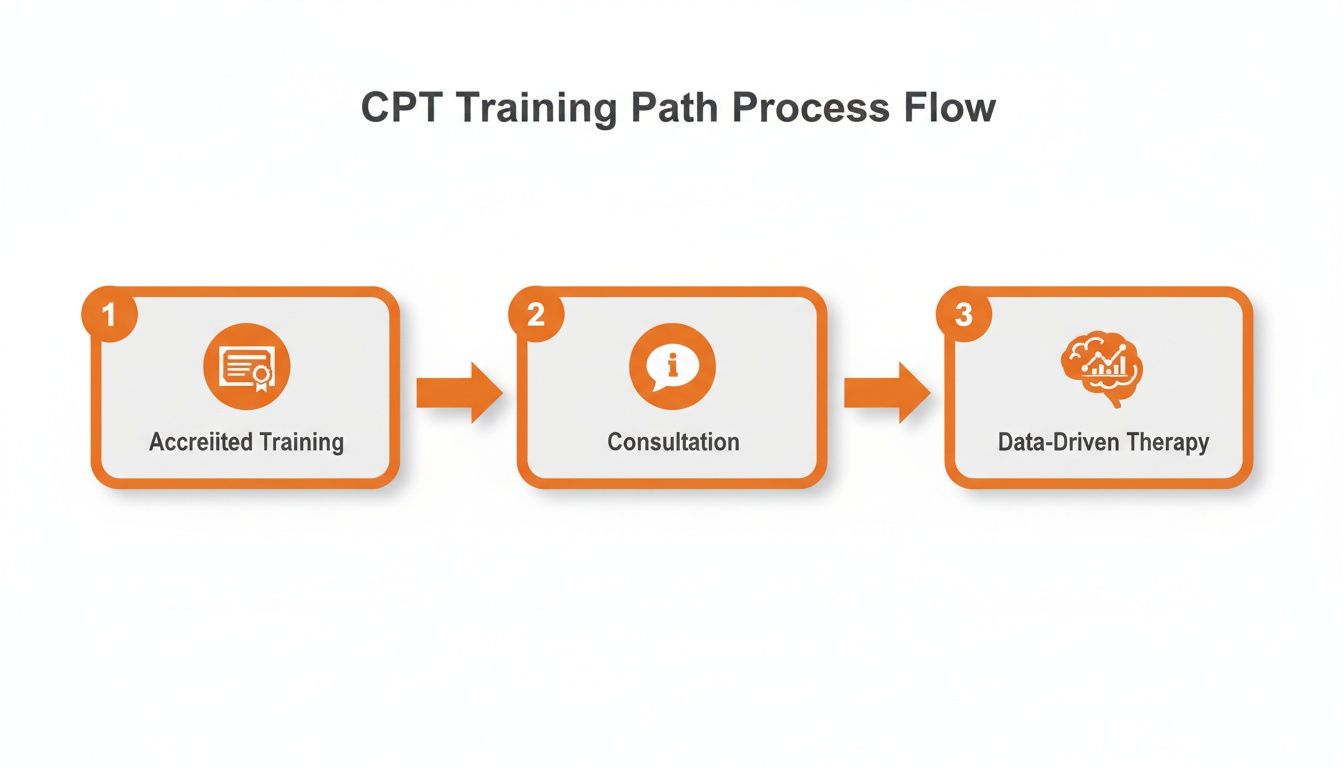
This highlights how true CPT mastery is a blend of structured education, supervised practice, and a commitment to data-driven methods to ensure the best possible outcomes for your clients.
CPT Training Pathways at a Glance
Navigating the different stages of CPT training can feel complex at first. This table breaks down the typical pathway, from your first workshop to becoming an officially recognized provider.
Training Component | Typical Format | Key Objective |
|---|---|---|
Foundational Workshop | 2-3 day live or online workshop | Learn the core theory, session structure, and key CPT techniques. |
Clinical Consultation | Group or individual calls (10-20 hours) | Review real cases, receive expert feedback, and ensure fidelity to the model. |
Provider Roster | Application and case submission | Achieve official recognition as a CPT provider, signalling expertise. |
Certification (Optional) | Advanced case review and audio submission | Attain the highest level of proficiency and the ability to train others. |
Each step is designed to build your skills methodically, moving from theoretical knowledge to confident, real-world application with clients.
Integrating Modern Tools into Your Practice
Today's approach to CPT is about more than just the therapy itself; it’s about delivering smarter, data-informed care from day one. By bringing objective cognitive metrics into your assessment process, you can get a much clearer picture of a client's information processing abilities, which directly impacts how they'll handle CPT's written and cognitive tasks.
By measuring a client's cognitive baseline before starting therapy, you can anticipate challenges and tailor interventions. For example, knowing a client has slower processing speed allows you to adjust session pacing and homework expectations, setting them up for success.
This proactive, evidence-based strategy makes a huge difference in your practice. You can find out more about how objective data can support the therapeutic work of healthcare providers on our site. When you're choosing a program, look for one that embraces these modern integrations—it will prepare you not just to practice CPT, but to excel at it.
Choosing the Right CPT Training Program
Picking the right program is easily the most critical first step you'll take, but let's be honest—the number of options out there can be a bit dizzying. Not all cognitive processing therapy training is created equal. The main thing you need to do is sort through the noise and find the official, developer-endorsed workshops that actually lead to provider status, not just introductory courses that give you a high-level overview.
The way we train has been changing, too. For years, the standard was an intensive, multi-day workshop. Think of it as cramming an entire, complex methodology into one long weekend. While that kind of immersion has its place, it often leads to information overload. It's tough to retain everything and apply it effectively when you're back in the clinic on Monday morning.
Because of this, we're seeing a welcome shift toward more flexible, modular online courses. For instance, a clinician juggling a heavy caseload in a busy community clinic would find a paced, multi-week online program much more realistic. This setup allows them to balance their work while slowly weaving new CPT skills into their practice, which helps prevent burnout and fosters much deeper, more practical learning.
Evaluating Training Formats
The choice between a weekend warrior workshop and a paced online course really boils down to your personal learning style and your professional reality. Each has its own clear benefits.
Intensive Workshops (2-3 Days): These are fantastic for a deep dive and for getting direct, real-time interaction with instructors and colleagues. You get a concentrated dose of learning and can ask questions on the spot. The downside? The fast pace can make it a real challenge to absorb it all.
Paced Online Courses (Multi-Week): These programs break down the dense material into smaller, more manageable modules. This structure is a game-changer for retention, as it allows you to immediately practice what you're learning with your clients between sessions.
Newer research actually backs up this modern approach. One study on online CPT training for community-based clinicians found that moving from the old "3 jam-packed days" model to a 6–7-week virtual course with short, modular sessions significantly improves knowledge retention and application of CPT skills.
Your Program Evaluation Checklist
Before you pull the trigger on a program, run through this checklist. A little due diligence now will save you a ton of time and money down the road.
Accreditation and Endorsement: Is the program officially endorsed by the developers of CPT or another recognized professional body? This is non-negotiable. It's the only way to ensure you're learning the therapy with fidelity.
Instructor Credentials: Who's doing the teaching? Look for instructors who are more than just CPT Providers—you want certified CPT Consultants or Trainers. Their depth of real-world experience is priceless.
Consultation Structure: Does the program have a clear, built-in path for clinical consultation after the workshop ends? Top-tier training doesn't stop when the last slide is shown; it includes structured, expert-led consultation to help you navigate the tricky parts of applying your new skills.
Learning Materials and Support: What resources do you get? Make sure you'll have access to manuals, worksheets, session recordings, and maybe even a community forum for peer support.
A key takeaway here is to prioritize programs that offer integrated consultation. A standalone workshop might teach you the "what" of CPT, but ongoing consultation is where you truly learn the "how"—the art of applying the protocol to the messy, complex reality of actual clients.
Making the Final Decision
Ultimately, the best cognitive processing therapy training for you is one that teaches the model and prepares you for the realities of clinical practice. Take a hard look at your current work environment, the clients you see, and how you genuinely learn best.
Can your schedule handle three full days away from the office, or would a two-hour online module each week be more sustainable? Answering these kinds of practical questions will point you toward a program that truly sets you up for success.
Choosing the right training is an investment—in your professional growth and in the well-being of the people you serve. For a broader look at different therapeutic approaches, you might find our overview of various cognitive therapies helpful. By making a well-informed choice now, you ensure your journey into CPT starts on solid ground.
Making the Most of CPT Clinical Consultation
Finishing an intensive workshop feels great, but it’s just the beginning. The real learning—the kind that sticks—happens during your clinical consultation. Think of your initial cognitive processing therapy training as learning the theory of driving; consultation is where you’re actually on the road with an expert in the passenger seat, navigating real-life situations with your clients. This supervised practice is what turns theoretical knowledge into genuine clinical skill.
This is where CPT truly comes to life. You’ll typically spend about six months in weekly sessions, either one-on-one or in a group, with a certified CPT consultant. It's a dedicated space to go beyond the worksheets and session outlines to wrestle with the messy, nuanced parts of therapy. You'll tackle challenges like adapting the protocol for complex trauma or figuring out how to repair a rupture in the therapeutic relationship.

This process isn't about being judged. It's all about growth. The aim is to build your confidence and make sure you’re delivering CPT with fidelity, which is what gets the best results for the people you're helping.
Setting Yourself Up for Success on Consultation Calls
To really squeeze the value out of every consultation call, you need to prepare. Just showing up with your session notes in hand won't cut it. The clinicians who grow the fastest are the ones who treat each consultation as a focused training opportunity.
Before you dial in, get your thoughts and materials organized:
Pinpoint the Problem: Don't just say, "the session was hard." Get specific. Where exactly did you get stuck? Was it when you tried using Socratic questioning to challenge a client's assimilated belief? Or when they just couldn't seem to connect their emotions to their thoughts?
Cue Up Key Moments: Have the relevant parts of your notes, audio recordings (with client consent, of course), or their completed worksheets ready to go. This lets your consultant give you precise, actionable feedback instead of vague advice.
Come with a Clear Question: Have a specific question you need help with. Something like, "My client is stuck on self-blame, and every time I try to challenge it, they shut down. What are some different tacks I can take?"
This kind of prep work transforms a simple case review into a powerful skill-building session. It also shows your consultant that you’re serious about mastering the therapy, which makes for a much more productive relationship.
The real magic of consultation happens when you allow yourself to be vulnerable. Bring in the cases that have you stumped, not just the ones that went perfectly. That’s where you’ll see the biggest leaps in your own professional growth.
Bringing Objective Data into Your Case Presentations
Presenting a case well is a skill in its own right. Your consultant needs a clear, concise snapshot of your client, their journey so far, and the specific hurdle you're facing. This is where objective data can completely change the game.
Imagine this: you come to your consultation call with more than just your clinical intuition. You have hard metrics.
You could present a case like this:
"I'm with a client in session four of CPT, and they're reporting extreme distress when writing the trauma account—they say it feels 'overwhelming.' What's interesting is that their pre-treatment cognitive assessment showed a significantly slower processing speed and some executive function weaknesses. I'm starting to think the cognitive demand of the writing task itself is the main barrier, not just emotional avoidance. How can I modify the homework to better suit their cognitive profile?"
Bringing in this kind of data gives your consultant so much more to work with. It helps them see whether you're dealing with emotional resistance or a cognitive capacity issue, which leads to far more targeted and useful guidance. To see how we work to weave these kinds of objective metrics into clinical practice, have a look at our site. This approach elevates your practice from intuitive to intentionally data-driven, boosting both your skills and your clients' outcomes.
Integrating CPT into Your Clinical Practice
Moving from the classroom to your actual clinic is where the rubber really meets the road with Cognitive Processing Therapy. This is where your skills get put to the test. Bringing CPT into different settings—whether you're a solo practitioner or part of a bustling community health centre—takes some real strategic thinking. It’s not just about having the manual on your shelf; it's about applying the protocol skillfully within the messy reality of day-to-day practice.
Right off the bat, many clinicians hit the same snags. They struggle with figuring out if a client is truly ready, trying to make the standard 12-session model fit weird billing structures, and—this is a big one—avoiding "protocol drift." That's the subtle, often unintentional, straying from CPT's core elements that can water down its effectiveness. Getting ahead of these challenges from the start is absolutely crucial.
Identifying the Ideal CPT Candidate
One of your first jobs is to get good at spotting which clients are most likely to thrive with CPT. The therapy is powerful, but it’s definitely not a magic bullet for every single person with a history of trauma. A huge part of your clinical wisdom comes from assessing a client's readiness and capacity for this kind of deep cognitive work.
CPT asks a lot of a client's brain. They need to be able to think about their own thoughts, handle written homework, and challenge beliefs they've held for years. A solid initial assessment helps you figure out if they're up for it. For instance, getting a quick, objective cognitive baseline can tell you volumes about a client’s executive function, attention, and how quickly they process information.
This kind of data isn't just "nice to have"—it's a game-changer. If an assessment flags that a client has a slower processing speed or some working memory challenges, you can predict they might find the written trauma account particularly tough. That doesn't disqualify them! It just means you need to be smart and adapt. You might break the writing task into smaller, more manageable pieces or spend extra time in session helping them get their thoughts down on paper.
By matching the therapy's demands to a client's cognitive capacity, you're not just being a good clinician—you're setting your client up for success from day one. It removes guesswork and allows for a more personalized, effective therapeutic plan.
Understanding a client's cognitive profile can transform your therapeutic approach. Take a look at our range of cognitive assessments to see how these tools can simplify this vital step and help you make sharper, more informed clinical decisions.
Adapting the Model Without Sacrificing Fidelity
Once you have a good candidate, the next puzzle is making the CPT protocol work within your practice's unique constraints. Let's be real: not every clinic runs on a perfect, predictable 12-week schedule. You could be dealing with an insurance company that only approves six sessions at a time, or working in a community agency where keeping appointments can be a real struggle for clients.
Here are a few practical ways to make it work:
Billing and Session Structure: If you're stuck with a restrictive session limit, front-load the most essential CPT components. Make psychoeducation and the initial work on identifying stuck points your top priority. You can frame this first block of sessions as a foundational phase, with a clear rationale for requesting more time to complete the deeper trauma processing and cognitive work.
Managing Client Readiness: Some clients seem all-in at the start but get overwhelmed once the heavy lifting begins. It's your job to keep a constant pulse on how they're doing. You might need to tap the brakes, maybe spend an extra session on a particularly tough stuck point before pushing forward, just to make sure they feel grounded and capable.
This constant need for flexible, efficient formats is changing how CPT is taught and delivered. Just look at California, where between 2015 and 2023, large health systems adopted CPT training in a big way, with a heavy emphasis on practicality. Kaiser Permanente’s Northern California mental health training program, for example, offers a condensed CPT course designed to get clinicians ready to "implement cognitive processing therapy" after just one full day of training plus follow-up consultation. This is part of a bigger trend: foundational workshops are typically 2-3 days, followed by about six months of consultation to help therapists build real-world skills.
Enhancing CPT with Modern Assessment Tools
Mastering Cognitive Processing Therapy today goes way beyond just knowing the manual inside and out. It’s about weaving modern tools into your practice to get a deeper, more nuanced look into a client's cognitive world. This is how you start delivering truly personalized and effective care.
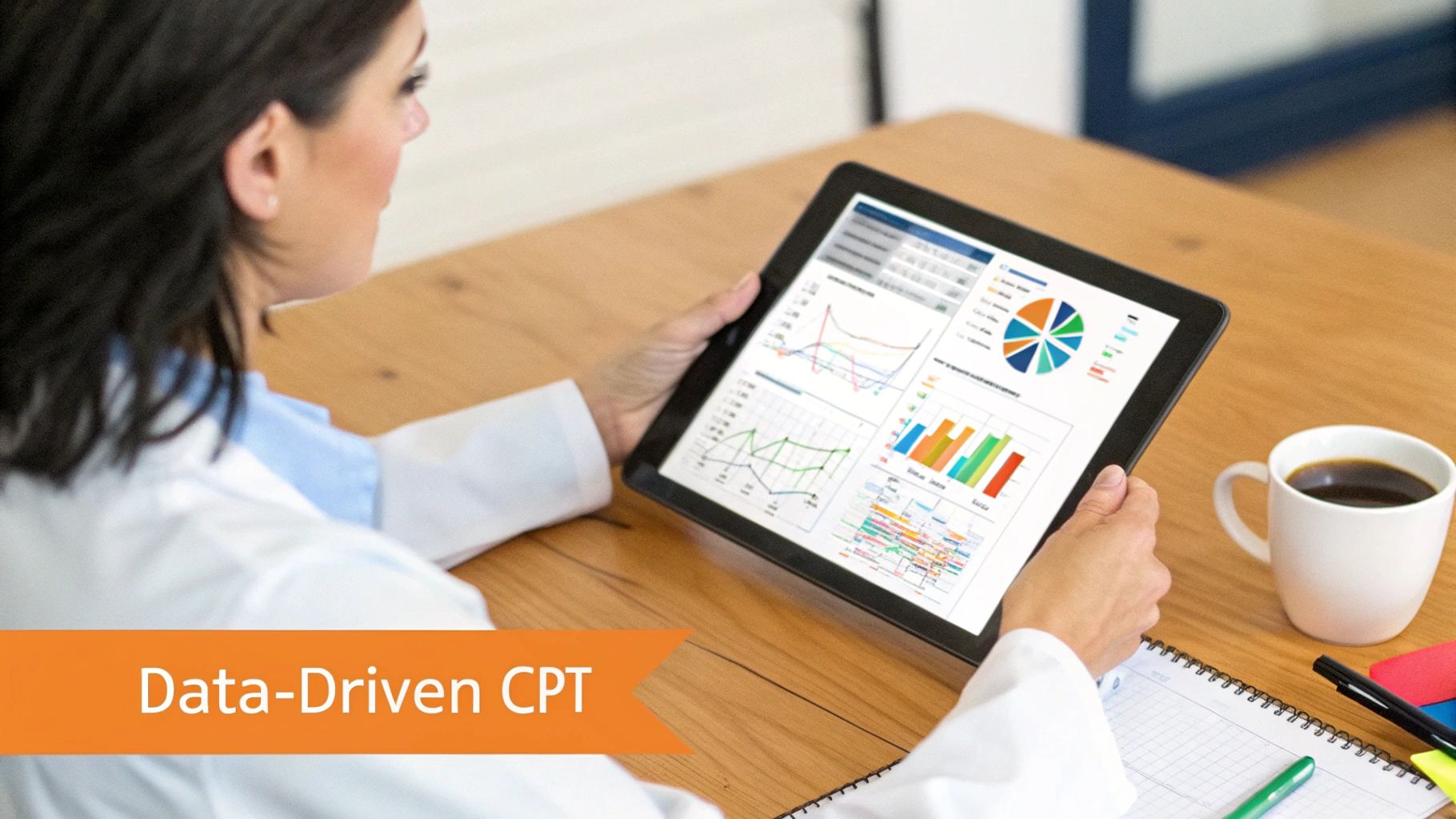
While standard measurement-based care is a must, the real game-changer is leveraging objective cognitive assessment platforms. This data-driven approach takes you past subjective client reports and simple symptom checklists, giving you a crystal-clear, objective baseline of cognitive functions like attention, memory, and executive function. This isn't just nice to have; it's invaluable for tailoring your interventions, spotting potential roadblocks, and ultimately, getting better outcomes—especially with complex cases.
From Symptom Tracking to Cognitive Profiling
Of course, using tools like the PTSD Checklist for DSM-5 (PCL-5) is a cornerstone of solid CPT practice. It’s how we track symptom severity and stay dialed into a client's progress week by week. But let's be honest, that only tells us part of the story. It tells you what the client is feeling, not necessarily why they’re getting stuck on certain parts of the therapy.
This is exactly where objective cognitive profiling shines.
Picture this: you have a client who consistently struggles to complete the Challenging Beliefs Worksheet. Your first thought might be emotional avoidance, right? But what if a quick cognitive assessment revealed significant deficits in their working memory or a slower processing speed?
Suddenly, the whole picture changes. The problem isn't just avoidance—it's a cognitive capacity issue. That insight completely reframes your approach. Instead of pushing them to power through emotional resistance, you can adapt the task. Maybe you break the worksheet into smaller, single-question chunks or lean more on in-session verbal processing to lighten the cognitive load.
Making CPT More Precise with Objective Data
When you start integrating cognitive data into your CPT workflow, you unlock a level of precision that was previously out of reach. It equips you to make smarter clinical calls right from the very first session.
Here’s what that looks like in the real world:
Scenario: A veteran with combat-related PTSD is about to start CPT. A brief, pre-treatment cognitive assessment shows he has strong verbal memory but weaker sustained attention.
Actionable Insight: With that information, you can anticipate that he might struggle to stay focused while writing his detailed trauma account.
Tailored Intervention: You can proactively structure the homework. Suggest writing for shorter, focused bursts (say, three 15-minute blocks instead of one long 45-minute session). You could also start each therapy session with a brief grounding exercise to help him centre his attention before diving into the tough stuff.
This data-driven strategy transforms CPT from a one-size-fits-all protocol into a highly personalized intervention. It helps you pinpoint and address the underlying cognitive barriers that can derail therapy, leading to better client engagement and more robust outcomes.
This precision is becoming more crucial as CPT is adapted for increasingly complex cases. For instance, research in California is exploring telehealth CPT for individuals with both PTSD and Borderline Personality Disorder. A Stanford Medicine trial is even testing an augmented protocol, CPT+SRM, which adds a structured Suicide Risk Management component.
Considering that national data suggests around 22% of patients may drop out of routine CPT, being able to use data to manage crises and prevent protocol drift is more vital than ever. You can learn more about this innovative work from Stanford Medicine's clinical trial database.
Using Technology to Track Holistic Recovery
One of the most powerful things about these modern tools is their ability to track progress beyond just symptom reduction. As a client moves through CPT, you can do periodic reassessments to see how their cognitive functions are improving alongside their PTSD symptoms. Our guide to cognitive assessment online dives into just how accessible these tools have become for clinicians.
Seeing tangible improvements in attention or executive function provides another layer of proof that the therapy is working. It can be incredibly motivating for a client to see objective data showing that their ability to focus and organize their thoughts is getting stronger. This holistic view of recovery enriches your case conceptualization and reinforces the profound impact CPT has on a person's entire well-being.
To see practical examples of these tools in action and get more case studies, sign up for our newsletter for exclusive clinical insights delivered to your inbox.
Common Questions About CPT Training
As you think about jumping into Cognitive Processing Therapy training, it’s only natural for questions to come up. Figuring out the path to becoming a skilled CPT provider means getting your head around timelines, which clients are a good fit, and the different levels of expertise you can achieve. Let's tackle some of the most common questions we hear from clinicians, giving you clear, straightforward answers to help you move forward.
How Long Does It Take to Get Certified in CPT?
This is probably one of the first questions on every clinician's mind, and the answer has a few moving parts. The journey kicks off with a foundational workshop, which is usually an intensive 2-3 day event. But finishing the workshop is just the starting line.
The real hands-on learning happens during the clinical consultation phase that follows. This period of supervised practice typically lasts around six months and involves weekly calls with a CPT consultant. To get that official recognition as a CPT Provider, you’ll need to successfully treat and present four full CPT cases under this supervision.
All in, the entire process—from that first workshop to becoming a rostered provider—often takes between 7 to 12 months. The exact timeline really depends on your caseload, how quickly you can start and finish those cases, and the specific rhythm of your consultation group.
Can I Use CPT with Clients Who Have Complex Trauma?
Yes, absolutely. CPT was built to be robust and is incredibly effective for clients dealing with complex trauma. A huge piece of your cognitive processing therapy training is learning how to spot and work through the deep-seated "stuck points" that fuel PTSD symptoms, even when other conditions like depression, anxiety, or substance use are in the mix.
For especially complex cases, like a client with both PTSD and Borderline Personality Disorder, specialized CPT protocols are always being refined, often using telehealth to make them more accessible. This is where modern assessment tools really shine.
Here’s a real-world example: Let's say you're working with a client who has a history of childhood abuse and also struggles with an anxiety disorder. A quick pre-treatment cognitive assessment shows they have excellent verbal memory but find cognitive flexibility challenging. Right away, this tells you they might get snagged on stuck points related to self-blame. With that insight, you can plan to spend extra time using Socratic questioning and more concrete examples to help them generate alternative thoughts, tailoring the therapy directly to their cognitive profile.
What Is a CPT Provider Versus a CPT Consultant?
Knowing the difference between these two roles is key when you're mapping out your long-term career goals with CPT. They represent distinct levels of expertise and responsibility in the CPT community.
CPT Provider: This is the destination for most clinicians. A CPT Provider has gone through the foundational workshop and the follow-up clinical consultation, proving they can deliver the therapy with fidelity. It's the credential that shows you're competent in using CPT in a clinical setting.
CPT Consultant: This is the next level up. A CPT Consultant is not only a master of the therapy but has also completed additional, rigorous training. This qualifies them to rate other clinicians' sessions and provide the crucial consultation that new learners need. It’s a great path for seasoned providers who are passionate about teaching and mentoring.
How Can Objective Cognitive Data Support My CPT Practice?
Think of objective cognitive data as a powerful co-pilot in your CPT work. It helps you shift from a practice that's purely intuitive to one that's intentionally data-informed. A brief pre-treatment assessment gives you a solid baseline of a client’s cognitive strengths and weaknesses in key areas like attention, processing speed, and executive function.
This information lets you anticipate roadblocks before you hit them. For instance, if a client's assessment flags a deficit in working memory, you’ll know they might have a hard time holding complex ideas in their head while filling out a Challenging Beliefs Worksheet. Armed with this knowledge, you can adapt on the fly—maybe by breaking the task down into smaller chunks or focusing more on verbal processing during the session.
Tracking these cognitive metrics alongside symptom scores like the PCL-5 provides a much richer picture of recovery. It deepens your case conceptualization, helps you deliver more precise and personalized CPT, and gives clients tangible proof of their progress that goes beyond just "feeling better."
Ready to elevate your practice with objective, data-driven insights? Orange Neurosciences provides the tools you need to integrate precise cognitive assessments into your clinical workflow seamlessly. Remove the guesswork and deliver more effective, personalised care from day one. Explore our platform for healthcare providers at https://orangeneurosciences.ca.

Orange Neurosciences' Cognitive Skills Assessments (CSA) are intended as an aid for assessing the cognitive well-being of an individual. In a clinical setting, the CSA results (when interpreted by a qualified healthcare provider) may be used as an aid in determining whether further cognitive evaluation is needed. Orange Neurosciences' brain training programs are designed to promote and encourage overall cognitive health. Orange Neurosciences does not offer any medical diagnosis or treatment of any medical disease or condition. Orange Neurosciences products may also be used for research purposes for any range of cognition-related assessments. If used for research purposes, all use of the product must comply with the appropriate human subjects' procedures as they exist within the researcher's institution and will be the researcher's responsibility. All such human subject protections shall be under the provisions of all applicable sections of the Code of Federal Regulations.


© 2026 by Orange Neurosciences Corporation