Brain Gymnastics Exercises: 6 Actionable Ways to Boost Your Focus
Feb 5, 2026
Just as your body needs structured exercise to stay strong and agile, your brain thrives on targeted workouts to stay sharp and resilient. The idea of 'brain training' has moved beyond simple puzzles. Today, a new generation of evidence-based brain gymnastics exercises, grounded in cognitive neuroscience, offers methodical ways to enhance specific mental skills.
These aren't abstract theories; they are practical techniques designed to measurably improve everything from working memory to problem-solving. Think of it as a personalized fitness plan for your mind, designed to stimulate neuroplasticity—your brain's ability to adapt and grow. This guide provides a curated roundup of powerful brain gymnastics exercises with actionable steps you can take today.
Inside, you will find a detailed breakdown of each technique, organised by the cognitive skill it targets. We provide step-by-step instructions, clear examples, and strategies for tracking your progress. Whether you're a professional guiding a patient or an individual committed to cognitive vitality, this article will equip you with the structured tools needed to build a stronger, more efficient brain.
1. Dual N-Back Training
Dual N-Back training is a powerful and scientifically validated exercise designed to enhance working memory and fluid intelligence. This classic cognitive task requires you to simultaneously track two independent streams of information—one visual and one auditory. You must identify when a current stimulus matches one that appeared 'N' steps back in the sequence. This forces your brain to constantly update and monitor information, making it a demanding yet effective form of "brain gymnastics exercise."

This training method is used in high-performance settings, such as military pilot training to improve focus under pressure, and in cognitive rehabilitation to address attention deficits. The core benefit lies in its ability to directly target the brain’s executive functions, particularly the real-time manipulation of information held in short-term memory.
How to Implement Dual N-Back Training
To get started, it's crucial to approach the exercise systematically. The difficulty, represented by the 'N' value, should be progressive to ensure continuous challenge without causing frustration.
Start at N=1: Begin at the simplest level, where you remember the stimulus just one step back. Master this before advancing.
Maintain Consistency: Aim for three to four training sessions per week, each lasting about 20-25 minutes. Consistency is more important than session length for building cognitive resilience. Practical Example: Schedule your sessions for Tuesday, Thursday, and Saturday mornings before you start your workday.
Track Your Progress: Use an app or a simple journal to monitor your N-level and accuracy scores. Actionable Insight: Seeing tangible progress, like moving from N=1 to N=2 with 85% accuracy, provides powerful motivation to continue.
This targeted exercise is ideal for individuals looking to sharpen their focus and enhance their ability to multitask effectively. To deepen your understanding of the underlying mechanisms, you can learn more about how to improve working memory and its impact on overall cognitive health.
2. Speed of Processing Training
Speed of Processing Training is a highly targeted brain exercise focused on improving the brain's efficiency in quickly identifying and interpreting information. This cognitive skill is fundamental to learning, reaction time, and decision-making. Engaging in these specific "brain gymnastics exercises" can help counteract the natural cognitive slowing that occurs with age.
Pioneered through research on Useful Field of View (UFOV) training, this method has demonstrated significant real-world benefits. For instance, studies have shown that UFOV training can reduce at-fault car accident rates in older drivers by improving their ability to process peripheral visual information quickly.
How to Implement Speed of Processing Training
A structured approach is key to maximizing the benefits of this training. The goal is to gradually decrease the time you need to make accurate judgments, pushing your brain to work faster and more efficiently.
Schedule for Peak Performance: Engage in these exercises during your peak cognitive hours, which for most people is in the morning. This ensures your brain is alert and ready to perform.
Keep Sessions Brief and Focused: Limit training sessions to 20-30 minutes. Actionable Insight: This duration is optimal for maintaining high engagement and preventing cognitive fatigue, which can hinder progress.
Vary the Stimuli: Use training modules that present a variety of stimulus types (e.g., different shapes, letters, or objects). Practical Example: One day, practice identifying a specific shape among distractors. The next day, switch to identifying a central object while also locating a target in your peripheral vision. This helps the brain generalize the skill.
This form of training is ideal for anyone looking to sharpen their mental quickness and improve reaction times in daily activities.
3. Executive Function Maze Solving and Planning Tasks
Executive function maze solving and planning tasks are targeted "brain gymnastics exercises" designed to strengthen the prefrontal cortex, which is responsible for goal-directed behaviour, impulse control, and decision-making. These activities require you to mentally plan several steps ahead, hold a strategy in your working memory, and adapt your approach as you navigate complex problems.
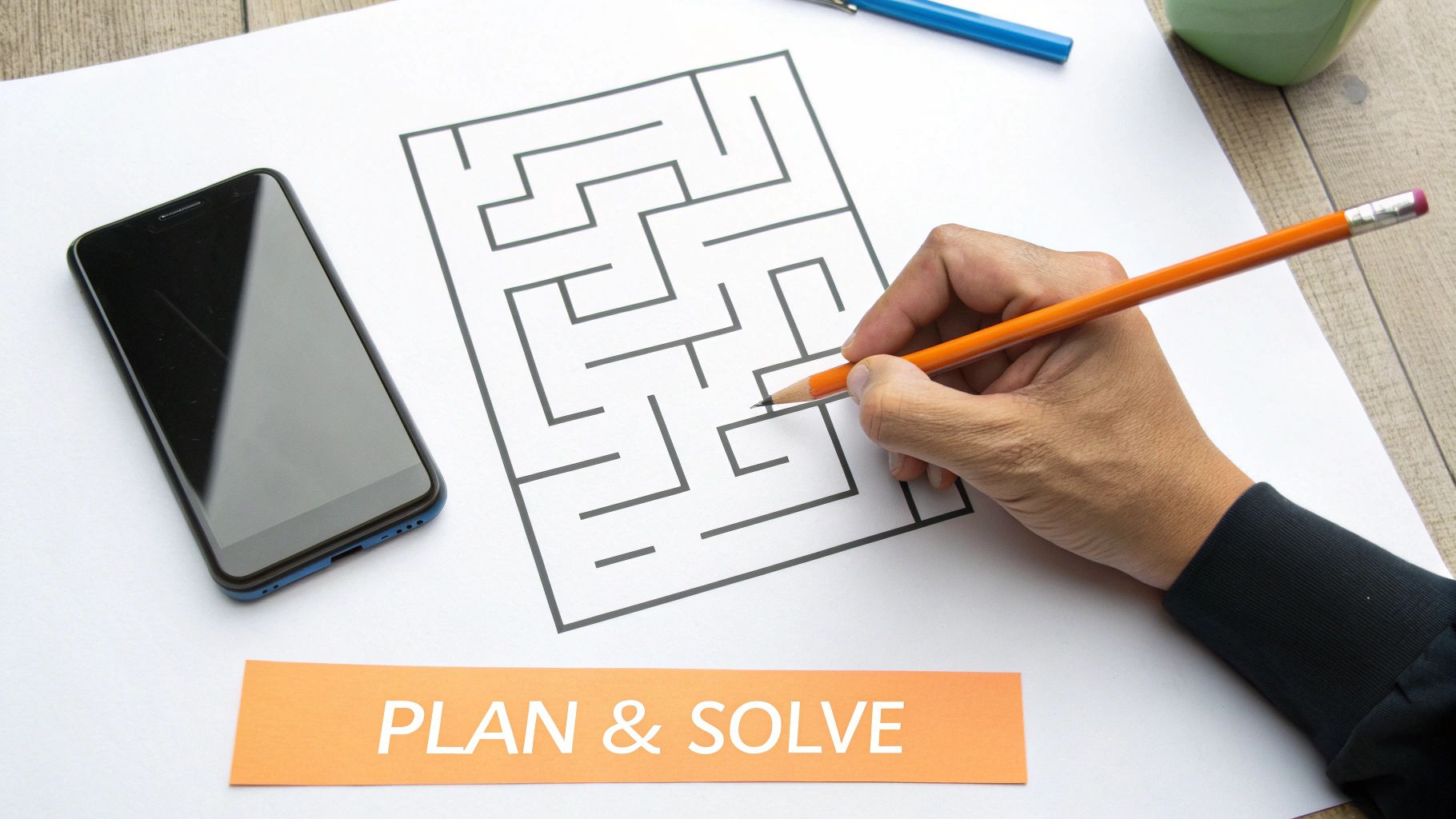
These types of planning tasks are fundamental tools in neuropsychological assessment and rehabilitation. Variants of the Tower of Hanoi and Tower of London tasks are standard in clinical settings to measure planning abilities, while maze-based games are increasingly used in ADHD intervention programs to improve foresight and reduce impulsivity.
How to Implement Maze Solving and Planning Tasks
A structured approach is essential for maximizing the benefits of these tasks and avoiding frustration. Progressing systematically ensures the brain is continuously challenged.
Start with Guided Tutorials: Begin with simple mazes or planning puzzles that offer hints or show the optimal solution path. This helps build foundational strategic thinking.
Articulate Your Strategy: As you solve a maze or plan your moves, say your strategy out loud. Practical Example: Verbalize your thought process: "First I will go left to avoid the dead end, then I'll look for the longest open path towards the exit." This reinforces the planning sequence and improves metacognition.
Vary the Conditions: Alternate between timed and untimed exercises. Actionable Insight: Timed trials help improve decision-making under pressure, while untimed trials allow for deeper, more deliberate strategic planning.
Track Efficiency Metrics: Monitor not just completion time but also the number of moves or errors. Tracking your planning efficiency provides a more accurate measure of cognitive improvement.
These exercises are particularly beneficial for individuals aiming to enhance their problem-solving skills and organisational abilities. For those interested in a deeper exploration, you can learn more about how to improve executive function and its critical role in daily life.
4. Attention Training with Sustained Focus Tasks
Attention training with sustained focus tasks is a targeted form of cognitive exercise designed to strengthen your ability to maintain concentration over extended periods. These structured activities challenge the brain's attentional control system, requiring you to remain vigilant and responsive despite monotony. By engaging in these deliberate "brain gymnastics exercises," you build the neural stamina necessary for deep work and complex learning.
This type of training is a cornerstone in various clinical and high-performance environments. Variants of the Continuous Performance Test (CPT) are used in ADHD clinics, while military pilot programs use sustained attention training to ensure pilots remain alert during long missions.
How to Implement Sustained Focus Training
Effective attention training requires structure and gradual progression. The goal is to systematically increase the duration and complexity of the tasks to continuously challenge your attentional capacity.
Vary Stimuli and Formats: To prevent habituation, frequently change the nature of the task. Practical Example: One week, practice a visual tracking exercise where you follow a specific object on screen. The next week, switch to an auditory task where you must press a button every time you hear a target number in a sequence.
Use Immediate Feedback: Implement tasks that provide instant feedback on performance. Actionable Insight: This reinforces correct responses and helps you immediately identify and correct lapses in concentration, accelerating your learning.
Prioritise Shorter, Frequent Sessions: Monitor for signs of mental fatigue. Often, shorter and more frequent training sessions (e.g., 15-20 minutes daily) are more effective than longer, infrequent ones for building sustainable focus.
This methodical approach is ideal for professionals, students, or anyone looking to enhance their ability to concentrate in a world full of distractions. You can learn more about how to improve focus and concentration to further support your cognitive training goals.
5. Memory Enhancement Through Spaced Repetition and Mnemonic Techniques
This powerful cognitive training method combines two evidence-based principles to dramatically improve information encoding and retrieval: spaced repetition and mnemonic techniques. Spaced repetition involves reviewing information at increasing intervals over time. When paired with mnemonic devices like the method of loci (memory palace) or chunking, it becomes one of the most efficient brain gymnastics exercises for long-term memory.
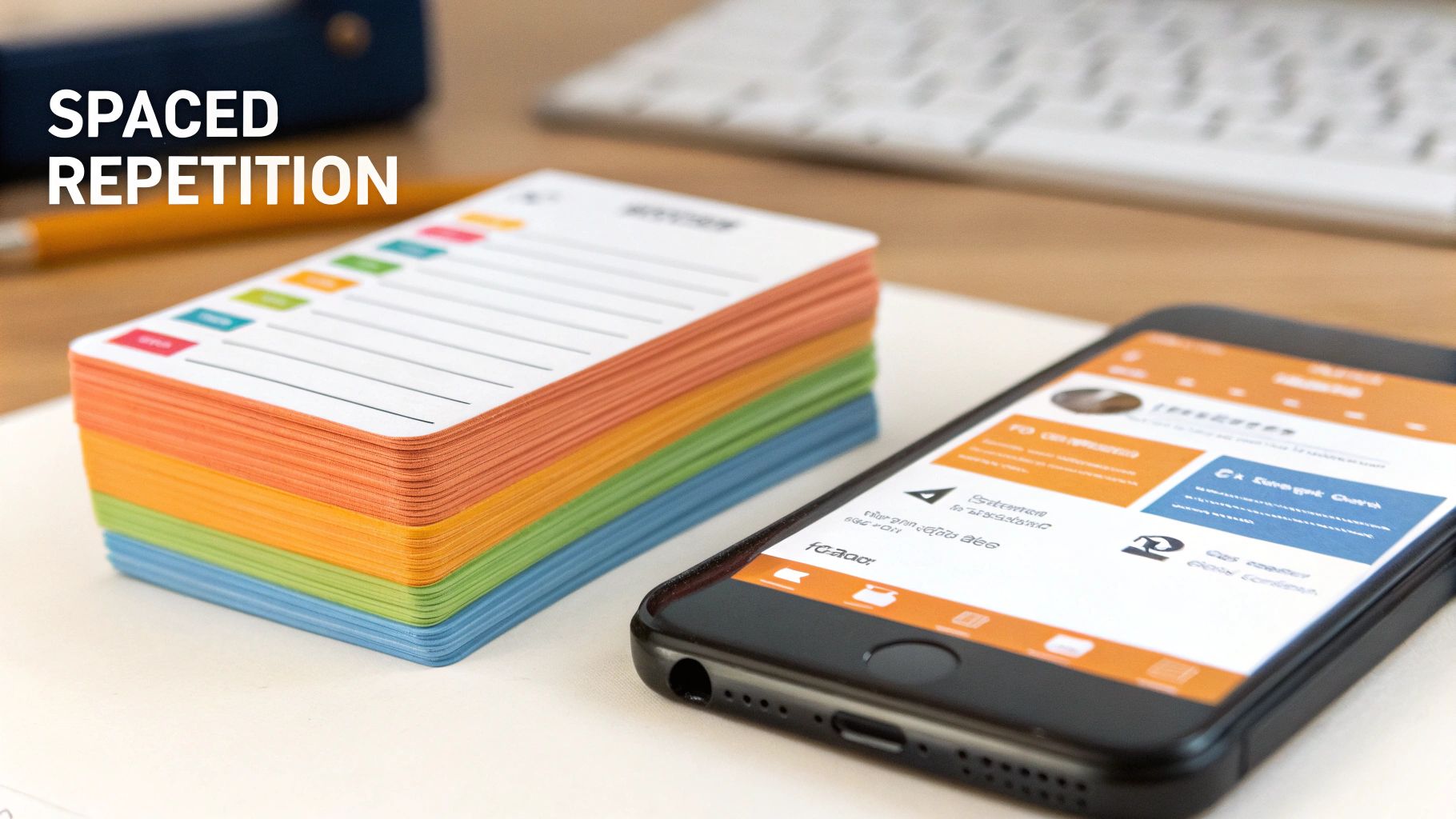
The combination is highly effective because it capitalises on core principles of cognitive psychology. Spaced repetition fights the natural forgetting curve, while mnemonics create strong, memorable associations. This dual approach is widely used in demanding fields, from medical students using platforms like Anki to master vast amounts of information to memory champions performing incredible feats of recall.
How to Implement Spaced Repetition and Mnemonics
A structured approach is key to leveraging these techniques. The goal is to create a personalised system that makes learning both efficient and durable.
Choose Your Tools and Techniques: Start by selecting a spaced repetition system (SRS) like Anki or Quizlet. Simultaneously, learn a few mnemonic strategies. Practical Example: To remember a list of key historical dates, create a vivid, silly story that links them together in sequence. Enter the date and its event into your SRS app.
Create High-Quality Cues: When creating flashcards, focus on connecting new information to what you already know. Combine visual imagery with semantic elaboration (understanding the meaning) for the strongest encoding.
Trust the Algorithm and Be Consistent: Commit to daily reviews as prompted by your SRS software. Actionable Insight: The algorithms are designed to present information just before you are about to forget it, which strengthens the neural connection. Consistency is the key to making this system work.
This integrated memory exercise is perfect for anyone needing to learn and retain complex information. For further details on this powerful learning technique, consider exploring a guide on Spaced Repetition and its applications.
6. Perception and Visual Processing Training
Perception and Visual Processing Training focuses on enhancing foundational visual abilities that go beyond simple eyesight. These targeted exercises are designed to improve skills like contrast sensitivity, visual field awareness, and pattern recognition. Strengthening these core processing skills is a critical form of "brain gymnastics exercises" because they are essential for everyday tasks such as reading, driving safely, and quickly recognising objects in a cluttered environment.
This training is used in highly specialized settings. It's a key component in vision rehabilitation programs for retinal disease management and is used in clinics to address visual processing deficits associated with dyslexia. Senior driving programs also use contrast sensitivity training to improve reaction times and safety on the road.
How to Implement Perception and Visual Processing Training
Effective implementation requires a structured approach that starts with an individual's current abilities and systematically increases the challenge.
Establish a Baseline: Before starting, it's important to assess baseline visual acuity and visual field integrity, often with the help of a professional. This ensures the exercises are appropriate and safe.
Use Progressive Complexity: Begin with simple tasks and gradually move to more complex challenges. Practical Example: Start by identifying high-contrast shapes (a black circle on a white background). Progress to finding a specific pattern in a busy "Where's Waldo?"-style image or identifying low-contrast objects at dusk.
Integrate Real-World Tasks: Combine structured exercises with practical, real-world activities. Actionable Insight: Challenge yourself to read street signs from further away or consciously identify objects in your peripheral vision while walking. This helps transfer your training to daily life.
This type of training is ideal for anyone looking to sharpen their visual perception. For more tailored programs and tools, you can explore platforms from specialists like OpticalShop that offer guided vision training.
7. Eye-Hand Coordination and Motor Planning Training
Eye-hand coordination and motor planning training is a dynamic form of brain gymnastics exercise focused on strengthening the neural pathways that connect visual perception with motor execution. This training involves interactive tasks that demand precise, controlled movements in response to visual cues. By synchronizing what your eyes see with what your hands do, you improve reaction time, accuracy, and the brain's ability to plan and execute complex actions.
This approach has been popularized by accessible technologies and therapeutic practices. For instance, Nintendo's Wii Fit brought interactive rehabilitation gaming into homes, using motion controls to improve balance and coordination. In clinical settings, neurokinetic therapy practitioners use targeted exercises to correct faulty movement patterns.
How to Implement Eye-Hand Coordination Training
A progressive and varied approach is key to developing robust motor skills. The goal is to consistently challenge the brain's ability to adapt its motor output based on changing visual information.
Start with Larger Targets: Begin with simple exercises like catching a large, soft ball or touching large, widely spaced targets on a screen. Actionable Insight: As you improve, progressively reduce the target size to refine fine motor control.
Vary Movement Speeds: Practice tasks at different speeds. Slow, deliberate movements build precision, while faster actions challenge your reaction time.
Incorporate Real-World Tasks: Integrate practical activities into your day. Practical Example: Practice threading a needle, picking up dropped coins, or typing without looking at the keyboard. These functional movements translate directly to improved daily living skills.
Monitor for Compensation: Pay close attention to how you perform movements. Avoid developing compensatory habits, such as using your torso to assist your arm, as this can hinder progress.
This training is ideal for anyone looking to enhance their motor skills, from athletes fine-tuning their performance to individuals recovering from a neurological event. To explore more specific techniques, you can find a comprehensive guide to eye-hand coordination exercises and their benefits for cognitive function.
8. Adaptive Cognitive Difficulty Sequencing and Progressive Overload
Adaptive Cognitive Difficulty Sequencing, often called progressive overload for the brain, is a foundational principle rather than a single exercise. It ensures that cognitive training remains challenging and effective by systematically adjusting task difficulty in real-time based on your performance. This method keeps you in the "flow state"—a highly focused mental state where you are fully immersed and challenged, but not overwhelmed. This constant, tailored challenge is a key driver of neuroplasticity, making it one of the most crucial brain gymnastics exercises principles.
This principle is the core mechanism behind leading cognitive training platforms like BrainHQ and Lumosity. Their algorithms dynamically increase or decrease difficulty to maintain an optimal level of engagement. In clinical settings, it’s used in cognitive rehabilitation gaming to help patients recover functions by providing tasks that are consistently demanding yet achievable.
How to Implement Adaptive Cognitive Difficulty Sequencing
To apply this principle to your own cognitive training, focus on creating a structured system for increasing challenges.
Define Advancement Metrics: Before starting, establish clear criteria for making an exercise harder. Actionable Insight: A common rule is to increase the difficulty only after achieving 80-90% accuracy consistently over several sessions.
Implement Small, Gradual Steps: Avoid large leaps in difficulty that can lead to frustration. Practical Example: If you are memorizing a list, add just one or two new items at a time rather than doubling its length.
Analyse Your Plateaus: When you stop improving, don't just push harder. Analyse the plateau. You may need to change the exercise, focus on a different cognitive skill for a while, or break down the current task into smaller components.
This meta-approach is perfect for anyone serious about long-term cognitive improvement. By ensuring every session is optimally challenging, you create the ideal conditions for brain growth.
9. Metacognitive Training and Self-Awareness Development
Metacognitive training is a sophisticated form of “brain gymnastics exercise” that focuses on developing awareness and control over your own thought processes. Often described as "thinking about thinking," this training develops your ability to monitor your cognitive performance, select appropriate strategies for tasks, and detect errors. It acts as an executive oversight function, enabling you to use your cognitive resources more effectively.
This approach is heavily utilized in various clinical and educational settings. For instance, metacognitive strategy instruction is a cornerstone of support for individuals with learning disabilities. It's also used in cognitive retraining programs for stroke survivors to rebuild their awareness of their cognitive deficits and in ADHD interventions to improve self-monitoring and planning skills.
How to Implement Metacognitive Training
To begin strengthening your metacognitive skills, it’s essential to make your internal thought processes more explicit and to regularly self-assess your performance.
Practise Think-Aloud Protocols: When working through a problem, verbalize your thought process. Practical Example: While assembling furniture, say out loud, "Okay, the instructions show this piece connects here. I see I've put it on backwards. I need to reverse it and re-read step three." This externalizes your cognition, making it easier to analyze.
Implement Regular Self-Assessment: Before starting a task, predict how well you will do. After completion, reflect on what went well and what you could improve. Actionable Insight: This simple pre- and post-task reflection builds accurate self-awareness.
Focus on Error Analysis: Instead of just correcting mistakes, analyze why they happened. Was it a lack of attention, a misunderstanding of the instructions, or a flawed strategy? Understanding the root cause is key to preventing future errors.
This type of training is ideal for anyone looking to become a more efficient and adaptable learner. By consciously developing your self-awareness, you build the foundation for more resilient and strategic cognitive functioning. For more advanced strategies and personalized guidance, consider exploring the cognitive training programs available on our website.
10. Neuroplasticity-Based Intensive Task Training with Real-World Transfer
This advanced form of cognitive training is a highly targeted and intensive approach designed to rewire the brain by leveraging its natural ability to change—neuroplasticity. Unlike general brain games, this method focuses on specific cognitive deficits resulting from injury or neurological conditions. The core principle is high-repetition, task-relevant practice with progressive difficulty. These intensive "brain gymnastics exercises" aim for meaningful improvements in daily life, not just better scores on a training app.
This structured training is a cornerstone of modern neurorehabilitation. For instance, in stroke rehabilitation, a patient might engage in constraint-induced cognitive therapy to rebuild language skills. Similarly, an individual recovering from a traumatic brain injury (TBI) could undergo intensive working memory training designed to improve their ability to follow multi-step instructions at work.
How to Implement Neuroplasticity-Based Intensive Task Training
Implementing this approach requires a structured, goal-oriented plan, often guided by a therapist but with principles that can be adapted for self-guided improvement.
Establish Functional Goals: Before starting, clearly define the real-world task you want to improve. Practical Example: Instead of a vague goal like "improve memory," a specific goal would be "remember a three-item grocery list without writing it down."
Incorporate Real-World Variants: Design training exercises that mimic the target task. Actionable Insight: If the goal is to improve attention during conversations, practice with audio recordings of conversations that have increasing levels of background noise.
Prioritise Abundant, Corrective Feedback: High-intensity training demands immediate feedback. Whether working with a therapist or a specialised app, you must know instantly if you are performing the task correctly to reinforce the right neural pathways.
Reassess and Adjust Regularly: Progress is not always linear. Schedule regular check-ins (e.g., weekly) to assess your performance on the real-world functional goal and adjust the training tasks accordingly.
This method is ideal for individuals recovering from neurological events or those with specific cognitive challenges. To explore the clinical application of these principles further, you can learn more about neurorehabilitation therapies and how they are structured for maximum impact.
Brain Gymnastics: 10-Item Comparison
Training | Implementation complexity | Resource requirements | Expected outcomes | Ideal use cases | Key advantages |
|---|---|---|---|---|---|
Dual N-Back Training | Low–Moderate (simple task with adaptive option) | Low (computer/app, headphones) | Improved working memory; possible fluid-intelligence gains (variable) | Working-memory rehab, cognitive enhancement, research | Strong evidence for WM improvement; measurable progression; short sessions |
Speed of Processing Training | Moderate (precise timing and stimulus control) | Moderate (software, response recording) | Faster reaction times; improved processing speed; functional benefits | Older adults, stroke/TBI rehab, driving-safety programs | Direct functional impact; measurable gains within weeks |
Executive Function Maze Solving & Planning | Low–Moderate (task design and scoring) | Low (digital or paper tasks) | Better planning, decision-making, path efficiency | ADHD interventions, pediatric training, executive rehab | Engaging; targets multiple executive functions simultaneously |
Attention Training with Sustained Focus Tasks | Moderate (target detection, distraction control) | Low–Moderate (CPT-style software) | Increased vigilance; fewer lapses; improved RT variability | ADHD clinics, safety-sensitive roles, occupational therapy | Directly addresses attention deficits; objective metrics; gamifiable |
Spaced Repetition & Mnemonic Techniques | Moderate (scheduling algorithms + strategy instruction) | Low (SRS apps, instructional content) | Robust long-term retention for trained material; improved recall | Education, memory coaching, cognitive-decline prevention | Strong empirical support; high retention; broadly applicable |
Perception & Visual Processing Training | Moderate (stimulus calibration and display control) | Medium (assessments, possible specialized displays) | Improved contrast sensitivity, field awareness, pattern recognition | Vision rehab, driving/reading programs, dyslexia clinics | Direct functional gains for reading/driving; objective measures |
Eye‑Hand Coordination & Motor Planning Training | Low–Moderate (interactive tasks, hardware integration) | Moderate (controllers, sensors, interfaces) | Improved accuracy, speed, and motor planning; functional carryover | Stroke/OT rehab, pediatric motor therapy, geriatric programs | Highly engaging; measurable motor-cognitive integration benefits |
Adaptive Cognitive Difficulty Sequencing | High (algorithm development and personalization) | High (data, monitoring, analytics) | Optimized challenge, sustained progress, reduced plateau | Digital training platforms, personalized rehab, adaptive learning | Maximizes neuroplasticity and engagement; prevents plateau |
Metacognitive Training & Self‑Awareness | Moderate (instructional design, coaching) | Low–Moderate (trained facilitator, reflective tools) | Better strategy use, error awareness, improved transfer across tasks | Learning disability clinics, ADHD programs, cognitive rehab | Enhances transfer and independence; improves self-regulation |
Neuroplasticity‑Based Intensive Task Training | High (intensive protocol design, individualized tasks) | High (professional supervision, long-duration commitment) | Significant functional recovery; measurable real-world transfer | Intensive stroke/TBI rehabilitation, targeted deficit remediation | Strongest evidence for functional outcomes; goal-directed transfer |
From Theory to Practice: Integrating Brain Gymnastics into Your Daily Life
Throughout this guide, we’ve explored evidence-based brain gymnastics exercises designed to target specific cognitive skills. From the memory demands of Dual N-Back to the precision of Eye-Hand Coordination tasks, the central theme is consistent: cognitive function is not static. It is a dynamic set of skills that can be intentionally strengthened through targeted, consistent practice.
You’ve learned about the importance of progressive overload, the value of metacognitive awareness, and the critical role of real-world transfer. These are the foundational principles that transform simple mental puzzles into powerful tools for neuroplasticity. The goal is not just to get better at games, but to cultivate a more resilient, efficient, and agile mind for the demands of daily life.
Weaving Cognitive Fitness into Your Routine
The true measure of success for any brain gymnastics exercises program lies in its real-world impact. Transitioning from isolated practice to tangible improvements requires a structured approach.
Start Small, Build Momentum: Select one exercise that targets a personal priority and another you find engaging. Actionable Insight: Dedicate just 15-20 minutes, three to four times a week, to create a sustainable habit. For example, use a speed-of-processing app during your morning commute on the train.
Create Cognitive Cross-Training Routines: Your brain benefits from variety. A well-rounded weekly plan might look like this:
Monday & Thursday: Focus on executive functions and memory (e.g., 10 minutes of Maze Solving, 10 minutes of Spaced Repetition for new professional terminology).
Tuesday & Friday: Target processing speed and attention (e.g., 15 minutes of Speed of Processing Training followed by a brief mindfulness exercise).
Bridge the Gap to Application: Actively look for opportunities to apply your trained skills. Practical Example: If you've been practicing memory techniques, consciously use the Method of Loci to remember your grocery list instead of writing it down. If you've been working on attention, try to hold a conversation in a noisy café without losing your focus. For those looking to significantly expand their cognitive capabilities, exploring strategies for multiple language study can be a highly effective approach that naturally combines memory, attention, and executive function.
The Power of Objective Measurement
How do you know if your efforts are paying off? This is where objective, data-driven feedback becomes indispensable. Subjective feelings of being "sharper" are useful, but they lack the precision needed for genuine optimization.
Key Takeaway: Meaningful cognitive enhancement is built on a cycle of Assess, Train, and Re-assess. Without an accurate baseline and periodic progress checks, you are navigating without a compass.
Establishing your cognitive baseline provides a clear starting point, highlighting your unique strengths and areas for improvement. This data allows you to personalize your brain gymnastics exercises, ensuring you are always working at the optimal level of challenge. Regular assessments provide the motivation needed to maintain consistency, transforming your training from a hopeful experiment into a targeted, evidence-based strategy for lifelong cognitive health.
Ready to move from theory to targeted action? Orange Neurosciences provides the tools you need to objectively measure your cognitive functions and track the real-world impact of your brain gymnastics exercises. Visit Orange Neurosciences to discover how our evidence-based digital assessments can help you establish a precise baseline and build a personalized cognitive fitness plan for a sharper, more resilient mind.
Orange Neurosciences' Cognitive Skills Assessments (CSA) are intended as an aid for assessing the cognitive well-being of an individual. In a clinical setting, the CSA results (when interpreted by a qualified healthcare provider) may be used as an aid in determining whether further cognitive evaluation is needed. Orange Neurosciences' brain training programs are designed to promote and encourage overall cognitive health. Orange Neurosciences does not offer any medical diagnosis or treatment of any medical disease or condition. Orange Neurosciences products may also be used for research purposes for any range of cognition-related assessments. If used for research purposes, all use of the product must comply with the appropriate human subjects' procedures as they exist within the researcher's institution and will be the researcher's responsibility. All such human subject protections shall be under the provisions of all applicable sections of the Code of Federal Regulations.


© 2026 by Orange Neurosciences Corporation