8 Powerful Brain Gym Exercises to Boost Cognitive Function in 2026
Feb 18, 2026
In a world demanding constant mental agility, the connection between physical movement and cognitive function is more critical than ever. Traditional learning often separates mind and body, but modern neuroscience reveals they are deeply interconnected. The concept of "brain gym exercises" leverages this link, using specific, intentional movements to stimulate neural pathways, improve communication between the brain’s hemispheres, and enhance overall cognitive performance. These aren't just arbitrary stretches; they are targeted neurological tune-ups designed to prepare your brain for optimal learning, focus, and information processing.
This article moves beyond generic advice to provide a comprehensive, evidence-informed guide to eight powerful brain gym exercises. We will explore each movement in detail, grouped by the primary cognitive domain it supports, such as attention, memory, executive function, and visuomotor coordination. You will receive a detailed roadmap for implementation, including:
Practical, step-by-step instructions for correct execution.
The clinical rationale explaining why each movement is effective.
Actionable insights for different ages and physical abilities.
Real-world examples to help you implement these exercises immediately.
You will learn not just what to do, but precisely why it works. Furthermore, while these physical exercises form a strong foundation, optimal brain health is multifaceted. Supporting your brain's neurochemical balance with a targeted brain nootropic choline supplement can further enhance cognitive function and complement the benefits of these movement-based practices. This guide empowers you to build a sharper, more resilient, and better-integrated mind, one deliberate movement at a time.
1. Cross Crawl
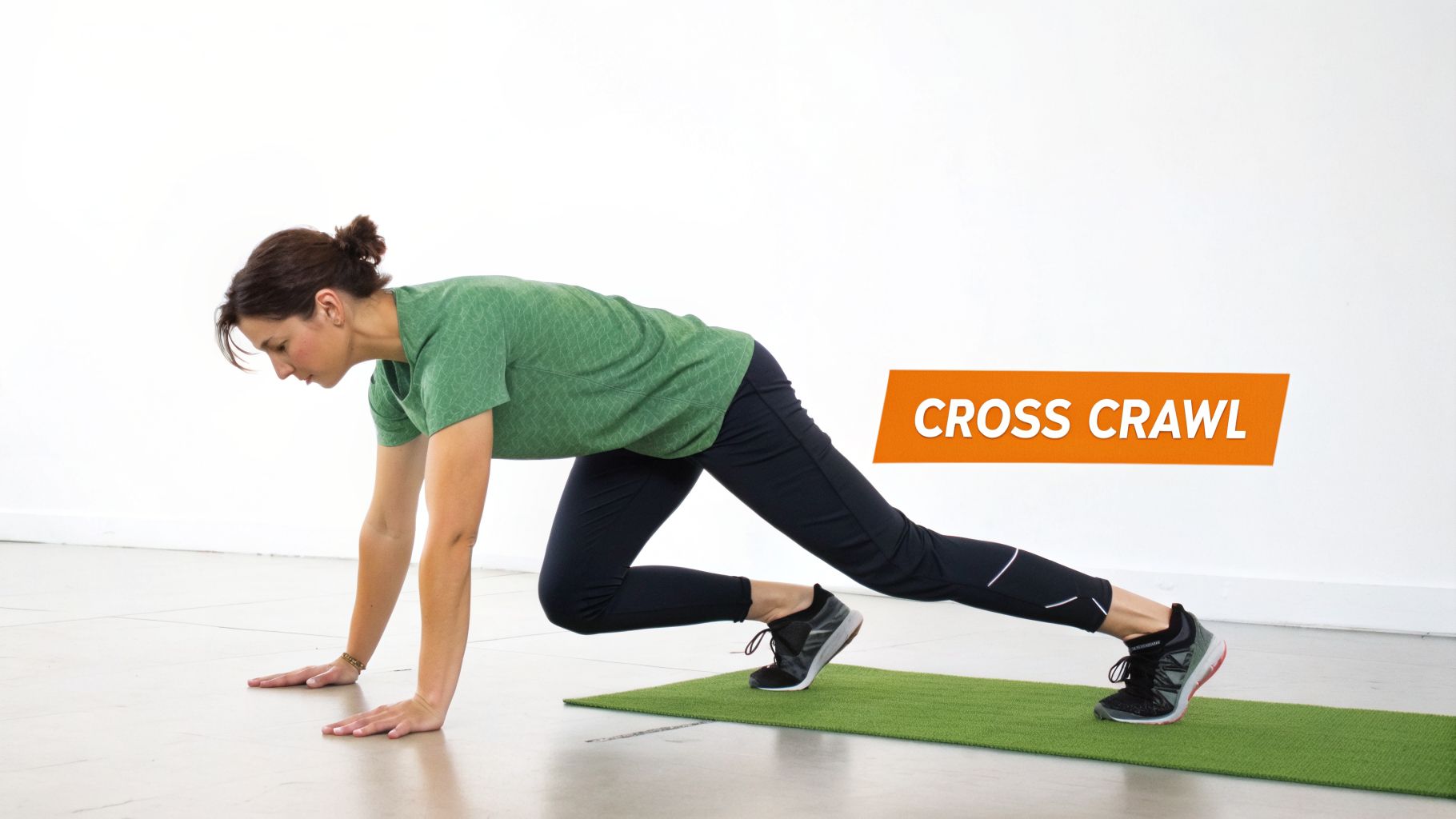
The Cross Crawl is a cornerstone of many cognitive and motor programs, prized for its simplicity and profound neurological benefits. Popularized by Paul and Gail Dennison through their Brain Gym® methodology, this exercise involves the simple, rhythmic action of touching your opposite hand to your opposite knee. This contralateral movement pattern is crucial because it forces both hemispheres of the brain to engage and communicate simultaneously across the corpus callosum, the thick band of nerve fibres connecting them.
This bilateral activation strengthens neural pathways essential for integrated brain function. By coordinating opposite sides of the body, the Cross Crawl improves motor planning, spatial awareness, and balance. More importantly, this cross-lateral integration is fundamental for higher-order cognitive processes, including reading, writing, and complex problem-solving. It's a foundational exercise used to prepare the brain for more demanding cognitive tasks.
Step-by-Step Instructions
Starting Position: Stand with your feet shoulder-width apart and your arms relaxed at your sides. Maintain a tall, upright posture.
Movement: Begin marching slowly in place. As you lift your right knee toward your waist, bring your left hand across your body to touch or tap the top of your knee.
Alternate: Lower your right leg and left arm, then immediately lift your left knee and bring your right hand across to touch it.
Rhythm: Continue this alternating pattern in a smooth, controlled rhythm for 1-2 minutes. Focus on deliberately crossing your body's midline.
Practical Examples and Actionable Insights
The Cross Crawl is highly versatile and effective across different populations.
Practical Example for Students: Before a math test, a teacher can lead the class in 60 seconds of Cross Crawls to help activate both brain hemispheres, priming them for logical and creative problem-solving.
Actionable Insight for Professionals: Feeling stuck on a project? Step away from your desk and perform this exercise for two minutes. The cross-lateral movement can help break mental blocks and improve creative thinking.
For individuals with mobility challenges, the exercise can be adapted:
Seated Variation: Perform the same hand-to-opposite-knee movement while sitting upright in a chair.
Supine Variation: Lie on your back and perform the movement, which reduces the demand on balance.
Clinical Insight: The Cross Crawl is an excellent preparatory exercise before engaging in more complex visuomotor tasks. Its ability to prime the brain's hemispheres for communication can lead to better performance in activities requiring precise movement. For a deeper dive into related activities, you can explore a comprehensive guide to eye-hand coordination exercises.
By integrating this simple yet powerful movement into a daily routine, you can enhance neural connectivity, improve focus, and support overall brain health.
2. Figure-8 Eye Movements
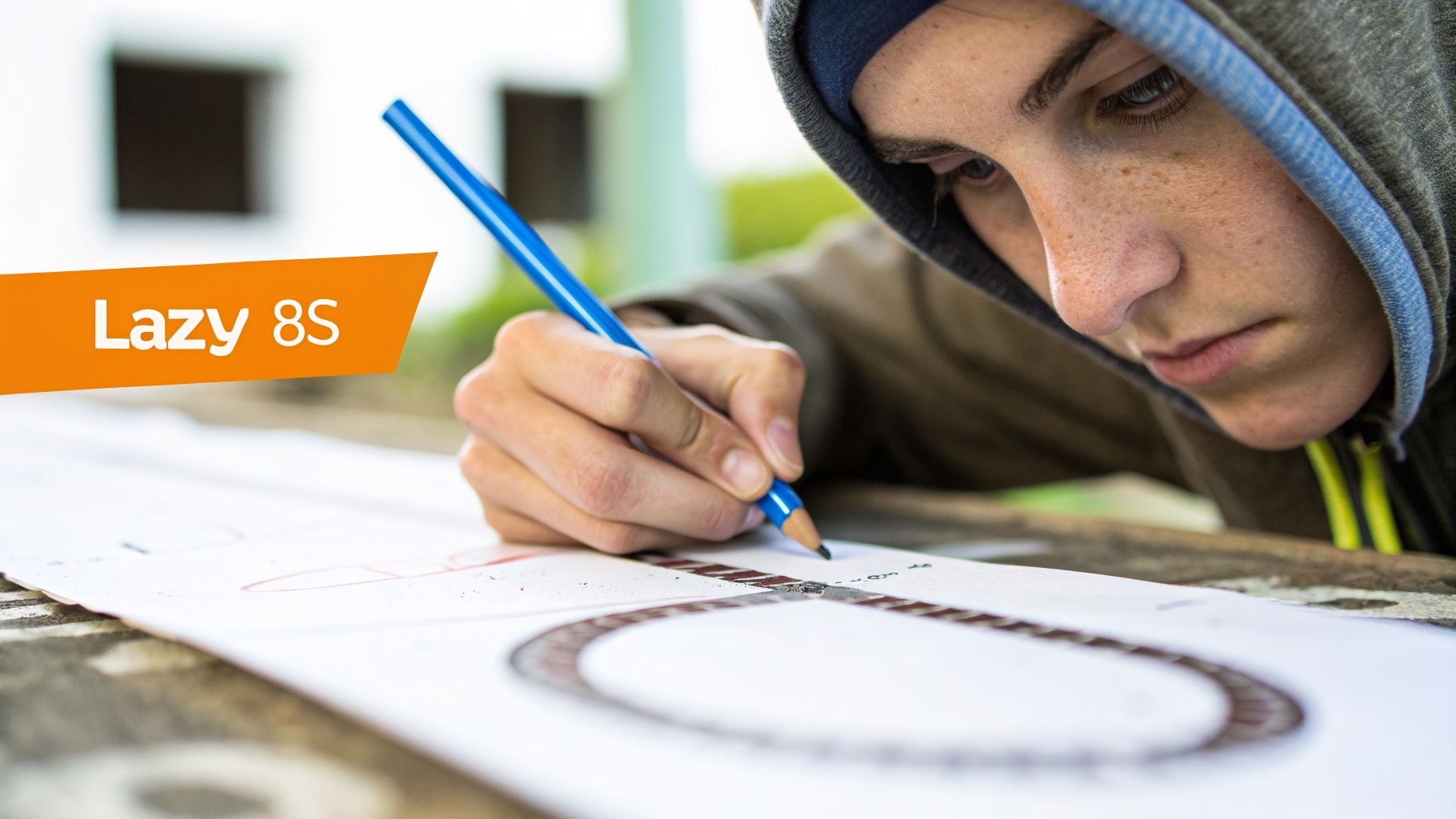
Figure-8 Eye Movements, often called "Lazy 8s," are a foundational brain gym exercise designed to improve visual tracking, processing speed, and the integration of both brain hemispheres. This exercise involves tracing an imaginary, sideways figure-8 (an infinity symbol) with the eyes, a movement that forces them to cross the visual midline. This cross-lateral activity is critical for synchronizing the brain's vision centres, enhancing communication between the left and right hemispheres, and improving eye-hand coordination.
Popularized by Brain Gym® International and widely used in vision therapy, this exercise strengthens the six extraocular muscles responsible for precise eye movement. Smooth, coordinated eye tracking is essential for academic skills like reading, where the eyes must move seamlessly across a page, and for dynamic activities like sports. By engaging the vestibular system and promoting bilateral eye movement, Figure-8s help build the neural pathways necessary for focused attention and efficient visual information processing.
Step-by-Step Instructions
Starting Position: Sit or stand comfortably, facing forward. Extend one arm straight out in front of you at eye level, with your thumb pointing up. Keep your head still throughout the exercise.
Trace the Figure-8: Slowly move your thumb in a large, sideways figure-8 pattern (∞). The centre of the "8" should be directly in front of your nose, at your body's midline.
Follow with Your Eyes: Without moving your head, follow the tip of your thumb with only your eyes. Trace the entire pattern smoothly.
Rhythm and Repetition: Complete the pattern 3-5 times with one hand, then switch hands and repeat. Aim for a slow, deliberate pace.
Practical Examples and Actionable Insights
This exercise is a staple in various therapeutic and performance-based settings.
Practical Example for Reading: If your child often loses their place while reading, have them perform three repetitions of the Figure-8 exercise before they start. This warms up the eye muscles for smooth left-to-right tracking across the page.
Actionable Insight for Athletes: A tennis player can use this exercise to improve their ability to track a fast-moving ball across the court, enhancing reaction time and accuracy.
The exercise can be adapted for different needs and abilities:
Without a Visual Target: Once comfortable, perform the exercise without using your thumb, simply tracing the imaginary pattern with your eyes.
Varying Planes: Practice drawing the figure-8 not only horizontally but also vertically and diagonally to challenge eye muscles in different ways.
Clinical Insight: This exercise is particularly effective for individuals who struggle with visual midline crossing, a common issue in some learning disabilities. Consistent practice can improve reading fluency by reducing the tendency to lose one's place or skip words. For a comprehensive assessment of visuomotor skills, platforms like Orange Neurosciences can benchmark progress and tailor interventions.
Integrating Figure-8 Eye Movements into a daily routine offers a powerful way to enhance visual processing, improve focus, and support the brain's ability to handle complex visual information.
3. Lazy 8s (Horizontal Figure-8)
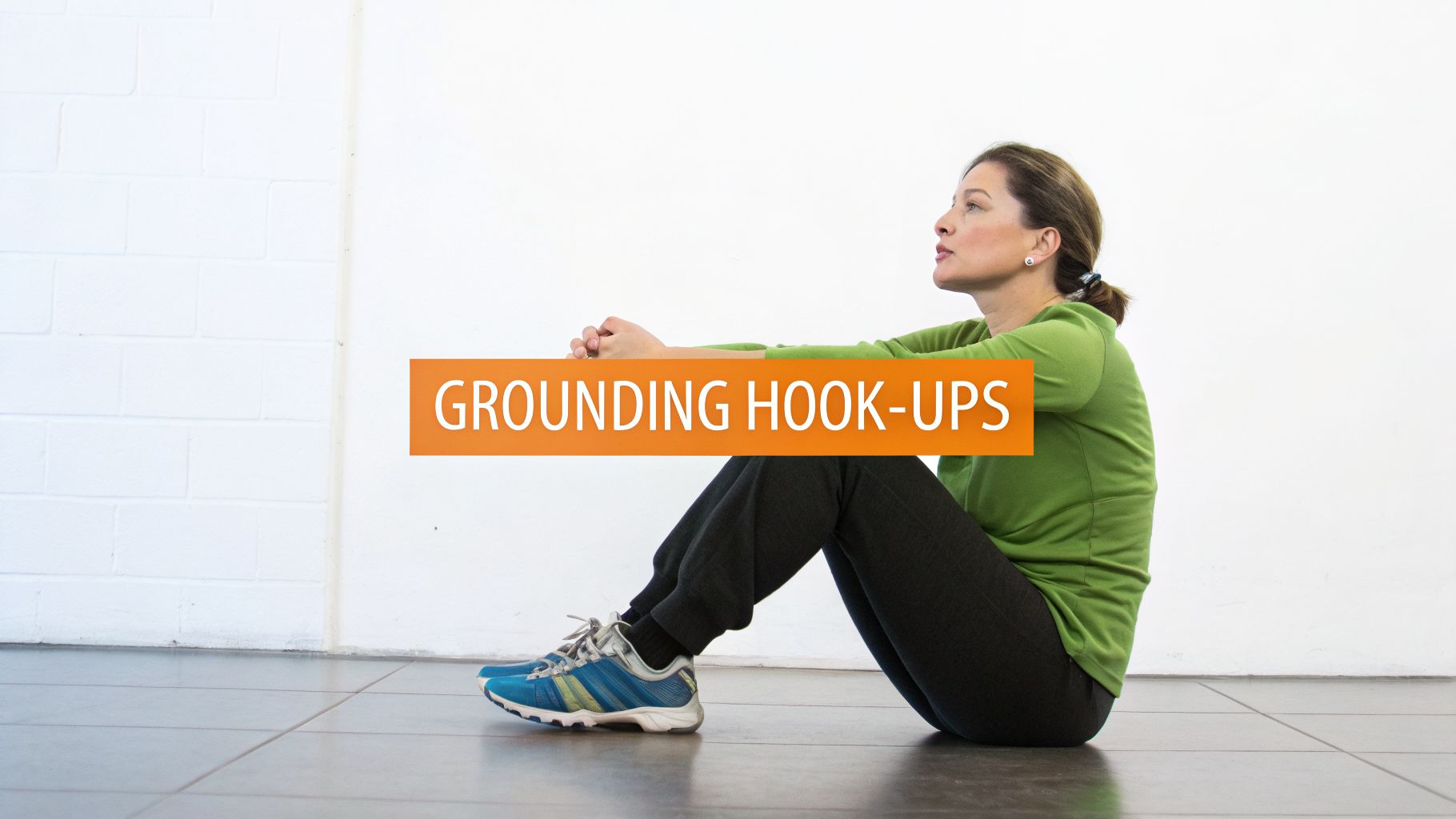
The Lazy 8 is a classic brain gym exercise celebrated for its ability to enhance visual tracking, fine motor control, and cross-lateral brain communication. Developed by Paul and Gail Dennison as part of the Brain Gym® program, this exercise involves tracing a horizontal figure-eight, or infinity symbol, in the air. This specific movement pattern encourages the eyes to smoothly cross the visual midline, a critical skill for tasks like reading and writing where tracking across a page is essential.
Performing the Lazy 8 forces both brain hemispheres to work together, strengthening the neural pathways across the corpus callosum. The exercise specifically integrates the visual, auditory, and kinesthetic systems, improving hand-eye coordination and peripheral vision. By activating both the visual cortex and motor planning centres simultaneously, it directly supports the foundational skills required for academic success, making it a powerful tool in educational and therapeutic settings for improving literacy and processing speed.
Step-by-Step Instructions
Starting Position: Stand or sit comfortably with a straight spine. Extend one arm straight out in front of you at eye level, with your thumb pointing up.
Movement: Begin tracing a large figure-eight lying on its side (an infinity symbol) in the air with your thumb. Start at the centre, move up and to the left, then down and around, crossing the midline to move up and to the right, and finally returning to the centre.
Visual Tracking: Keep your head still and follow your thumb's movement only with your eyes. Trace the pattern smoothly and continuously.
Repetition: Complete the movement 3-5 times with one hand, then switch hands and repeat. Finally, clasp both hands together with thumbs crossed and trace the pattern again. Perform for 1-2 minutes.
Practical Examples and Actionable Insights
The Lazy 8 is widely implemented in various professional contexts.
Practical Example for Handwriting: An occupational therapist might have a child trace Lazy 8s on a whiteboard before practicing letter formation. This helps integrate the visual and motor systems needed for fluid, legible writing.
Actionable Insight for Creativity: If you're facing a creative block, try drawing Lazy 8s on a piece of paper with both hands simultaneously. This bilateral activity can help generate new ideas by encouraging communication between the brain's logical and creative centres.
The exercise can be adapted for different needs and abilities:
Tactile Variation: Trace the Lazy 8 pattern on a large piece of paper with a crayon or in a sand tray for added sensory input.
Guided Variation: For individuals with significant motor control challenges, a therapist or parent can gently guide their hand through the pattern.
Clinical Insight: The smooth, continuous motion of the Lazy 8 is key to its effectiveness in promoting fluid visual tracking. It is an excellent warm-up before any task requiring sustained visual focus, such as reading a chapter or completing a worksheet. To see how these skills translate into measurable data, you can explore Orange Neurosciences' digital cognitive assessments to benchmark and monitor visuomotor progress.
By incorporating this simple tracing movement into a daily routine, you can enhance visual processing, improve coordination, and build a stronger foundation for complex cognitive tasks.
4. Brain Buttons (Carotid Artery Activation)
Brain Buttons is a fundamental technique within the Brain Gym® framework, designed to "wake up" the brain and enhance alertness for learning. The exercise involves gently stimulating specific points on the body to improve blood flow to the brain and balance the body's electrical energy. This technique targets the carotid arteries, which are major blood vessels in the neck that supply oxygenated blood to the brain.
The gentle stimulation is thought to activate baroreceptors located in the carotid sinus. These receptors play a key role in regulating blood pressure and, by extension, cerebral blood flow. By increasing blood flow, particularly to the prefrontal cortex, the Brain Buttons exercise helps improve focus, attention, and executive functions like planning and organisation. It is often used to prepare the brain for demanding cognitive activities or to clear mental fog.
Step-by-Step Instructions
Starting Position: Stand or sit in a relaxed, upright posture.
Hand Placement: Place one hand over your navel to ground your energy. With your other hand, use your thumb and index finger to find the soft indentations just below your collarbone, on either side of your breastbone.
Movement: Gently massage these points in a small, circular motion for approximately 20-30 seconds. The pressure should be light, never painful.
Breathing: As you massage, breathe deeply and slowly. For an enhanced effect, you can also slowly scan your eyes from left to right across your horizontal field of vision. Switch hands and repeat.
Practical Examples and Actionable Insights
The Brain Buttons exercise is highly valued for its ability to quickly prime the brain for optimal performance.
Practical Example for Meetings: Before presenting in a meeting, find a quiet moment to perform the Brain Buttons exercise for 30 seconds. This can help clear mental fog and enhance verbal fluency.
Actionable Insight for Study Sessions: When you feel your concentration waning during a long study session, use this technique as a quick reset. The increased blood flow to the brain can help restore focus and alertness.
The exercise is easily adapted for different needs:
Self-Administration: It is simple enough for children and adults to perform on their own before homework, exams, or important meetings.
Assisted Variation: For individuals with limited motor control, such as stroke survivors, a therapist or caregiver can gently perform the stimulation.
Clinical Insight: This exercise is particularly effective for enhancing executive function, which governs our ability to plan, focus, and multitask. By improving blood flow to the frontal lobes, Brain Buttons can provide a measurable boost in cognitive readiness. To further support these skills, you can explore a detailed guide on how to improve executive function.
Incorporating Brain Buttons into a daily routine can be a simple yet effective way to improve mental clarity, reduce stress, and prepare the brain for learning and complex problem-solving.
5. The Elephant (Vestibular-Auditory Integration)
The Elephant is a gentle, flowing brain gym exercise designed to integrate the vestibular (balance), auditory, and visual systems. This movement, popular in Brain Gym® programs and occupational therapy, involves tracing a lazy figure-eight pattern with one arm while the head and torso follow the movement. The exercise requires the head to tilt, bringing the ear toward the shoulder, which directly stimulates the inner ear's balance mechanisms.
This multi-sensory integration is crucial for brain function. By coordinating eye tracking with arm movement and vestibular input, The Elephant strengthens neural pathways connecting the brainstem, cerebellum, and cortex. This enhances auditory processing, spatial awareness, and balance. It is particularly effective for improving listening comprehension, attention, and the ability to coordinate what is seen with what is heard and done, a foundational skill for learning and motor control.
Step-by-Step Instructions
Starting Position: Stand with your feet comfortably apart, knees slightly bent and relaxed. Extend one arm straight out in front of you, with your thumb pointing up.
Movement: Lean your head to the side, placing your ear on the shoulder of your outstretched arm. Keep your eyes focused on your thumb.
Trace the Figure-Eight: Begin slowly moving your arm to trace a large, horizontal figure-eight (an infinity symbol) in front of your body. Let your torso and hips sway naturally with the arm's movement. Keep your eyes locked on your thumb.
Rhythm: Complete the pattern three to five times with one arm, then switch arms and repeat. Breathe deeply and continuously throughout the movement.
Practical Examples and Actionable Insights
The Elephant is a powerful tool in various therapeutic and educational settings.
Practical Example for Listening Skills: A speech therapist might use The Elephant with a child who struggles to follow multi-step directions. The exercise helps integrate the auditory system, making it easier to process and remember verbal instructions.
Actionable Insight for Balance: Older adults can practice this movement (with support if needed) to improve vestibular function, which is key for maintaining balance and preventing falls.
The exercise can be modified to suit different needs and abilities:
Seated Variation: Perform the movement while seated in a chair to reduce balance demands, focusing purely on the upper body and head movement.
Simplified Pattern: Begin by tracing the figure-eight without the full-body sway, gradually incorporating it as coordination improves.
Support: Practice near a wall or sturdy furniture for support if balance is a significant concern.
Clinical Insight: The Elephant is exceptional for calming and organizing the nervous system. Its rhythmic nature and stimulation of the vestibular system can help individuals feel more centred and ready to learn. For a comprehensive overview of how such activities fit into broader treatment plans, explore the range of available cognitive therapies.
By regularly practising this exercise, individuals can significantly improve the integration of key sensory systems, leading to better balance, focus, and academic performance.
6. The Hook-Ups (Proprioceptive Grounding)
The Hook-Ups posture is a powerful yet subtle exercise designed to promote emotional regulation and cognitive clarity by calming the nervous system. Popularized by Brain Gym® International and widely used by occupational therapists, this grounding technique involves crossing the limbs and pressing fingertips together at the body's midline. This specific posture activates the proprioceptive system, our body's internal sense of position and movement, creating a neurological 'reset'.
This exercise has a profound grounding effect because it integrates the left and right brain hemispheres through bilateral limb crossing while simultaneously calming the sympathetic nervous system (our "fight or flight" response). By holding this contained position, the brain receives signals of safety and stability, reducing feelings of anxiety and overwhelm. This makes The Hook-Ups an exceptional preparatory tool to centre the mind before engaging in focused cognitive work or stressful situations.
Step-by-Step Instructions
Starting Position: Sit comfortably in a chair or on the floor. Cross your left ankle over your right ankle.
Arm Position: Extend your arms forward, palms facing out. Cross your right wrist over your left wrist and interlace your fingers.
Hook-Up: Gently roll your clasped hands down and in toward your chest, resting them comfortably on your sternum.
Hold and Breathe: Close your eyes and breathe deeply and slowly for 1-2 minutes. Focus on the sensation of your body being grounded and the rhythm of your breath. To release, uncross your limbs and rest your hands on your lap.
Practical Examples and Actionable Insights
The Hook-Ups is a staple in settings where emotional regulation is key to performance.
Practical Example for Test Anxiety: A student feeling overwhelmed before an exam can discreetly perform the Hook-Ups posture at their desk for one minute to calm their nervous system and improve focus.
Actionable Insight for Stressful Conversations: Before entering a difficult conversation, take two minutes to hold this posture. It helps ground your emotions, allowing you to communicate more clearly and calmly.
This exercise is easily adapted for different needs:
Standing Variation: The same arm and leg-crossing posture can be performed while standing, adding a balance component.
Simplified Arms: For those with limited shoulder mobility, simply crossing the arms over the chest (like a self-hug) can provide a similar calming effect.
Clinical Insight: The Hook-Ups posture directly engages the body’s sensory systems to influence cognitive and emotional states. Its ability to create a sense of centredness makes it a valuable tool before any high-stakes cognitive task or therapeutic session. To deepen your understanding of how exercises like The Hook-Ups enhance your body's awareness, explore more about proprioceptive training.
By integrating this simple posture, you can quickly calm an overstimulated nervous system, fostering the mental clarity required for learning and complex thinking.
7. Thinking Caps (Auditory Processing Enhancement)
Thinking Caps is a specialized brain gym exercise designed to improve auditory processing and listening skills by stimulating the auditory system. This technique involves gently unrolling the outer curve of the ears, which activates thousands of nerve endings and reflex points connected to various parts of the brain and body. This gentle physical manipulation increases blood flow and sensitivity in the auditory mechanisms, preparing the brain to better receive, filter, and interpret sound.
The exercise enhances the brain's ability to discriminate between different sound frequencies and patterns, a critical skill for language comprehension, phonetic awareness, and focus in noisy environments. By activating the auditory cortex and related neural pathways, Thinking Caps helps to "tune in" the brain, making it more receptive to verbal instruction and communication. It is a subtle yet powerful tool for sharpening listening skills and enhancing auditory memory.
Step-by-Step Instructions
Starting Position: Sit or stand comfortably with a relaxed posture. Reach up with both hands to your ears.
Movement: Use your thumb and index finger to gently grasp the top curve (helix) of each ear.
Unroll: Slowly and gently "unroll" the curved edge of your ear, working your way from the top down to the earlobe. Imagine you are gently massaging and opening up the folded cartilage.
Rhythm: Perform this gentle unrolling motion three to five times. The pressure should be light and comfortable.
Practical Examples and Actionable Insights
The Thinking Caps exercise is widely used to support auditory functioning.
Practical Example for Public Speaking: Before giving a presentation, perform the Thinking Caps exercise to improve your own auditory feedback, helping you better modulate your tone, pitch, and volume.
Actionable Insight for Noisy Environments: If you struggle to focus in a busy office or coffee shop, take 30 seconds to do this exercise. It can help your brain filter out background noise and tune into the task at hand.
For different needs, the exercise can be easily modified:
Self-Regulation: Individuals can perform the exercise on themselves in a quiet space to improve focus before an important conversation or meeting.
Assisted Variation: For young children or individuals with limited motor control, a therapist or caregiver can gently perform the unrolling motion for them.
Clinical Insight: Enhancing auditory processing is directly linked to cognitive functions like attention and memory. When the brain can efficiently process what it hears, it frees up cognitive resources. This sharpened auditory focus can significantly impact one's ability to retain and manipulate verbal information. To further support these cognitive skills, you can explore detailed strategies on how to improve working memory.
By regularly practising this simple movement, you can significantly enhance your ability to listen attentively, process auditory information more effectively, and improve overall communication clarity.
8. Water Activation (Hydration for Cognitive Function)
While not a physical movement, Water Activation is a foundational principle within Brain Gym and cognitive science, recognized for its critical role in supporting all other neurological exercises. It involves the conscious and strategic intake of water to ensure the brain operates in an optimal state for learning and processing. The brain is approximately 75% water, and even mild dehydration can significantly impair functions like attention, memory, and information processing speed by disrupting neural signalling and neurotransmitter balance.
Proper hydration facilitates the efficient transmission of electrochemical signals between neurons, which is the very basis of thought and action. By ensuring cells are well-hydrated, we support synaptic plasticity, metabolic efficiency, and the removal of cellular waste products that can cause cognitive fog. This makes hydration an essential preparatory step for any demanding cognitive task, from academic learning to clinical assessments, as it primes the brain for peak performance.
Step-by-Step Instructions
Preparation: Use filtered, room-temperature water. Cold water can require more energy from the body to process.
Timing: Drink a glass of water approximately 15-30 minutes before beginning any brain gym exercises, cognitive training, or important mental tasks like an exam or assessment.
Awareness: Drink slowly and mindfully. Pay attention to the sensation of the water and the feeling of hydrating your body, rather than drinking distractedly.
Consistency: Maintain hydration throughout the day. Aim to consume approximately half your body weight in ounces daily (e.g., a 150 lb person would aim for 75 oz).
Practical Examples and Actionable Insights
The principle of Water Activation is widely applied across various professional settings to ensure cognitive readiness and accurate performance measurement.
Practical Example for the Workplace: Keep a reusable water bottle on your desk and set a recurring timer to drink every hour. This simple habit can prevent the afternoon slump and maintain high cognitive performance throughout the day.
Actionable Insight for Parents: Ensure your child drinks a glass of water before starting their homework. A hydrated brain is better able to focus, learn, and retain new information, making study time more effective.
Adaptations can be made based on individual needs:
For the Elderly: Seniors are at a higher risk of dehydration. Using a marked water bottle can help track daily intake.
For Athletes: During intense physical activity, which also demands cognitive focus, adding electrolytes can help maintain optimal hydration and mineral balance.
Clinical Insight: Dehydration is a common and often overlooked variable that can skew the results of cognitive assessments. By standardizing hydration protocols before testing, clinicians can achieve more accurate and reliable data on a patient's cognitive function. To learn more about other supportive measures, explore this comprehensive guide on how to improve cognitive function.
Integrating this simple practice ensures the brain has the fundamental resources it needs to benefit fully from other brain gym exercises and cognitive enhancement strategies.
Brain Gym: 8-Exercise Comparison
Item | Implementation complexity | Resource requirements | Expected outcomes | Ideal use cases | Key advantages | Main limitations |
|---|---|---|---|---|---|---|
Cross Crawl | Low — simple contralateral marching/touch | None; minimal space; can be seated | Short-term boosts in attention, bilateral coordination, motor planning | Classroom energizer, pre-test focus, stroke rehab, ADHD support | Easy, quick, scalable, suitable for most ages | Effects temporary without practice; requires balance; limited rigorous evidence |
Figure-8 Eye Movements | Low–Medium — deliberate eye-only tracking | None; optional visual target (finger/pointer) | Improved visual tracking, binocular coordination, reading fluency | Vision therapy, reading interventions, sports vision training | Directly targets visual processing; non-invasive | Requires consistent practice; may be hard for vestibular disorders; variable results |
Lazy 8s (Horizontal Figure-8) | Medium — hand tracing at eye level with eyes following | Minimal (hand/finger; eye-level space) | Enhanced visual-motor integration, literacy readiness, processing speed | Pre-reading activities, occupational therapy, dyslexia support | Targets reading/writing readiness; observable concentration gains | Requires learned technique; benefits accumulate slowly; variable effectiveness |
Brain Buttons (Carotid Activation) | Low — gentle neck point stimulation + movement | None; instruction to avoid carotid compression | Rapid alertness and focus, short-term working memory facilitation | Pre-assessment warm-up, ADHD support, cognitive testing prep | Quick, measurable alertness boost; no equipment | Safety precautions for cardiovascular issues; temporary effect; limited validation |
The Elephant (Vestibular-Auditory Integration) | High — coordinated full-body sway with head/eye tracking | Space, supervision or support for balance | Improved vestibular integration, balance, and auditory processing | Pediatric vestibular therapy, auditory processing programs, movement therapy | Multisensory integration addressing balance and auditory domains | Steep learning curve; may induce dizziness; requires safety precautions |
The Hook-Ups (Proprioceptive Grounding) | Low — static crossed-limbs posture held 30–60s | None; small space; seated/standing | Rapid calming, reduced anxiety, improved emotional regulation and test readiness | Pre-assessment anxiety reduction, test-taking support, trauma-informed settings | Immediate calming effect; discreet and easy to perform | Temporary effect; limited utility for severe anxiety; needs correct positioning |
Thinking Caps (Auditory Enhancement) | Low–Medium — ear folding with vocalization | None; private setting preferred for vocal sounds | Improved auditory discrimination, listening and phonetic processing | Speech-language therapy, auditory processing interventions, language classes | Quick auditory cortex stimulation; supports language skills | Technique-sensitive; may be uncomfortable; vocalization not always appropriate; limited validation |
Water Activation (Hydration) | Very Low — timed, intentional drinking | Access to clean water; timing before activities | Better attention, processing speed, and overall cognitive function when hydrated | Pre-assessment protocol, schools, rehab and performance settings | Low-cost, universally accessible; supports all other interventions | Requires ongoing adherence; over-hydration/electrolyte risks; not a standalone therapy |
From Movement to Measurement: Your Next Step in Cognitive Enhancement
You have just explored a comprehensive toolkit of eight powerful brain gym exercises, each designed to target and strengthen distinct neural pathways. From the bilateral coordination of the Cross Crawl to the sensory integration of The Elephant, these movements are more than just physical activities; they are deliberate strategies for enhancing cognitive function. We have moved beyond simple descriptions, providing you with the clinical rationale, step-by-step instructions, and practical adaptations needed to implement these exercises effectively across different age groups and abilities.
The central theme woven throughout this guide is the profound connection between physical movement and cognitive vitality. The exercises detailed, such as the Figure-8 Eye Movements for visual tracking and the Hook-Ups for emotional regulation, demonstrate that our bodies are the primary instruments through which we can directly influence brain health. By engaging in these targeted activities, you are actively promoting neuroplasticity, improving communication between brain hemispheres, and sharpening core cognitive domains like attention, memory, and processing speed.
Consolidating Your Learning: Key Takeaways
To truly leverage the power of these techniques, it is crucial to move from conceptual understanding to consistent application. Here are the most important actionable insights to guide your practice:
Intentionality is Key: The effectiveness of brain gym exercises lies in performing them with focus. Mindless repetition yields minimal results. Practical Example: When doing the Cross Crawl, consciously feel the connection between your left hand and right knee, synchronizing your brain's hemispheres, rather than just going through the motions.
Consistency Over Intensity: Short, regular sessions are more beneficial than long, infrequent ones. Actionable Insight: Integrate a 5-minute routine combining Brain Buttons and Water Activation into your morning schedule to create sustained improvements in focus throughout the day.
Integration, Not Isolation: These exercises are most powerful when combined with a holistic approach to brain health, including proper nutrition, adequate sleep, and ongoing cognitive challenges.
From Subjective Feeling to Objective Fact: While you may feel more focused, true progress comes from objective measurement. Tracking progress validates the effort and allows for data-driven adjustments to your regimen.
The Critical Role of Measurement
The adage "what gets measured, gets managed" is particularly true for cognitive enhancement. Without a clear baseline and ongoing monitoring, it is difficult to quantify the real-world impact of your efforts. Are the Lazy 8s improving your visuomotor coordination for better handwriting? Is the Brain Buttons exercise genuinely enhancing your alertness before an important meeting? Subjective feelings are a start, but objective data provides the definitive answer.
This is where the journey transitions from simple movement to strategic enhancement. By pairing your brain gym exercises routine with a robust assessment platform, you create a powerful feedback loop. You can pinpoint specific areas of cognitive weakness, select exercises that directly target those domains, and then use reassessment to track tangible, numerical improvements over time. This evidence-based approach transforms a general wellness activity into a precise therapeutic intervention, empowering clinicians, caregivers, and individuals to take control of their cognitive health with confidence. The path to a sharper, more resilient mind is not built on hope alone; it is paved with consistent practice and validated by precise measurement.
Ready to move beyond guesswork and start measuring what matters? The brain gym exercises in this guide provide the "how," but a dedicated assessment platform provides the "what" and "why." Orange Neurosciences offers a suite of evidence-based digital tools designed to benchmark, monitor, and train cognitive functions with clinical precision. Integrate our assessments to establish a clear baseline before you begin and track your progress objectively as you enhance your brain's performance.
Visit Orange Neurosciences today to discover how our data-driven approach can revolutionize your path to cognitive improvement. For more actionable insights and updates, subscribe to our newsletter and join a community dedicated to building better brains.
Orange Neurosciences' Cognitive Skills Assessments (CSA) are intended as an aid for assessing the cognitive well-being of an individual. In a clinical setting, the CSA results (when interpreted by a qualified healthcare provider) may be used as an aid in determining whether further cognitive evaluation is needed. Orange Neurosciences' brain training programs are designed to promote and encourage overall cognitive health. Orange Neurosciences does not offer any medical diagnosis or treatment of any medical disease or condition. Orange Neurosciences products may also be used for research purposes for any range of cognition-related assessments. If used for research purposes, all use of the product must comply with the appropriate human subjects' procedures as they exist within the researcher's institution and will be the researcher's responsibility. All such human subject protections shall be under the provisions of all applicable sections of the Code of Federal Regulations.


© 2026 by Orange Neurosciences Corporation